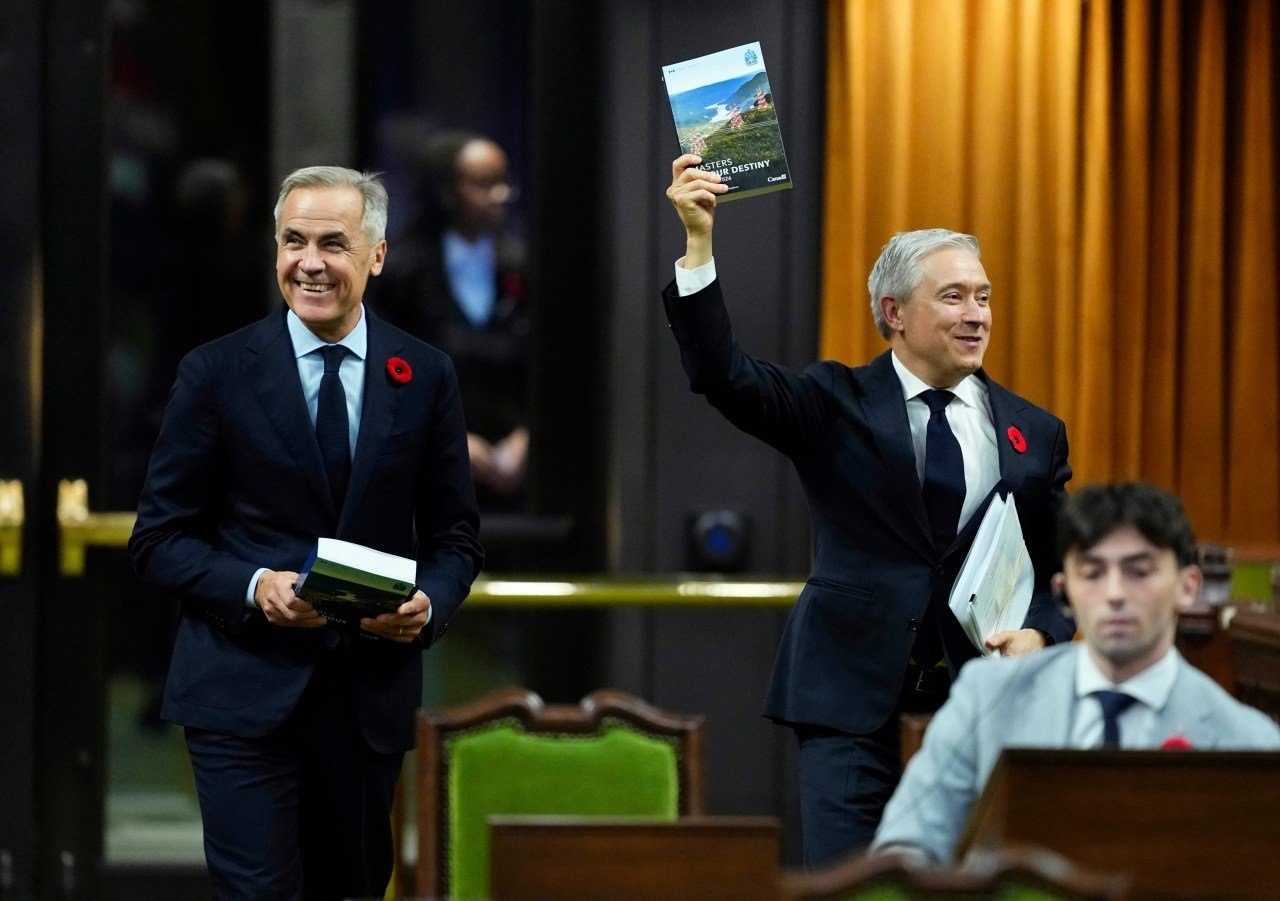
Prime Minister Mark Carney's government has tabled a budget aimed at reducing Canada's economic dependence on the United States, as President Trump's trade war continues to disrupt the longstanding alliance. The fiscal plan, titled "Masters of Our Destiny," outlines C$142.1 billion (US$101.6 billion) in multiyear spending and tax relief, with a focus on attracting investment and bolstering key sectors such as energy, infrastructure, and culture.
The budget projects total government spending of C$603 billion (US$431 billion) for the 2026-27 fiscal year, with a deficit of C$62.3 billion (US$44.5 billion)—C$3 billion less than previously forecast in April. According to International Monetary Fund figures cited in the document, Canada's combined federal, provincial, and local deficits stand at 2.5% of GDP, compared to 8.5% in the United States.

"The United States is upending global trade," the budget states, reflecting the administration's view that the Trump tariffs have fundamentally altered the economic landscape. The plan comes just two days after Democrats swept the U.S. midterm elections, a result that has weakened Trump's political leverage as both nations seek a new trade arrangement.
Ottawa anticipates that the trade war will slow economic growth in the near term, with GDP growth forecast at just 1% in 2026 and 1.7% in 2027. To counter this, the budget includes a previously announced tax incentive allowing businesses to immediately deduct qualifying investments, effectively cutting Canada's tax rate on new investment to 6.4%—less than half the comparable U.S. rate. That measure alone is expected to cost C$36 billion (US$25.7 billion) over five years.
Carney, a former governor of both the Bank of Canada and the Bank of England, has set an ambitious goal of doubling Canadian exports outside the United States by 2035, while deepening ties with Europe and Asia. The budget also advances plans for Canada's first national sovereign wealth fund, a C$25 billion (US$17.9 billion) initiative designed to invest in Canadian companies and major projects.
On defense, the budget allocates C$7.7 billion (US$5.5 billion) to strengthen the domestic defense industry, with a target of awarding 70% of military contracts to Canadian firms. Ottawa maintains it remains on track to meet NATO's goal of spending 5% of GDP on defense and security by 2035, though the budget does not fully account for the associated costs.
The fiscal blueprint arrives after Canada walked away from trade negotiations in August, citing U.S. demands that Carney argued threatened Canadian sovereignty and cultural protections. The new budget is seen as a strategic pivot to build economic resilience and reduce vulnerability to U.S. policy shifts.
Analysts note that while the plan is bold, its success will depend on global market conditions and the ability to attract private investment. With the midterm results having exposed Trump's political vulnerabilities, some observers suggest the administration may be more open to compromise, but Carney's government appears prepared to forge ahead with its diversification strategy regardless.