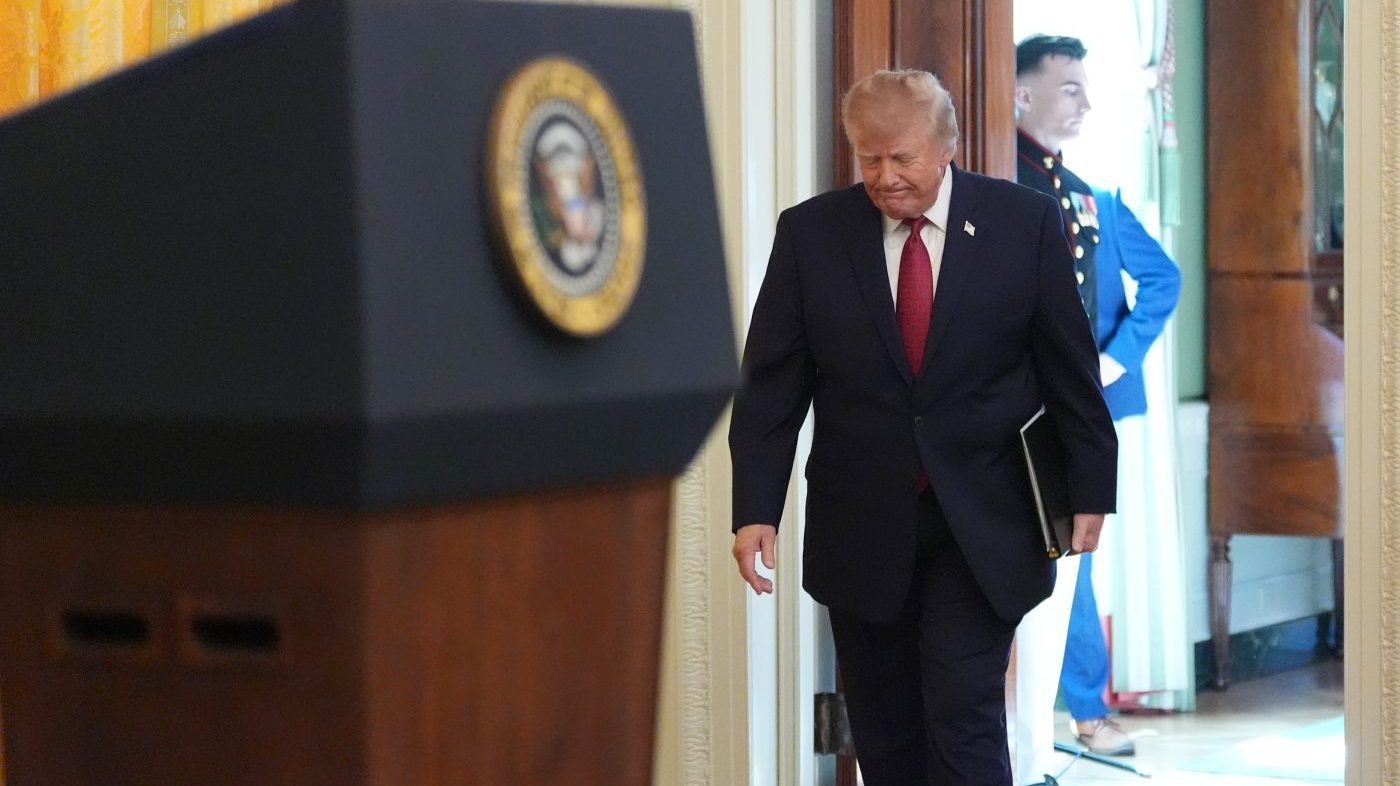
President Trump on Wednesday framed the completion of the US military withdrawal from Iraq as a triumph for both nations, declaring an end to a mission that began with the 2003 invasion. Speaking at a Hispanic Heritage Month event at the White House, Trump said the departure represented a strategic success.
“It’s a victory for the United States, it’s a victory for Iraq and a decisive victory over ISIS, which has been completely decimated,” Trump told attendees. His remarks, which echoed a Truth Social post published earlier in the day, underscored his long-standing opposition to sustained US ground operations in the region.
In the social media post, Trump wrote that he had weighed the options of maintaining a presence or pulling out. “I had a choice to stay or to leave, and felt, without question, that it was time for America to go home!” he said. The president also expressed support for Iraqi Prime Minister Ali al-Zaidi, who took office in May and met with Trump at the White House in July.
The withdrawal announcement came from US Central Command (Centcom), which confirmed that all American forces and military equipment had departed Erbil Air Base in northern Iraq. Centcom described the move as the start of a “transition to a US-Iraq bilateral defense relationship.” The command’s 12-year mission in the country has now formally concluded.
Adm. Brad Cooper, who leads Centcom, said in a statement that “full primary responsibility for Iraq’s security” would transfer to the Iraqi government and its people. He added that US troops remaining in the region would maintain “vigilance and readiness” to protect the American homeland and reinforce regional stability.
The US invaded Iraq in 2003, toppling dictator Saddam Hussein. The conflict, launched by President George W. Bush without a formal declaration of war, continued for years after Bush left office. Trump’s decision to complete the withdrawal marks a sharp break from the previous administration’s approach, which had maintained a residual force to train and advise Iraqi troops and conduct counterterrorism operations.
Critics have warned that a full exit could create a security vacuum that ISIS or other extremist groups might exploit. Supporters, however, argue that Iraq’s security forces are now capable of managing internal threats and that the US should avoid open-ended commitments. The White House has also pointed to the defeat of ISIS’s territorial caliphate as a key metric of success.
The announcement comes as the president continues to promote a foreign policy agenda centered on reducing military footprints abroad. In recent months, his administration has pursued a series of high-profile economic and diplomatic initiatives, including a $200 billion energy deal with South Korea. Meanwhile, domestic political battles have intensified, with Democrats pressing for answers on DHS ad spending and a federal appeals court ruling that Trump colluded with the IRS in a $10 billion lawsuit.
Trump’s remarks at the Hispanic Heritage event also served as an opportunity to court a key voting bloc, as both parties gear up for the next election cycle. The White House has ramped up outreach to Hispanic voters, a demographic that has shown shifting loyalties in recent elections. Trump’s comments on Iraq were likely aimed at reinforcing his image as a leader who ends wars rather than starts them.
As the US transitions to a bilateral defense relationship with Baghdad, questions remain about the future of intelligence sharing and counterterrorism cooperation. Centcom officials have stressed that the US will retain the ability to strike terrorist targets from outside Iraq if necessary. For now, the president is claiming credit for closing a chapter that has defined American foreign policy for two decades.