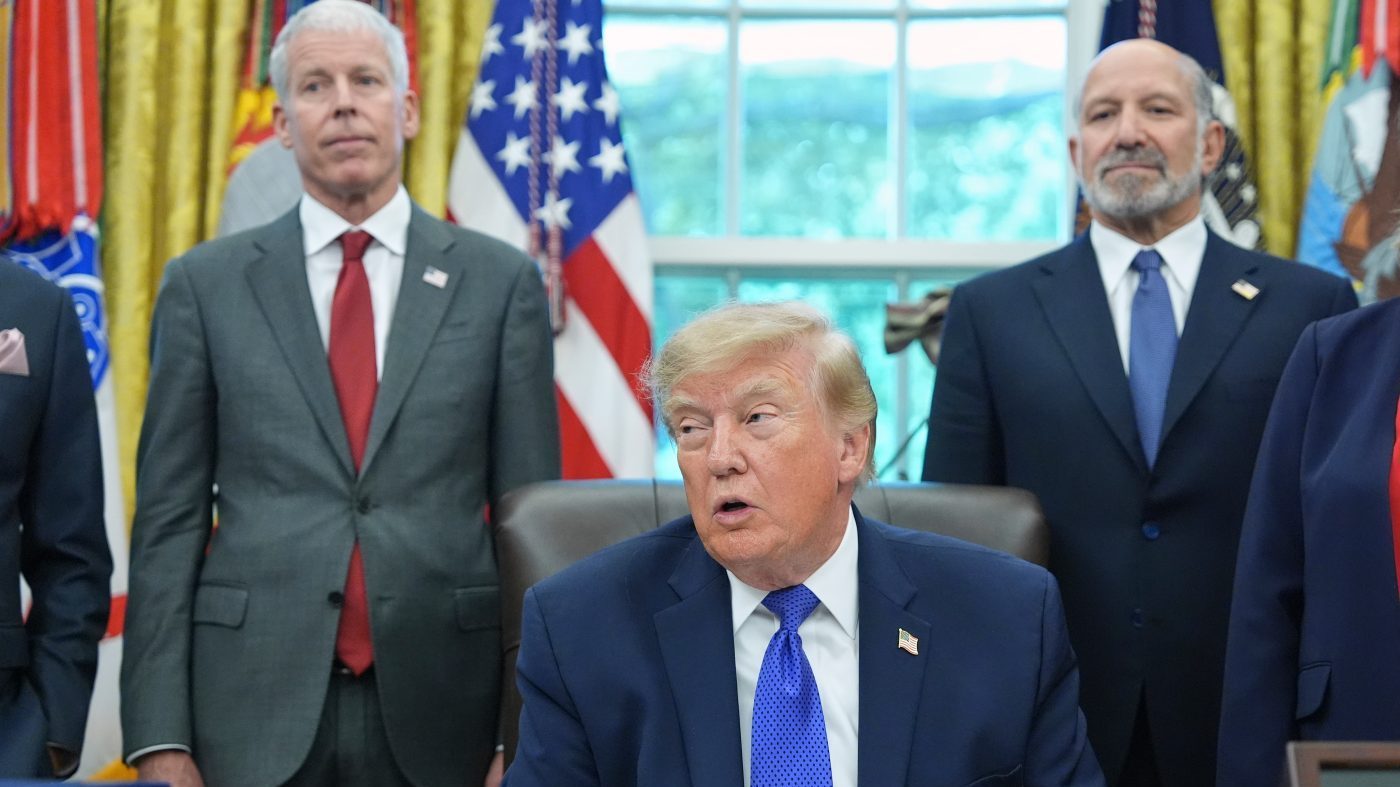
President Donald Trump is set to announce a major financial boost for Alaska’s long-delayed natural gas pipeline on Wednesday, with South Korea committing $54 billion to the project as part of a broader $200 billion investment in U.S. energy infrastructure, according to a White House official.
The Alaska LNG project — an 807-mile pipeline designed to move natural gas from the North Slope to southern Alaska for export to Asian markets — has languished for years amid cost overruns and doubts about its commercial viability. The South Korean commitment, first outlined during trade negotiations last year, could finally provide the financial footing the project has lacked.
Beyond the pipeline, Seoul’s investment package includes eight large-scale nuclear power plants and a 6-gigawatt power generation facility in Texas. The announcement underscores the administration’s push to leverage foreign capital for domestic energy projects, a strategy that has drawn both praise and scrutiny on Capitol Hill.
Trump will be joined at the event by Interior Secretary Doug Burgum, Commerce Secretary Howard Lutnick, and Energy Secretary Chris Wright, along with Alaska Gov. Mike Dunleavy (R), Sen. Dan Sullivan (R-Alaska), and Rep. Nick Begich (R-Alaska). The remarks are scheduled for 3:30 p.m. EDT.
The Alaska LNG project has been a priority for the state’s congressional delegation for years, but previous efforts to secure private financing repeatedly fell short. The infusion of South Korean capital could revive a project that many analysts had written off. The pipeline would not only create construction jobs but also position the United States as a major supplier of liquefied natural gas to Asia, where demand continues to rise.
Still, the deal is likely to face questions about its terms and the extent of South Korean involvement. The administration has not released a detailed breakdown of the $200 billion package, and it remains unclear whether the investments are binding commitments or memoranda of understanding. Lawmakers have recently moved to streamline energy project approvals, with a bipartisan Senate deal to accelerate permits that could benefit the Alaska pipeline.
Critics of the project point to its history of delays and ballooning costs, which have made it a symbol of the challenges facing large-scale energy infrastructure in the United States. Supporters counter that the pipeline is essential for Alaska’s economic future and for diversifying global energy supplies away from adversarial regimes.
The event also comes as the administration faces scrutiny over its use of federal resources for promotional purposes. A recent cease-and-desist letter from JMSN to the White House over a Trump ad has raised questions about the intersection of official business and political messaging. Meanwhile, Democrats have demanded answers on DHS ad spending, signaling that the Alaska announcement could become entangled in broader oversight battles.
For now, the White House is framing the investment as a win for American energy dominance and a sign that Trump’s trade tactics are delivering tangible results. Whether the Alaska LNG project can overcome its troubled past and become a viable export hub will depend on how quickly the South Korean funds materialize and whether the project can secure the remaining financing and regulatory approvals it needs.