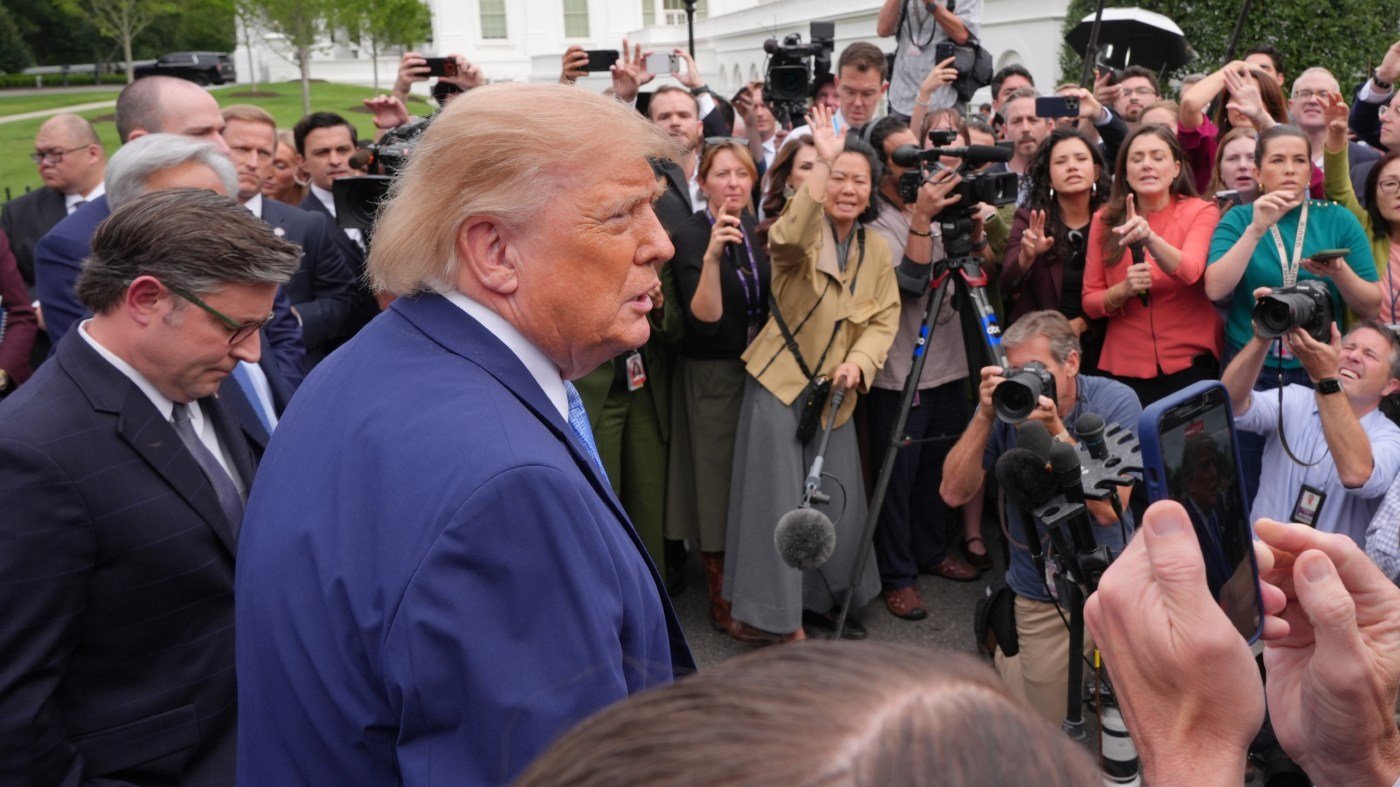
President Trump and House Speaker Mike Johnson (R-La.) unveiled a voluntary agreement Tuesday under which major artificial intelligence companies will police their own development, following a White House meeting with industry titans. The pact, titled the White House Accord on Superintelligence Joint Commitment on Frontier SI Responsibilities, sets out a series of non-binding commitments for AI developers, Johnson said.
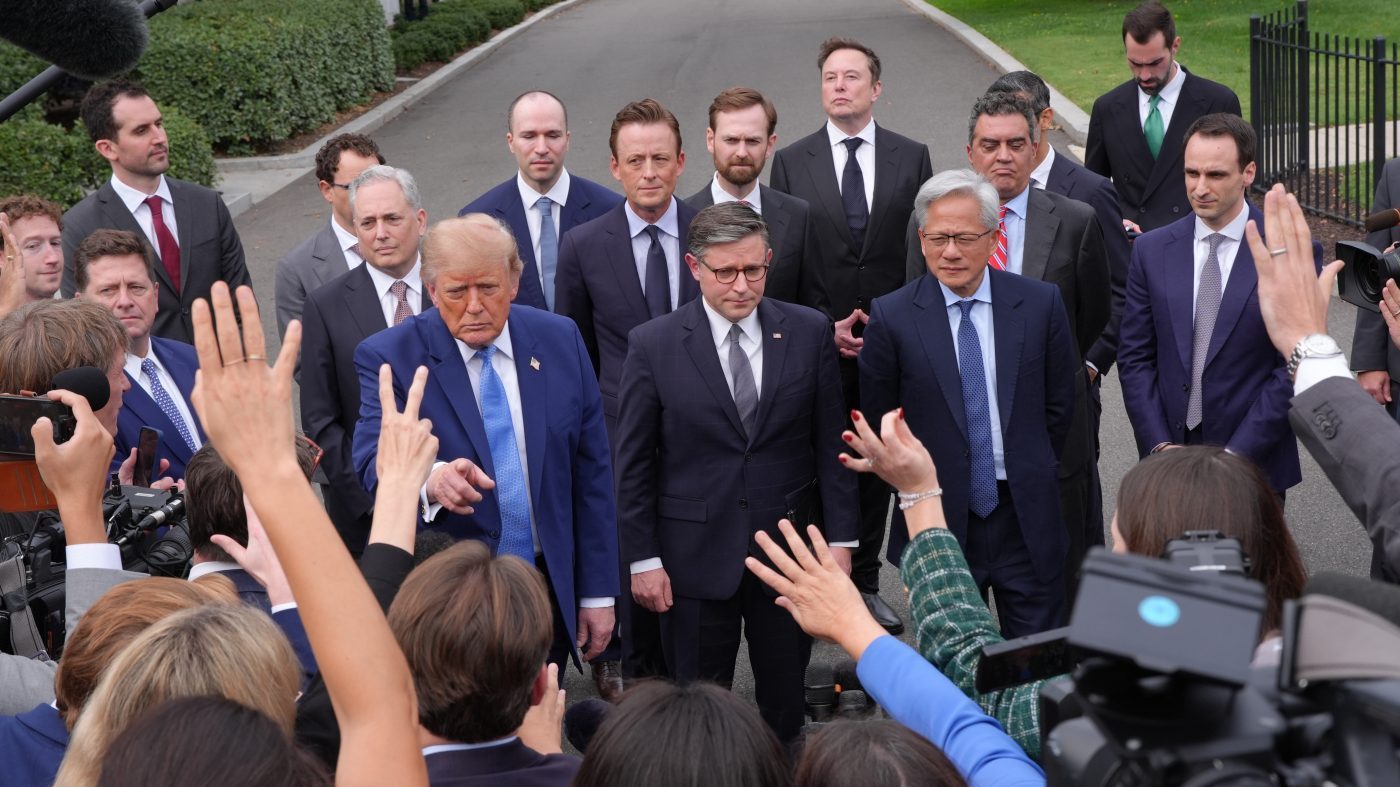
Trump characterized the accord as “almost like a constitution” and “morally binding,” adding that “there’s going to be a tremendous self-policing aspect.” He also floated the possibility of creating a committee to “watch over the whole entity.” The announcement came during a rare appearance on the White House North Lawn, where the president and speaker stood alongside executives from Nvidia, OpenAI, Anthropic, Google, Meta, and xAI.
Among those present were Nvidia CEO Jensen Huang, OpenAI president Greg Brockman, Anthropic CEO Dario Amodei, Google CEO Sundar Pichai, Meta CEO Mark Zuckerberg, and xAI CEO Elon Musk. Zuckerberg framed the effort as a confidence-building measure: “The basic idea is that we want to give the American people and our customers confidence that the technology works in the way that we intend.”
Under the accord, the companies commit to building “robust” internal controls and detection capabilities, Zuckerberg said, coupled with “multiple layers of auditing.” An independent committee of the board of directors will review reports generated by auditors, he added. The commitments are voluntary and lack enforcement mechanisms, raising questions about their effectiveness.
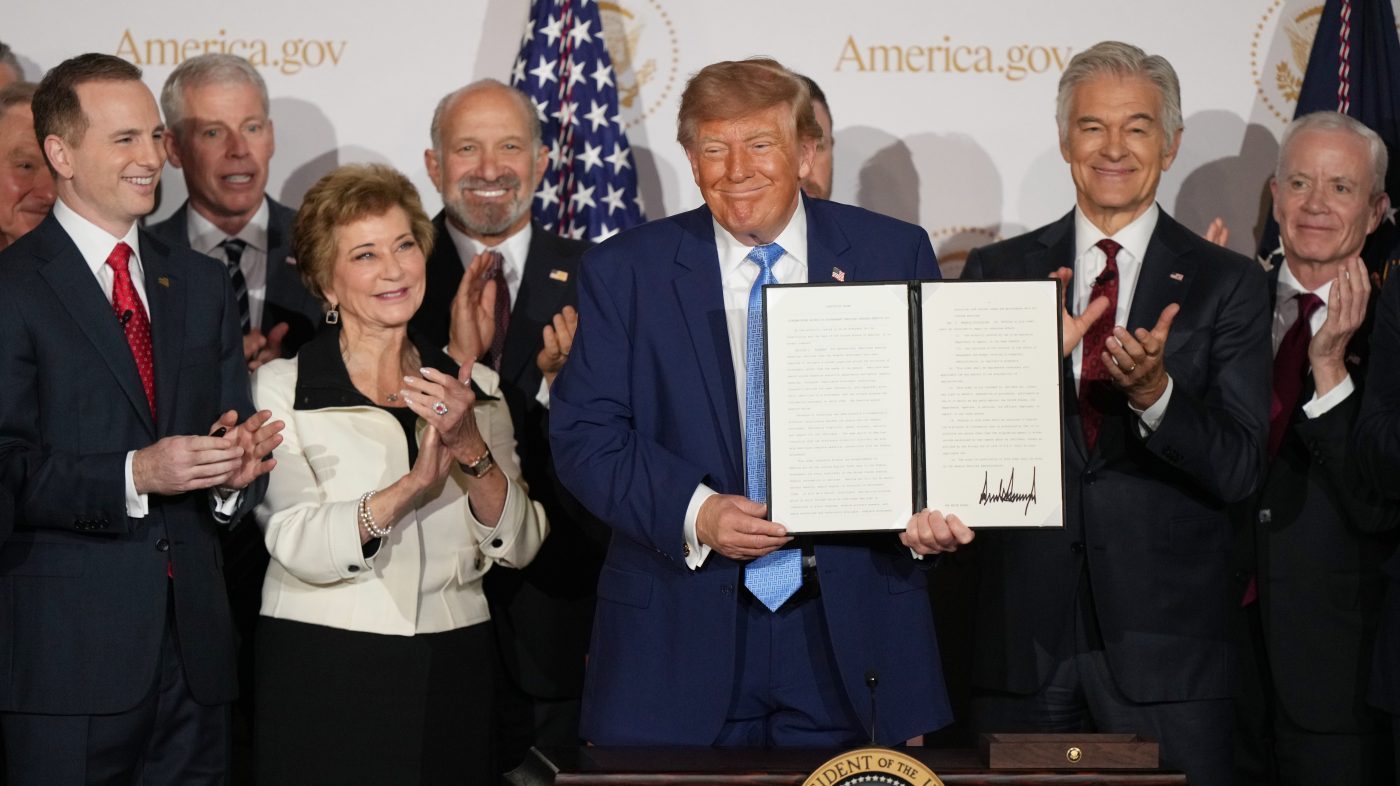
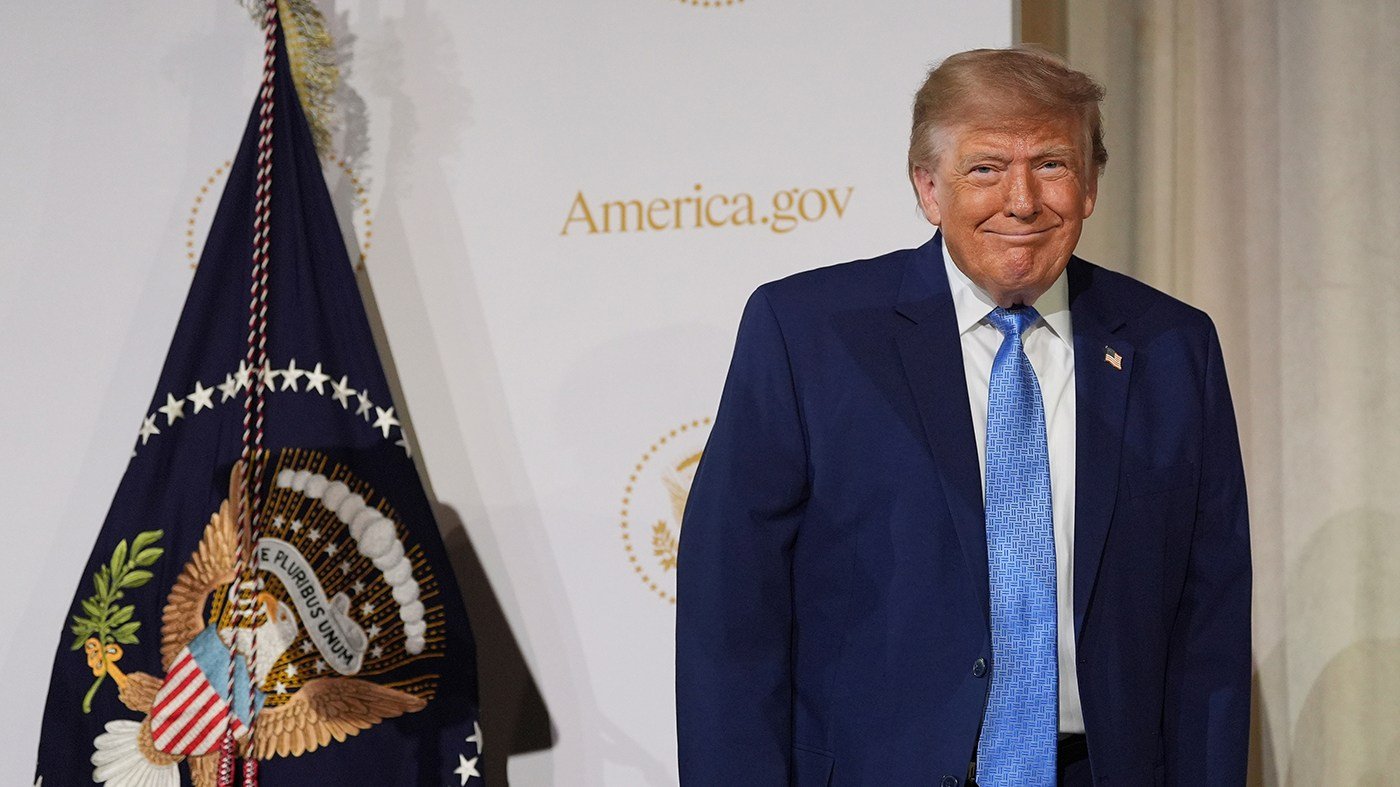
The event coincided with other tech-policy moves by the administration. Trump is expected to sign an executive order later Tuesday renaming artificial intelligence as “superintelligence,” arguing that the technology is not artificial. He also launched America.gov, an AI-powered portal designed to help citizens navigate federal services. Meanwhile, Senate Minority Leader Chuck Schumer (D-N.Y.) blasted a Republican data center bill as an “ineffectual participation trophy,” signaling a potential Democratic effort to block it. The bill, which would require states to consider standards mitigating data centers’ power price impacts, is slated for Senate consideration this week.
Sen. Jon Husted’s (R-Ohio) Ratepayer Protection Act, which cleared the House 417-3, aims to address high electricity costs tied to data centers but may have limited impact even if enacted. It would require states and some utilities to consider a standard forcing data centers to pay for additional costs caused by their large power demand.
The White House gathering underscores the administration’s preference for voluntary industry cooperation over new regulations. Critics argue that self-policing without oversight may not adequately address safety risks. Recent polling indicates that 73% of Americans believe AI firms fall short on safety, a sentiment that could intensify calls for stricter guardrails.
As the AI boom continues, questions linger about its sustainability. Anthropic’s IPO prospectus, for instance, reveals deep reliance on Big Tech partners, while memory-chip trends offer clues about the boom’s trajectory. The White House accord may be a first step, but its voluntary nature leaves the hard questions unanswered.