Jensen Huang's abrupt resignation from Nvidia, the company he founded 33 years ago, has sent ripples through the AI industry and financial markets, with analysts and lawmakers scrambling to assess the fallout. The board's announcement on Thursday followed a New York Times report detailing extramarital affairs, one involving an alleged Chinese spy, casting a shadow over the tech titan's legacy.
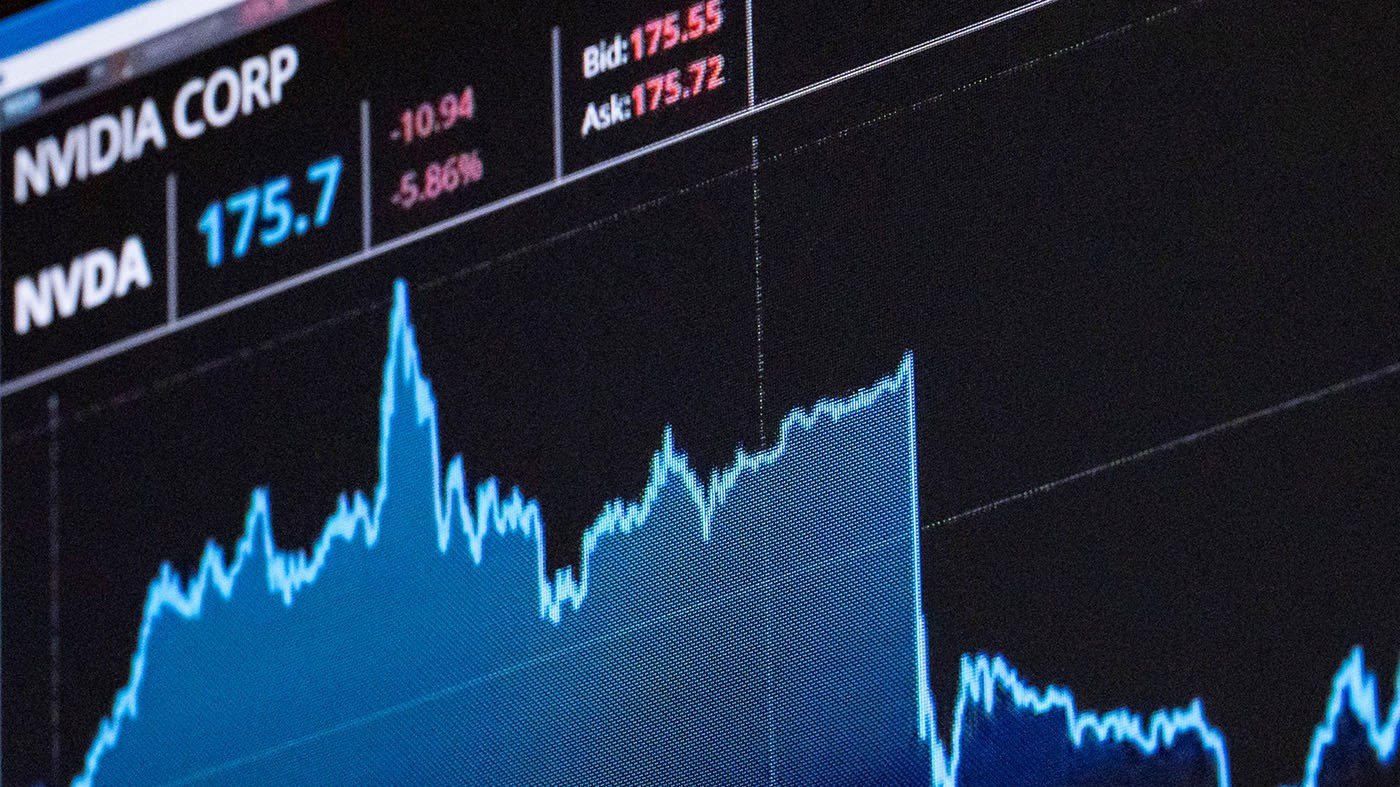
Shares of Nvidia initially plunged below $150 for the first time since June 2025 before recovering, but the long-term implications remain unclear. "I don't think today's trading is really indicative of anything," said Dan Alpert, executive chair at Westwood Capital, noting that bargain hunters may have masked deeper concerns. "Everybody knew that the stock was going to tank this morning, and there's a huge bunch of true believers in the AI space, and they thought they were getting a bargain."
Huang, often dubbed the "Godfather of AI" for his role in powering the AI revolution through Nvidia's graphics processing units (GPUs), leaves a void that tech analyst Dan Ives described as transformative. "What seemed impossible a week ago is now a reality," Ives wrote, adding, "The old Jensen, the black leather jacket, the rock star viewed as the face of the AI boom, is over and in the past."
Nvidia's reach extends across the tech industry, supplying chips to major players like Amazon, Anthropic, Meta, OpenAI, and Oracle. Lawmakers on Capitol Hill are acutely aware of its economic footprint. Sen. Jim Justice (R-W.Va.) acknowledged the company's "amazing" technology but warned, "The magnitude of the impact, I can't tell you. But it could have a major impact." The broader market reflected this uncertainty, with the Dow, Nasdaq, and S&P 500 all dipping slightly on Thursday.
The company's influence is also fiscal: Nvidia, with 19,000 U.S. employees, paid $10 billion in federal and state income taxes in fiscal 2025 and collaborates with government agencies and universities. However, analysts are split on what Huang's exit means for the future. Ryuta Makino of Gabelli Funds predicted near-term stability, citing locked-in deals for 2027 and 2028, but warned of potential long-term erosion. "This can also mean that lower efficiency gains on these servers equals lower AI efficiency and therefore the entire ecosystem will be worse overall," he said, suggesting Nvidia could lose market share by 2029 and 2030.
Alpert raised a more systemic concern: Nvidia's practice of investing in companies that buy its chips, a form of "circular financing" he likened to "Ponzi finance." "Anytime you have the buyer financed by the seller, you end up with misplaced price signals," he explained, warning that this could "eat itself" and destabilize the broader economy.
Despite these worries, some remain bullish. Dan Ives insists Nvidia "remains the clear leader in GPU chips for the AI Revolution" and is "roughly 2-3 years ahead" of competitors. Hendi Susanto, also at Gabelli Funds, echoed this, noting, "The fundamentals have not changed overnight. Demand for AI compute is still strong and customers will not cancel their orders; the roadmaps for the next two years is in place."
Interim CEO Colette Kress, Nvidia's CFO since 2013, now leads the company, with the board considering internal and external candidates. President Trump has floated Apple's Tim Cook as a possible successor, though no decision is imminent. The company is set to report third-quarter earnings on Tuesday, a call that Mark Malek of Siebert Financial called the "most important" in its history. "I will be listening less for the quarter and more for the backlog," he said. "Are the orders still the orders?"
The political dimension is also unfolding, as Huang's resignation has triggered calls for congressional scrutiny over national security implications. Meanwhile, Democrats are probing Trump's Nvidia chip deals with China, and lawmakers continue to demand answers about the company's export practices. The full economic impact of Huang's departure remains uncertain, but as Alpert noted, the coming months will reveal whether the AI-driven economy can weather this leadership vacuum.