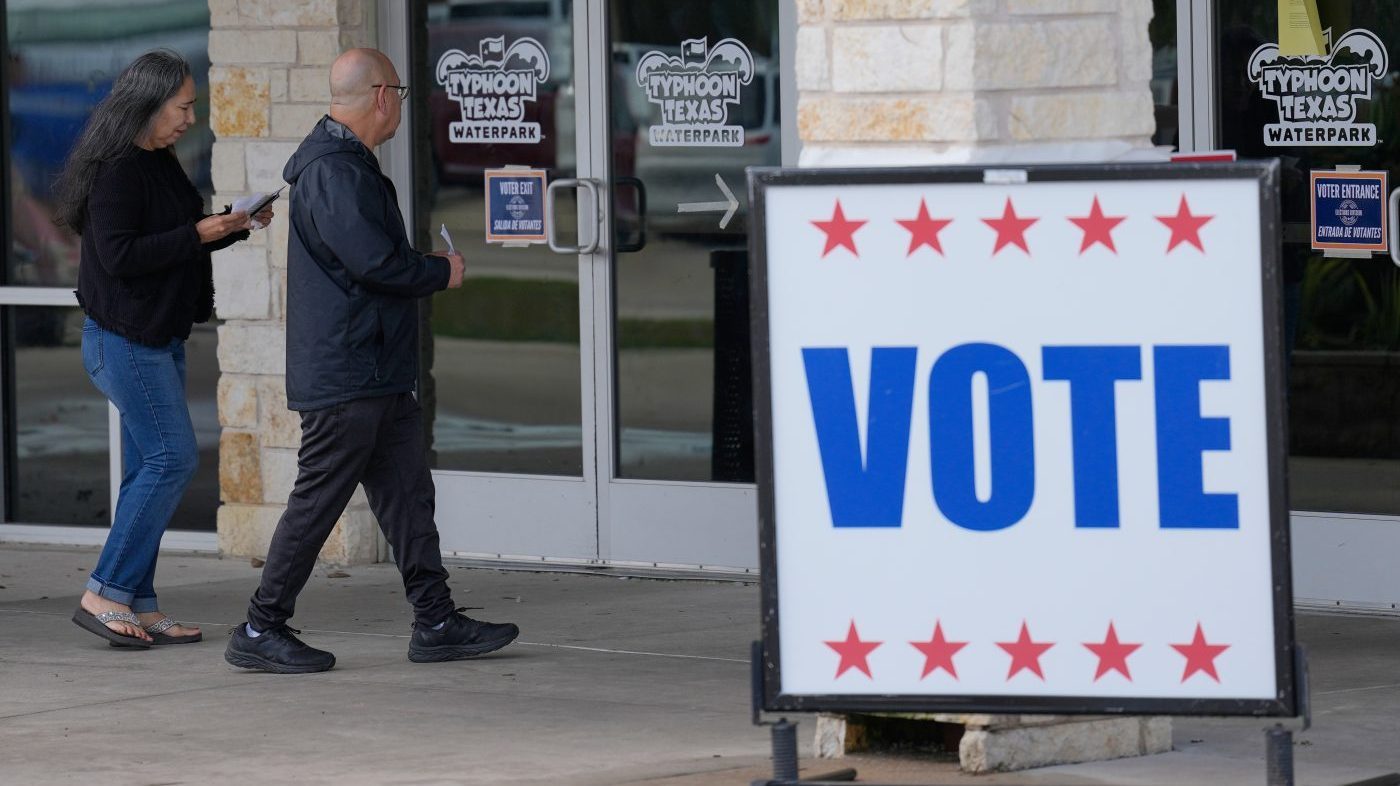
Democrats had plenty to celebrate on election night, capturing governorships, Senate seats, and legislative chambers across the country. But beneath the headlines, a different story emerged: voters in eight states approved ballot measures strengthening voter identification and citizenship requirements—often by margins larger than the Democratic victories themselves.
Ballot Measures Outpace Democratic Candidates
In Ohio, Democrats won the governorship and a Senate seat, yet nearly 3 million voters—over 65 percent—approved a constitutional amendment requiring voter ID. That measure received more than half a million additional votes than the winning Democratic candidates. Ohio had already implemented a photo ID law, and voters chose to make it harder for future legislatures to weaken it.
Nevada saw a similar pattern. Democrats took the governor's mansion, but Question 7, mandating photo ID for in-person voting and identity verification for mail ballots, passed with 62 percent support—over 100,000 more votes than the top Democratic candidates.
North Carolina provided perhaps the clearest evidence of bipartisanship. Democrats flipped the state House for the first time since 1972 and sent former Governor Roy Cooper to the U.S. Senate with nearly 59 percent of the vote. Yet on the same ballot, nearly 60 percent of voters approved a constitutional amendment strengthening voter ID protections.
Citizenship Requirements Gain Traction
Five states—Alaska, Arkansas, Kansas, South Dakota, and West Virginia—passed measures explicitly reserving elections for American citizens. These initiatives garnered between 61 and 70 percent support. In Kansas, Democrat Adam Hamilton ended a 94-year Republican winning streak in Senate races, but the citizenship amendment received over 672,000 votes—more than 112,000 above Hamilton's total.
These votes come as some municipalities have attempted to allow noncitizens to vote in local elections. The measures make clear that state and local elections, like federal ones, are reserved for citizens.
Alaska's Ranked-Choice Chaos
Alaska's experience underscores why such rules matter. Even with Measure Three passing easily, the state's ranked-choice voting system has delayed the outcome of a key Senate race. With two candidates named Dan Sullivan on the ballot—one a Republican incumbent, the other a Democrat—and no one reaching a majority, the state will not finalize results until November 18. The confusion has drawn criticism, but voters there have upheld ranked choice voting in the past.
A Winning Issue for Both Parties
For years, pundits framed voter ID and citizenship verification as partisan wedge issues. But these results show that supporting Democratic candidates does not require opposing election integrity. Voters across the political spectrum are embracing basic safeguards.
Washington has taken notice slowly. Senate Majority Leader John Thune has yet to bring the SAVE America Act to a vote, despite having a Republican majority. The message from voters is clear: election integrity is not a liability—it's a winning issue, even in states that elect Democrats.
As legal battles loom and Democrats push their agenda, these ballot measures serve as a reminder that voters want secure elections, regardless of party. Political majorities shift, but the push for election integrity is here to stay.