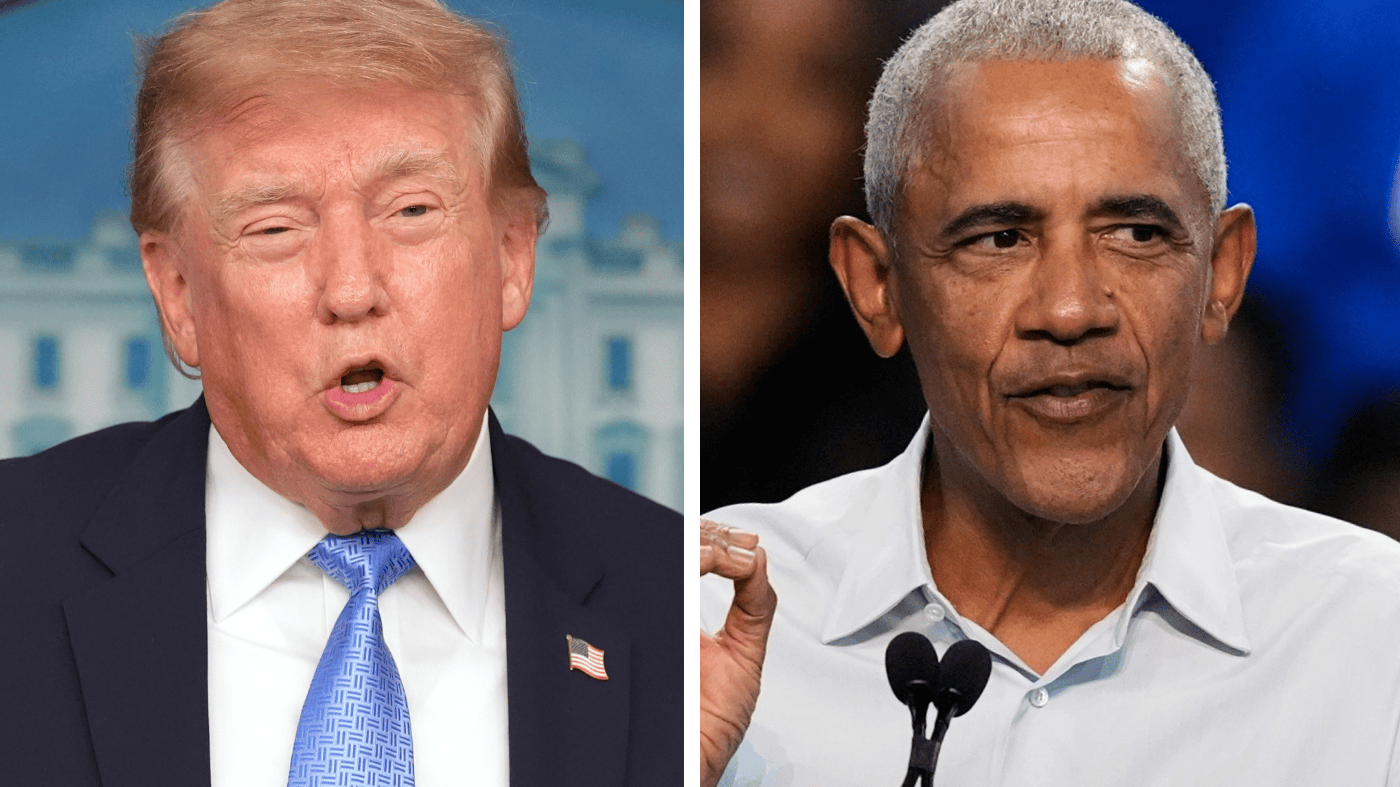
President Trump, in a recent interview, asserted he could "easily" defeat former President Barack Obama in a hypothetical political contest, just days after Republicans suffered significant losses in the midterm elections. Speaking with Stephen A. Smith on "Straight Shooter," Trump touted his electoral performance, claiming, "I got many more votes than he got, and I got many more votes in the states." He further highlighted his record in key battleground states, saying, "If you take a look at Texas, I have the all-time record. Florida, I have the all-time record."
When pressed by Smith on whether he could beat Obama, Trump responded, "I think I could beat him easily," adding, "I think he's highly overrated." This is not the first time Trump has floated the idea of a third term, despite constitutional term limits, a topic he has revisited in various forums.
The interview also delved into the GOP's electoral setbacks. Trump acknowledged that Republican voters "didn't like the candidates" backed by the party establishment, a point he tied to his own endorsement decisions. He defended his choice to back Texas Attorney General Ken Paxton over incumbent Senator John Cornyn in the GOP Senate primary, labeling Cornyn "very disloyal to me." Trump elaborated, "He wasn't for me, and I remember that. You know, I have a very good memory." Paxton ultimately lost the general election to Democrat James Talarico, a win that underscored Democratic gains in traditionally red territory.
Trump also addressed his administration's military strikes against Iran, which have drawn public criticism amid rising energy costs linked to the conflict. He framed the decision as historically significant, stating, "I think historically that's going to be a great decision, I hope. But short-term, I guess, it's tougher politically. I knew that."
The president's comments come as he continues to wield influence over the GOP, even as some Republicans question his electoral viability. His remarks on Obama and the midterms reflect a broader narrative of grievance and self-justification, resonating with his base while alienating moderate voters.
Trump's persistent talk of a third term remains a contentious issue, with legal scholars and opponents pointing to the 22nd Amendment. Meanwhile, his endorsement record in the midterms was mixed, with some picks succeeding and others, like Paxton, faltering.
In the aftermath of the elections, Trump has sought to downplay GOP losses, crediting individual wins like that in Mississippi while dismissing broader Democratic gains. His focus on loyalty and personal vendettas, as seen in the Cornyn-Paxton episode, may shape his future political maneuvers as he eyes the next cycle.
As the administration navigates fallout from the Iran strikes, Trump's approval ratings remain under pressure, with energy prices and international instability dominating headlines. His defensive posture in the interview suggests a recognition of political vulnerability, even as he projects confidence in his own appeal.
The president's remarks are likely to fuel further speculation about his political future and his ongoing rivalry with Obama, a figure who remains popular among Democrats. Whether Trump's bravado translates into electoral success remains an open question, but his rhetoric underscores the deep partisan divides that continue to define American politics.