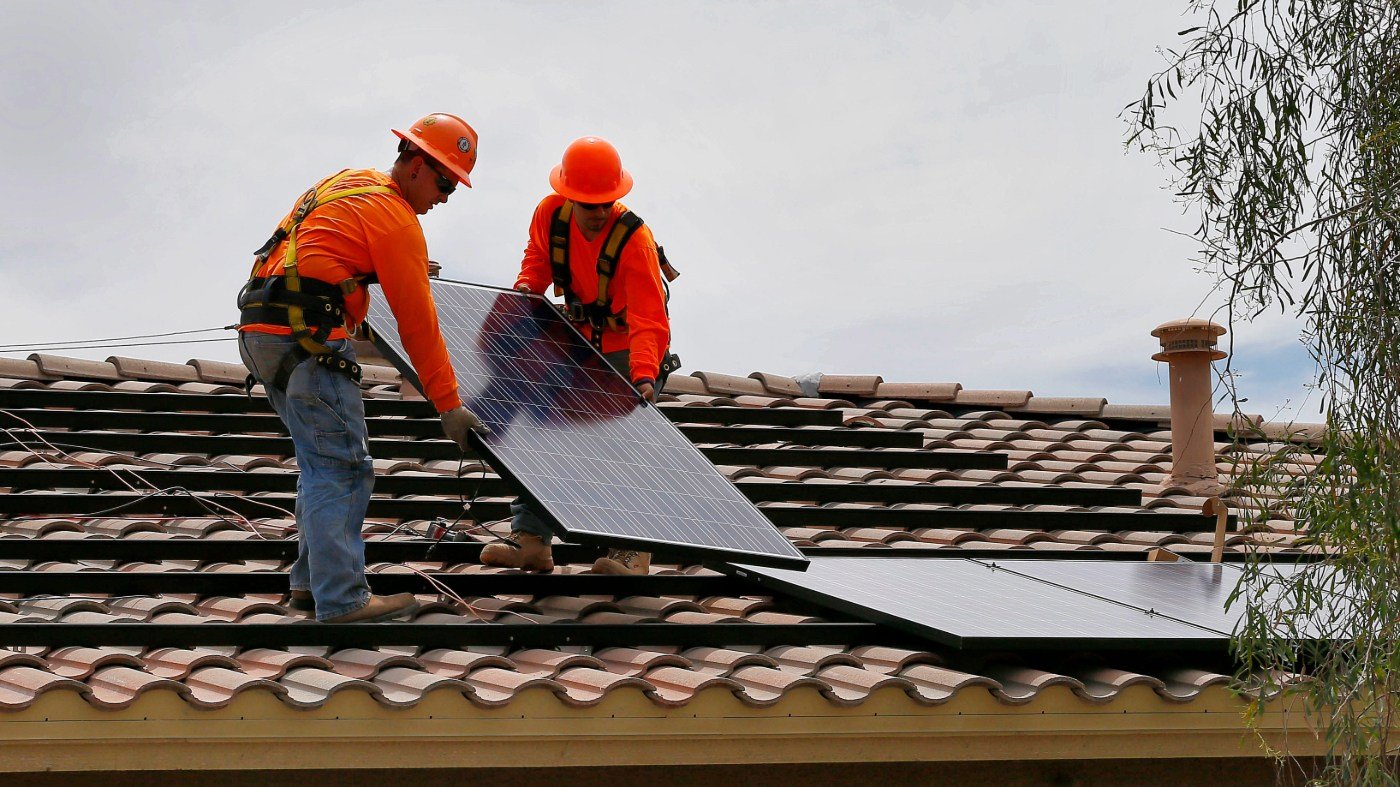
When President Trump returned to the White House last year, his administration's energy agenda was swift and disruptive. Executive orders and legislation have weakened federal agencies, put $14 billion in clean energy and manufacturing investments at risk, and introduced tariff chaos that has rattled markets. The administration has also targeted programs designed to ease energy burdens for households.
Our organization, Third Way, has been fighting these moves at the federal level. But we've also been working directly with governors' offices and state agencies. Increasingly, states are becoming the testing grounds for responsible, forward-looking energy policy, even when Washington pulls back.
The urgency is clear. This year, three-quarters of Americans say their home energy bills have gone up. Six months into the president's military confrontation with Iran, gasoline and diesel prices have repeatedly set new records, with no end in sight.
Trump has waved off affordability concerns, but states are not waiting. They are confronting the surge in electricity demand from data centers and pushing for more generation and transmission capacity. Governors are turning rhetoric about "ratepayer protection" into concrete rules. Arizona, Colorado, Michigan, New Jersey, North Carolina, Pennsylvania, and Virginia are either designing or have implemented pricing structures that make large power users pay their fair share, preventing residential customers from subsidizing corporate energy use.
In Pennsylvania, Governor Josh Shapiro has intervened to block rate increases while advocating for broader reforms. Massachusetts Governor Maura Healey, Arizona Governor Katie Hobbs, North Carolina Governor Josh Stein, and Maine Governor Janet Mills have all set up expert panels to improve utility oversight, cut red tape for energy investments, and stop data centers from offloading costs onto ordinary ratepayers.
Streamlining permitting and ensuring good governance are key to easing the cost crisis. But these states are also backing innovative technologies. We've heard from investors and entrepreneurs who are ready to fill the vacuum left by federal inaction. They see opportunities to expand investment and create jobs in emerging energy sectors.
Take North Carolina's work on enhanced rock weathering, a promising agricultural technique that can improve crop yields and pull carbon dioxide from the air. Third Way recently brought together state officials, mining companies, agribusinesses, environmental groups, and universities to explore how this could benefit local economies. North Carolina could be a model for other states looking to engage stakeholders and attract innovators.
This isn't the first time states have led during an energy crisis. The Massachusetts Clean Energy Center and the New York State Energy Research and Development Authority were born out of the 1970s oil shocks. Today, with global conflict, soaring demand, aging infrastructure, and a federal government that has stepped back, states are once again rising to the occasion.
They have the expertise, the ability to focus on local solutions, and a willingness to cooperate regionally. We've seen them bring together utilities, developers, labor, environmental advocates, and state officials to craft pragmatic, durable policies.
Americans cannot afford to wait for Congress or the president to act. Advocacy groups like Third Way shouldn't wait either. We need to work with states to refine ideas and elevate what works. By pushing back against the administration's worst policies and supporting state-led innovation, we can deliver real results for voters across the country.