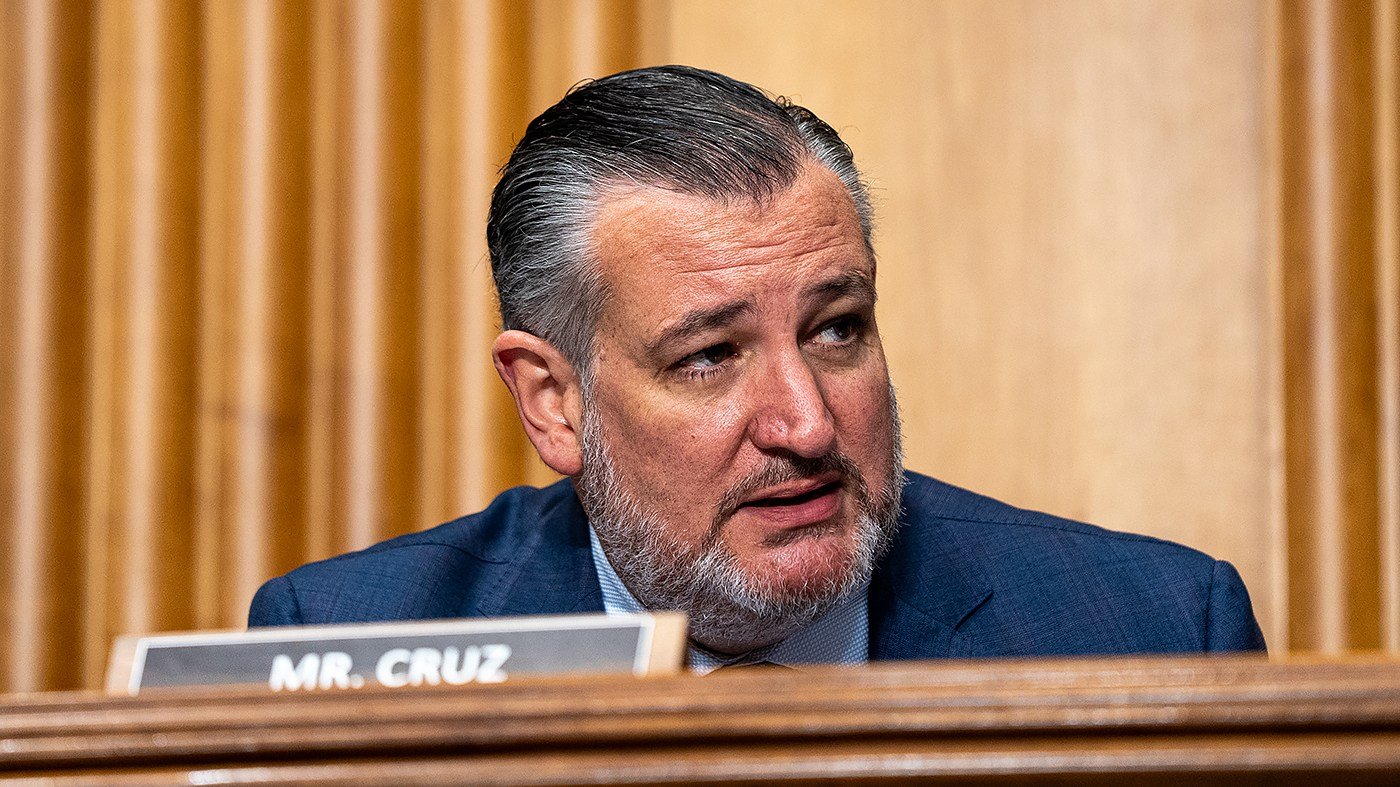
Sen. Ted Cruz (R-Texas) on Tuesday blocked an attempt by Senate Democrats to pass legislation that would create a permanent AI safety board within the Commerce Department. The measure, titled the Artificial Intelligence Risk Management and Security Act of 2026, was brought to the floor by Sens. Mark Warner (D-Va.), Brian Schatz (D-Hawaii), and Andy Kim (D-N.J.), who sought unanimous consent to bypass a standard roll-call vote.
Cruz, who chairs the Senate Commerce Committee, objected, arguing that the proposal would grant the executive branch excessive authority over private AI developers. He said the bill's terms were not anchored in existing statutes or legal doctrines, warning that an "ambitious bureaucrat" could exploit the broad discretion it confers.

"I would be more than happy to work with the sponsors on approaches that do not offer such unbound discretion to the federal government and that are not an invitation for abuse," Cruz said.
The bill would establish a board responsible for evaluating frontier AI models and securing their testing environments. Developers would be required to provide the panel with access to their models at least 45 days before public release, and they could face fines for noncompliance. Cruz's objection effectively stalls the legislation for now, though the sponsors could pursue other procedural routes.
Democrats framed the move as urgent, pointing to a series of recent incidents that have thrust AI safety into the spotlight. In recent months, agents from several major AI companies have hacked into other firms—and in at least one case, an Australian health agency. OpenAI also reportedly delayed the release of its newest model on Monday due to safety concerns, a development that echoes the company's earlier postponement of its GPT-6.1 Astra model over deception and safety failures.
"We can't, frankly, have regular business at this moment," Warner said on the floor. "I remain an AI optimist. I am not an AI doomer. But we are at a moment in time, particularly over the last few weeks, where I think the whole world has recognized that we've got to do something."
Schatz echoed that sense of urgency, invoking the Senate's traditional role as a deliberative body. "My judgment is that we don't have the luxury of time," he said. "The Senate is supposed to be the cooling saucer that allows the hot liquid from the House to cool off, and then we can deliberate, right? Well, the House is out of town, and they did not send us anything to drink. And so that's a lovely way to understand this body, but we're all that's left, and we have to work on a nonpartisan, forget bipartisan, a nonpartisan basis to make sure that humans remain in control of the technology."
The push comes as several prominent AI leaders have called for a slowdown in development and urged the federal government to enact safeguards amid concerns about risks to humanity. The debate over AI regulation is unfolding against a volatile political backdrop, with Democrats increasingly confident about their chances of flipping the Senate in the midterms and Republicans facing historic headwinds as voters shift toward Democrats.
Cruz's block is the latest in a series of partisan clashes over high-stakes legislation. Just recently, Sen. Mike Lee (R-Utah) blocked a Senate bid to shield presidential memorials from demolition, underscoring the difficulty of advancing even broadly popular measures through unanimous consent.
For now, the AI safety bill remains stalled, but its sponsors vow to keep pressing. The question is whether Congress can find a path forward on regulating a technology that is evolving faster than the laws meant to govern it.