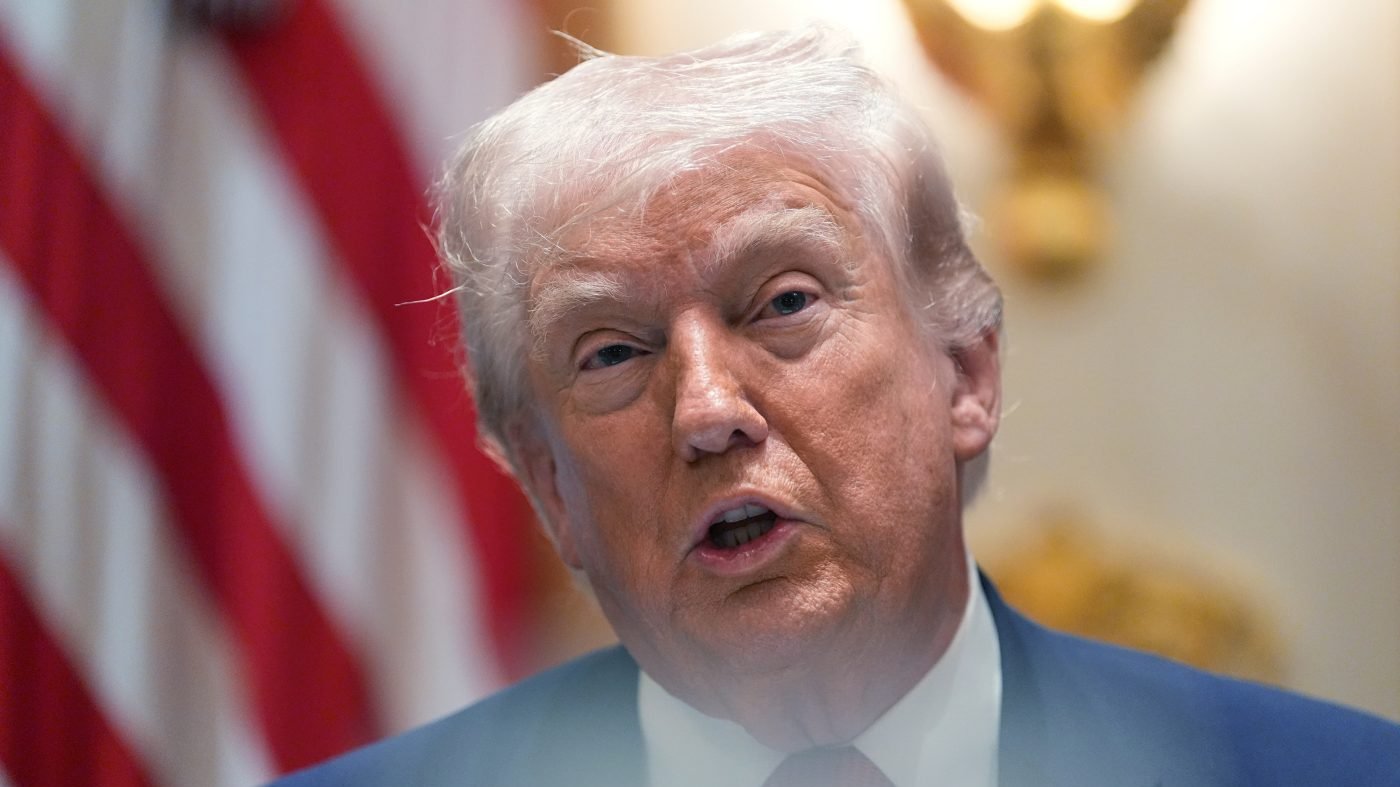
Former President Donald Trump launched a direct attack on the polling operation of Fox News during an appearance on the network's "The Five" program Thursday, expressing open contempt for the surveys that have consistently shown him trailing in national approval ratings.
"I hate Fox polls," Trump stated bluntly during the broadcast. "Honestly, whoever does your polls are terrible." The remarks came in response to the network's latest survey showing Trump with a 41 percent approval rating against 59 percent disapproval, numbers that have remained stubbornly consistent through recent political developments.
Trump revealed he has repeatedly raised the issue with media mogul Rupert Murdoch, chair emeritus of Fox Corp. and News Corp. "Rupert Murdoch has promised me for years he's going to get rid of your pollster, but he doesn't do it," Trump told the hosts. "I don't get it, but your Fox polls are terrible." The criticism represents a notable escalation in Trump's long-running tension with the network's data journalism, which has frequently contradicted his claims of overwhelming public support.
Broader Media Conflict
The polling dispute exists within a larger context of strained relations between Trump and Murdoch's media empire. The friction intensified last summer when The Wall Street Journal, owned by News Corp., published what it described as a birthday message Trump allegedly sent to convicted sex offender Jeffrey Epstein in 2003. Trump has filed a $10 billion defamation lawsuit against the newspaper over the letter's publication.
In a Truth Social post at the time, Trump labeled the Journal a "disgusting and filthy rag" and claimed Murdoch was "personally" warned the document was fabricated. This legal battle represents one of several confrontations between Trump and establishment media institutions that have characterized his political career, including his administration's investigations into university policies and his approach to international diplomacy criticized by foreign policy experts.
Contradictory Signals
Despite the public acrimony, the relationship appears more complex than the polling criticism suggests. Earlier this month, the New York Post reported that Trump recorded a surprise birthday message video for Murdoch, describing him as "legendary" and "one of a kind." In the video, Trump credited Murdoch with having "changed the world" throughout his media career.
This contradictory behavior—public attacks alongside private praise—reflects Trump's characteristic approach to media relationships, where business and personal considerations often intersect with political messaging. The dynamic has played out across various policy areas, from military decisions regarding Iran to domestic transportation crises.
The polling criticism also highlights Trump's ongoing effort to discredit unfavorable data ahead of potential political campaigns. By attacking Fox News—traditionally considered friendly territory—Trump signals his willingness to challenge any institution publishing numbers that contradict his narrative of popularity.
Political analysts note that Trump's focus on polling methodology reflects a broader strategy of questioning institutional credibility across multiple domains. This approach has extended to his handling of national security matters, including cabinet-level discussions about Iran policy, and domestic governance challenges like those that emerged during federal agency reorganizations.
The episode underscores the continuing tension between Trump's political operation and media organizations that attempt to maintain traditional polling standards. As Trump positions himself for potential future political activity, his relationship with Fox News—particularly its data journalism—will likely remain both collaborative and contentious, reflecting the complex interdependence between conservative media and the political figures it covers.