The U.S. Department of Education will abandon its current Washington, D.C., headquarters this summer, a direct consequence of the agency's dramatic downsizing under former President Donald Trump. The move, announced Thursday, comes after staffing cuts left the Lyndon B. Johnson Building approximately 70 percent empty.
A Smaller Footprint, A Symbolic Shift
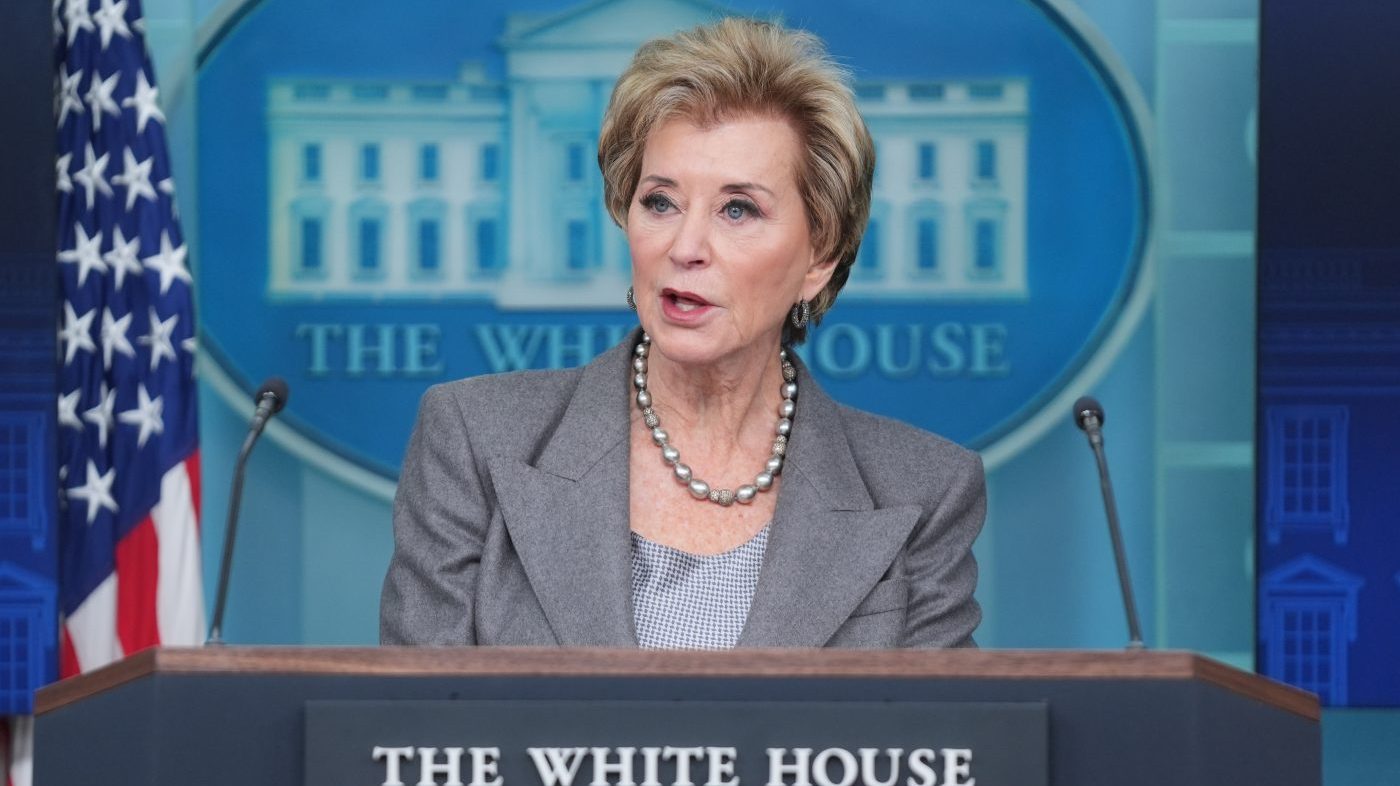
Secretary of Education Linda McMahon framed the relocation as the culmination of a deliberate policy to reduce federal influence in education. "One year ago, President Trump signed one of the most consequential executive orders of his presidency – to break up the federal education bureaucracy and return education to the states," McMahon stated. She characterized the department's shift to a smaller facility as "an important step in our efforts to forge brighter futures for our nation’s students" while honoring taxpayers.

The department estimates the move will save $4.8 million annually and is scheduled for August. The vacated LBJ Building will be transferred to the Department of Energy, which projects saving $350 million in maintenance costs compared to its current facility. Energy Secretary Chris Wright said the transition "will deliver significant taxpayer savings and will ensure the Energy Department continues to deliver on its mission."
The Staffing Reality Behind the Empty Space
The headquarters vacancy rate is not an accident of the real estate market but the result of sustained personnel reductions. Since the beginning of the Trump administration, the Education Department's workforce has been slashed from roughly 4,000 employees to an estimated 2,000. These cuts have affected core offices, including the Office for Civil Rights and the Federal Student Aid office, which manages the nation's student loan portfolio.
This staffing drawdown is part of a broader administrative agenda pursued by Trump's cabinet, which has frequently prioritized shrinking federal agencies. The department has also offloaded programs to other agencies, most notably transferring a significant portion of its student loan responsibilities to the Treasury Department.
Political Context and Future Implications
The announcement underscores the Trump administration's enduring focus on restructuring executive branch operations, even as it contends with significant foreign policy challenges. The move to physically shrink the Education Department's presence in the capital is a tangible symbol of its reduced policy role, aligning with conservative goals of devolving education authority to state and local governments.
Critics argue that the downsizing, particularly within the Office for Civil Rights, undermines the federal government's ability to enforce anti-discrimination laws in schools. The administration, however, has simultaneously launched high-profile civil rights investigations into several universities, indicating a targeted rather than blanket approach to enforcement.
The relocation plan now enters a logistical phase managed by the General Services Administration. While framed as a cost-saving measure, the departure from the LBJ Building marks a definitive endpoint for an agency that has been fundamentally reshaped over the past three years, setting the stage for future political battles over the federal role in American education.