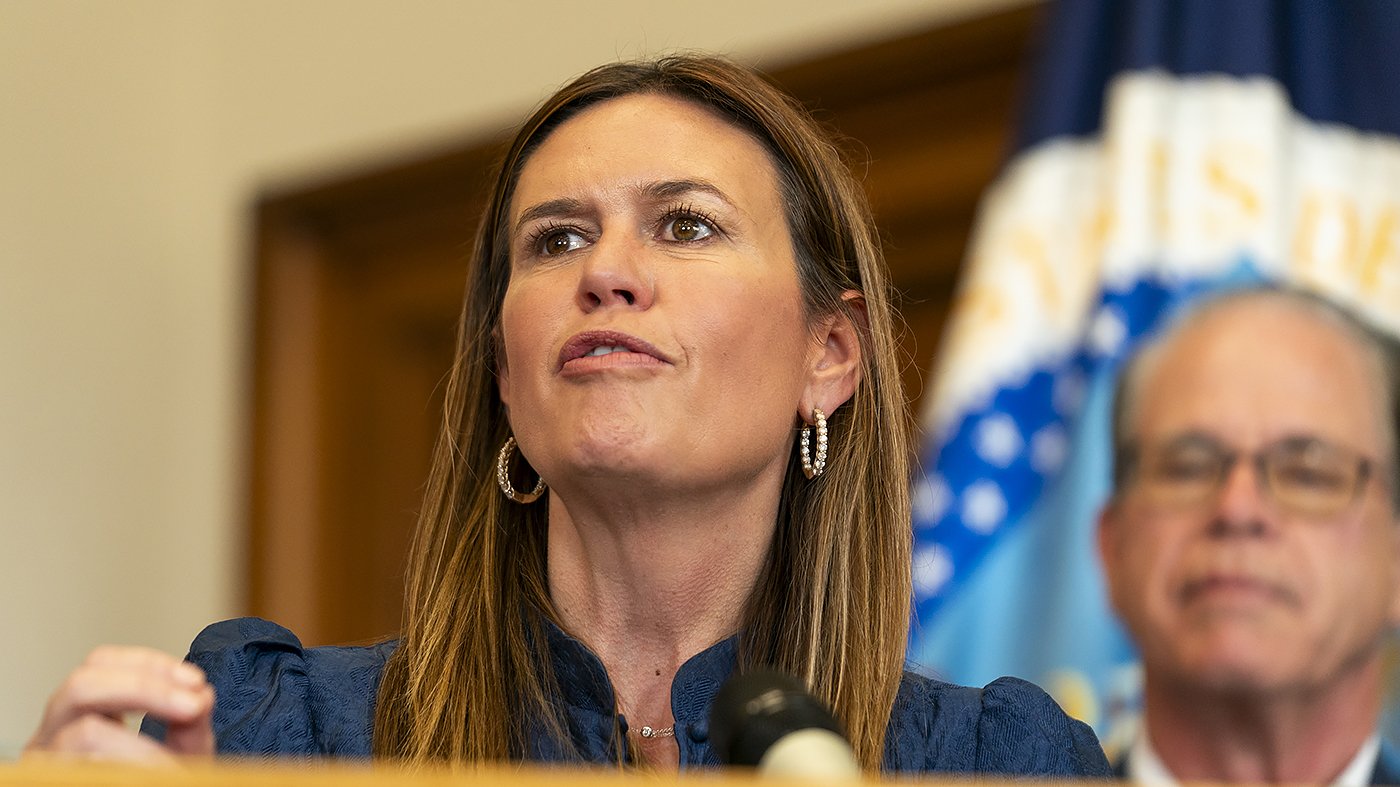
Arkansas Governor Sarah Huckabee Sanders and Maryland Governor Wes Moore, a Republican and a Democrat respectively, made a joint appearance on NBC's Meet the Press this Mother's Day to highlight the urgent need for bipartisan action on maternal healthcare. Both governors, who took office in January 2023, detailed state-level initiatives aimed at reducing preventable deaths and improving access to care for mothers across the country.
Arkansas Takes a Multi-Pronged Approach
Sanders, a mother of three, pointed to the Healthy Moms, Healthy Babies Act, which she signed into law last year. The legislation directs roughly $45 million annually toward maternal health programs and includes presumptive Medicaid eligibility for pregnant women—a move designed to streamline access to coverage. Her administration also recently launched a statewide ad campaign promoting free services at health units in all 75 Arkansas counties. “If we can see these women and help them and support them from the very beginning of their pregnancy all the way through, then we can help address some of these problems,” Sanders told host Kristen Welker. “We’re already seeing the positive impact by raising that awareness and opening up a lot of access.”

The governor emphasized a “no wrong door” philosophy, using an integrated technology platform to connect women with nonprofit and faith-based resources regardless of where they first seek help.
Maryland Bets on Cash Assistance and Anti-Poverty Initiatives
Moore outlined a different strategy, focusing on direct financial support and systemic anti-poverty efforts. His administration has partnered with the Bridge Project to provide cash assistance to 150 families in areas of Maryland with long-standing concentrated poverty. The program offers financial aid and community resources during pregnancy and the first several years of a child’s life. “It’s now coming off the heels of additional initiatives that we pulled together, where we’ve reestablished the Governor’s Office for Children,” Moore said. He also launched the ENOUGH Initiative, which stands for Engaging Neighborhoods, Organizations, Unions, Governments, and Households—described as the nation’s first place-based, state-led anti-poverty initiative.
Moore stressed the need to diversify the healthcare workforce, calling for stronger pipelines to recruit more physicians and nurses of color. “We need to make sure that our physicians and our nurses are trained up,” he said. “But also, what we’ve got to do is we’ve got to strengthen the pipeline to get more physicians and nurses of color who are actually in there to increase the probability that when a person comes in they’re going to have someone who’s going to be treating them and supporting them who looks like them, who represents them.”
Stark Data Underscores the Crisis
The urgency of the issue is backed by sobering statistics. According to the Centers for Disease Control and Prevention, 16.6 maternal deaths per 100,000 births were recorded in the U.S. in December—down from a peak of 33.2 per 100,000 in 2021 but still higher than the 11.3 per 100,000 reported three decades ago. The CDC also noted that nearly 80% of pregnancy-related deaths are preventable. Racial disparities remain stark: Black mothers die at a rate of 46.3 per 100,000, far exceeding rates for White, Hispanic, and Asian mothers.
Both governors acknowledged the racial gap but offered different solutions. Sanders highlighted the role of faith leaders and her 10:33 initiative, which connects people in poverty with community and religious organizations. Moore emphasized diversifying the medical workforce. The bipartisan tone of the discussion echoed broader trends in Washington, where lawmakers are increasingly seeking common ground on health issues. Recent bipartisan bills on bereavement leave and home visiting strategies reflect a growing consensus that maternal health requires cross-aisle cooperation.