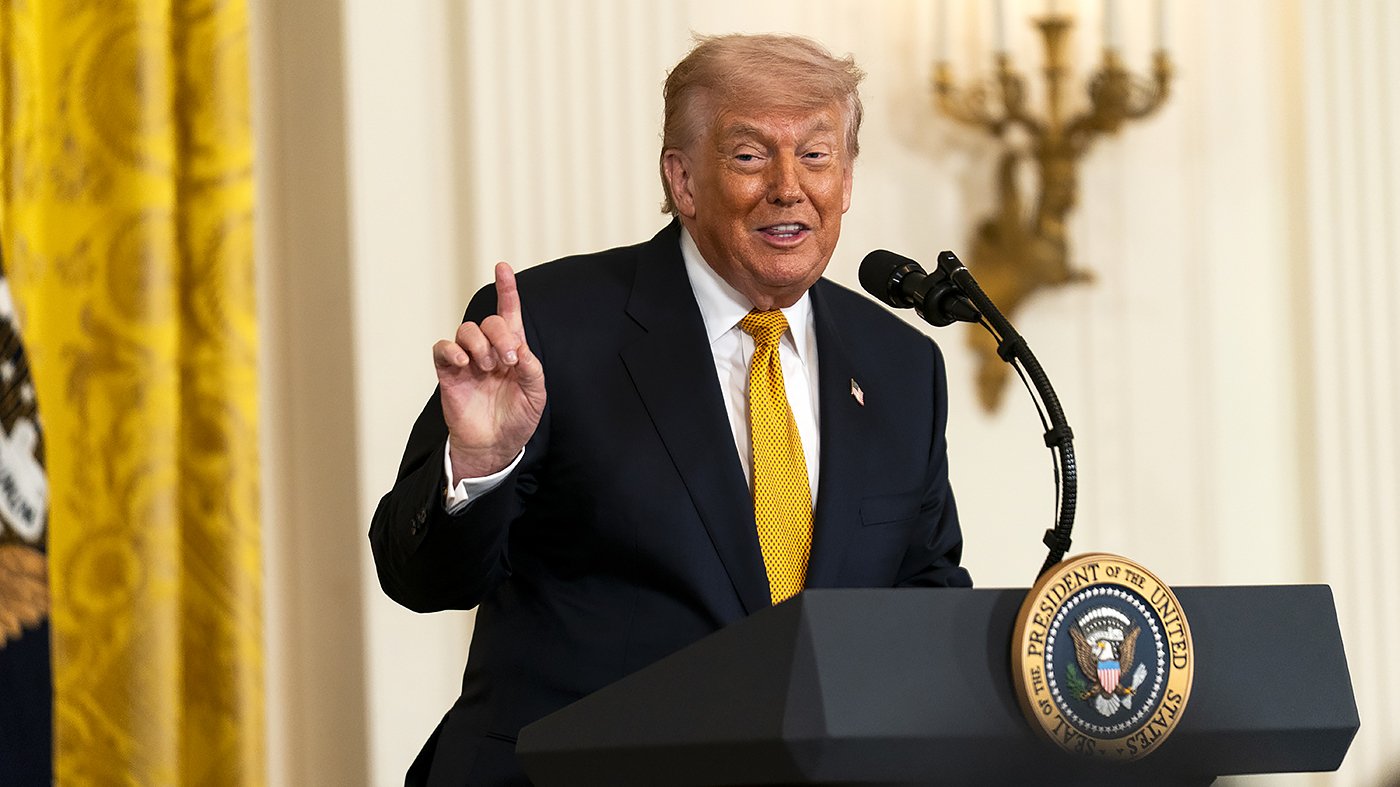
President Donald Trump escalated his trade nationalism on Sunday, declaring in a social media post that all federal agencies must purchase American-made products with no exceptions. The directive represents his latest attempt to tighten procurement rules and curb what he calls a long-standing pattern of sending taxpayer dollars overseas.
“ALL FEDERAL AGENCIES MUST BUY AMERICAN — NO EXCUSES! For decades, Washington politicians sent your Taxpayer Dollars overseas, and let Foreign Countries rip us off while our Workers, Factories, and Supply Chains were left behind,” Trump wrote on Truth Social. He added, “That betrayal is OVER.”
The Buy American Act of 1933 already requires federal agencies to acquire domestic end products for public use, but the law includes exceptions for unreasonable cost, product unavailability, or when domestic preference conflicts with public interest. Trump has long criticized the widespread use of waivers that allow agencies to bypass these requirements, accusing past administrations of undermining American industry.
In his post, Trump framed the push as part of his broader America First agenda. “No more games. No more fake labels. No more ripping off the American Taxpayer. AMERICA FIRST means BUY AMERICAN!” he wrote. “My Administration is strengthening MADE IN AMERICA Laws, ENDING Waiver Loopholes, and STOPPING the Federal Government from buying Foreign Products when Great American Products are available.”
Renewed Crackdown on Mislabeling
The president’s renewed focus builds on a March executive order titled “Ensuring Truthful Advertising of Products Claiming To Be Made in America,” which aims to crack down on false claims of American-made products, particularly from foreign manufacturers and sellers on digital marketplaces. Trump has argued that deceptive labeling “targets patriotic consumers” and undermines domestic producers.
During his first term, Trump signed the “Buy American, Hire American” executive order in April 2017, which increased enforcement of existing Buy American laws. Two years later, he issued “Strengthening Buy-American Preferences for Infrastructure Projects,” requiring that all manufacturing processes for iron and steel—from initial melting through coating—occur in the U.S. to qualify as American-made.
In his second term, Trump has pressured foreign auto companies to build factories in the United States, often tying such investments to trade agreements. These deals include commitments for multimillion-dollar plants aimed at boosting U.S. jobs and export profits. Critics, however, warn that his aggressive trade stance risks alienating allies and disrupting supply chains, as Trump's Iran strategy in disarray shows the perils of unilateral economic pressure.
Some analysts view Trump’s renewed Buy American push as a populist rallying cry that resonates with his base but raises questions about cost and efficiency. The approach has drawn comparisons to what some label “Republican Socialism,” as analysts warn it breaks with traditional conservatism by expanding government intervention in markets.
Political and Economic Implications
The president’s latest order comes amid broader debates over trade policy and economic nationalism. While supporters argue it protects American workers and industries, opponents say it could lead to higher costs for government projects and reduced competition. The White House has not yet detailed how agencies will enforce the new directive or whether existing waivers will be immediately revoked.
Trump’s focus on domestic procurement also intersects with his ongoing battles over election integrity and governance. As Trump's election integrity push is seen by some as a strategy to undermine democracy, his economic nationalism may further polarize an already divided electorate. Meanwhile, public opinion on money in politics remains bipartisan, with 72% of Americans saying money floods politics, a sentiment Trump often channels in his anti-establishment rhetoric.
For now, the president’s Sunday declaration signals that Buy American will remain a central pillar of his second-term agenda, with potential ripple effects across federal contracting, trade negotiations, and domestic manufacturing.