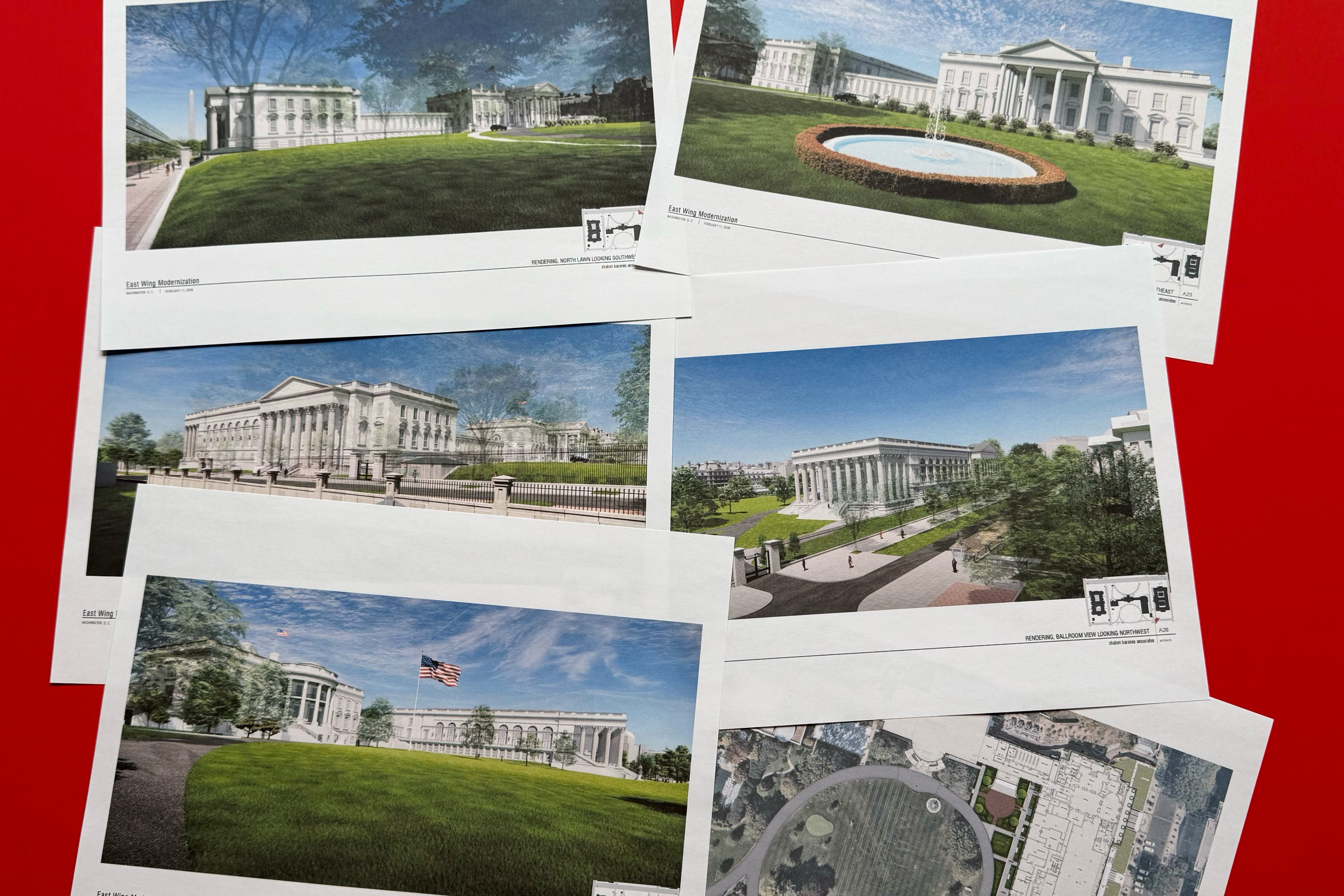
The Trump administration has launched an emergency legal bid to restart construction on a controversial $400 million renovation of the White House East Wing, after a federal judge halted the project for exceeding presidential authority.
In a late Friday filing with the U.S. Court of Appeals, Justice Department attorneys argued that leaving the ballroom structure incomplete would directly endanger President Trump, his family, and staff. They contend the entire design serves critical national security functions and that partially built, classified foundations must be sealed with fortified materials to prevent vulnerabilities.

National Security Claims Central to Legal Fight
The administration's emergency motion, authored by Civil Division chief Brett Shumate, stresses that "time is of the essence." It asserts the new ballroom's security features—including missile-resistant steel, drone-proof roofing, and ballistic glass—are integral to protecting the White House complex. The planned structure would also house bomb shelters, a medical facility, and military installations.
"Those security features and objectives, so necessary for the safety of the President, his family, and staff, and the White House itself, dictate the entire project," Shumate wrote. The administration argues that a district court's exception for work "necessary to ensure safety and security" applies to the whole undertaking.
Judge Rejects Basis for Executive Authority
The appeal challenges a ruling from U.S. District Judge Richard Leon, who found no statute granting Trump the authority to unilaterally rebuild the ballroom. Leon ordered all construction stopped until Congress provides authorization. He explicitly rejected the notion that delays compromise security, noting that "the existence of a 'large hole' beside the White House is, of course, a problem of the President's own making."
The legal challenge was initiated by the National Trust for Historic Preservation, which sued in December. The group demands the administration seek congressional approval and submit the project to standard independent reviews and public comment periods. The case is one of several testing the limits of executive power, following other high-profile legal clashes such as when the Supreme Court intervened in a contempt case against former Trump adviser Steve Bannon.
President Trump began demolishing the East Wing last October to make way for the nearly 90,000-square-foot ballroom, intended for state dinners and galas. He has stated the project, slated for a 2028 completion, is primarily funded by private donors.
The appeals court has ordered the preservation group to respond by Wednesday. Judge Leon anticipated the appeal and paused his ruling for 14 days. The administration has requested the appeals court rule by this Friday and, if it rules against them, to extend the pause another two weeks to seek intervention from the Supreme Court.
The dispute unfolds amid broader political tensions, including Trump's escalating feud with California Governor Gavin Newsom, highlighting how the administration's domestic projects and international posturing remain deeply intertwined.