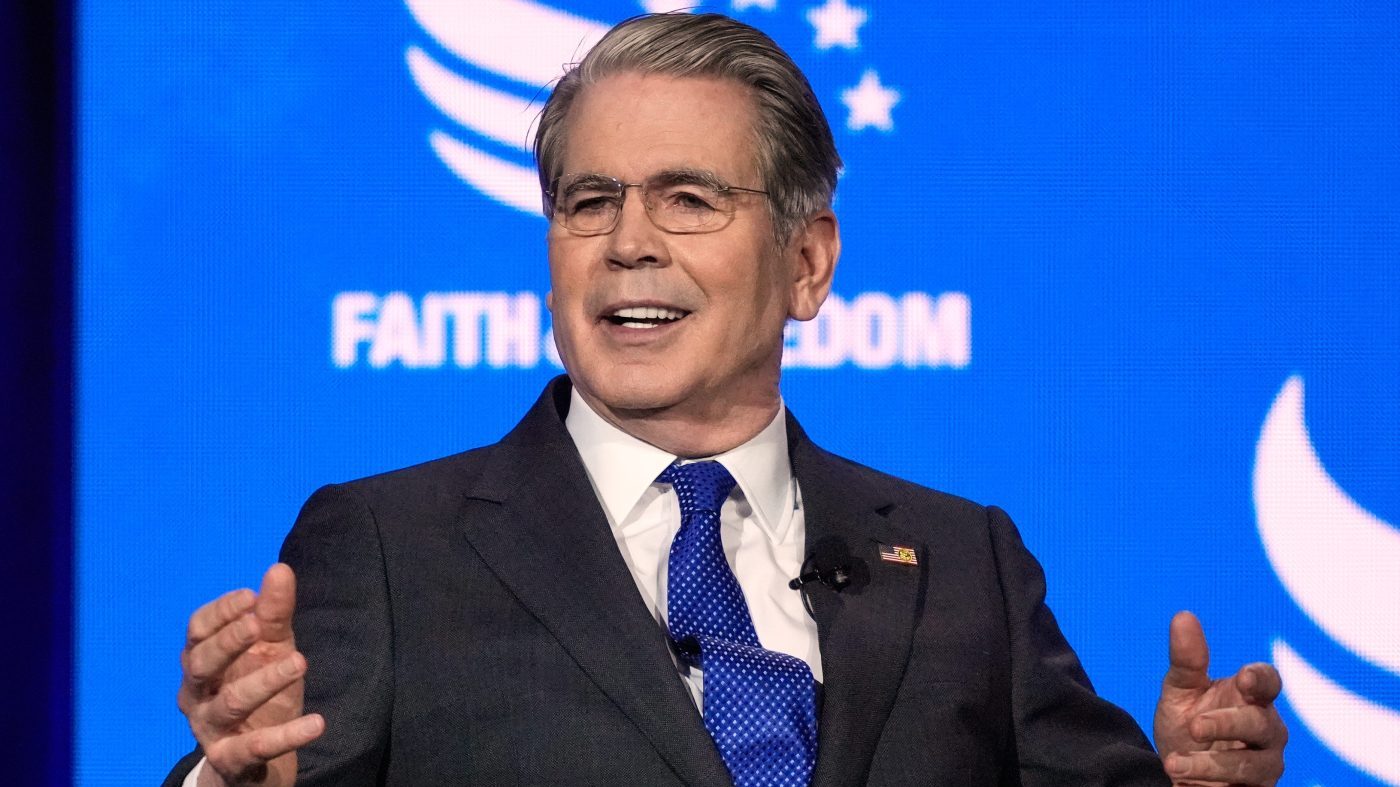
Treasury Secretary Scott Bessent issued a stark warning on Tuesday, signaling that the Trump administration is prepared to impose sanctions on China over the theft of American artificial intelligence intellectual property. The threat comes amid escalating concerns that Beijing is leveraging US-developed AI to accelerate its own advanced models, potentially eroding America's competitive edge.
In an interview with Fox Business's Maria Bartiromo, Bessent addressed the growing anxiety surrounding open-source AI models and their impact on US tech dominance. “We’ve seen a lot of talk about open-source models coming and threatening the large language models in the U.S.,” he said. “What I will tell you is this administration supports open-source models, but what we do not support is IP theft. And if we see, especially that overseas models are stealing from our great companies, we have the ability to sanction them because of this theft.”
The recent release of Kimi K3, a new model from the Chinese startup Moonshot AI, has intensified fears in both Silicon Valley and Washington. The company claims Kimi K3 performs on par with leading models from Anthropic and OpenAI, a claim bolstered by an AI evaluator’s decision to rank it at the top for front-end coding, surpassing the two US AI labs. Unlike its American counterparts, Kimi K3 is an open-weight model, meaning its training methodology is publicly accessible, though not entirely open-source.
The panic over Kimi K3 has reignited discussions about distillation, a technique that transfers knowledge from a larger, more capable model to a smaller one. Bessent asserted that US officials have found evidence of this practice. “We are finding watermarks of our U.S. large language models on many of the Chinese models, and that’s unacceptable, Maria,” he said. “So, we’re going to be looking at that in the coming days or weeks.”
The Treasury secretary also floated the idea of requiring companies that use Chinese AI models to disclose that fact to their customers. “The other question might be: Should companies that are using Chinese models have to disclose that to their customers?” he added, hinting at potential regulatory moves beyond sanctions.
The administration’s stance on China’s AI theft aligns with its broader, often inconsistent, approach to Beijing. As Trump avoids penalties on China despite election interference claims, the threat of sanctions over AI IP theft marks a more aggressive posture. Meanwhile, the debate over US overregulation handing the AI lead to China has been a recurring theme, as seen in Sacks’ warning that US overregulation hands AI lead to China following Moonshot’s Kimi K3 release.
The potential sanctions could further strain US-China relations, which have already been tested by disputes over trade, technology, and geopolitical influence. With the administration signaling a crackdown on IP theft, the coming weeks may see concrete actions aimed at protecting American AI dominance.