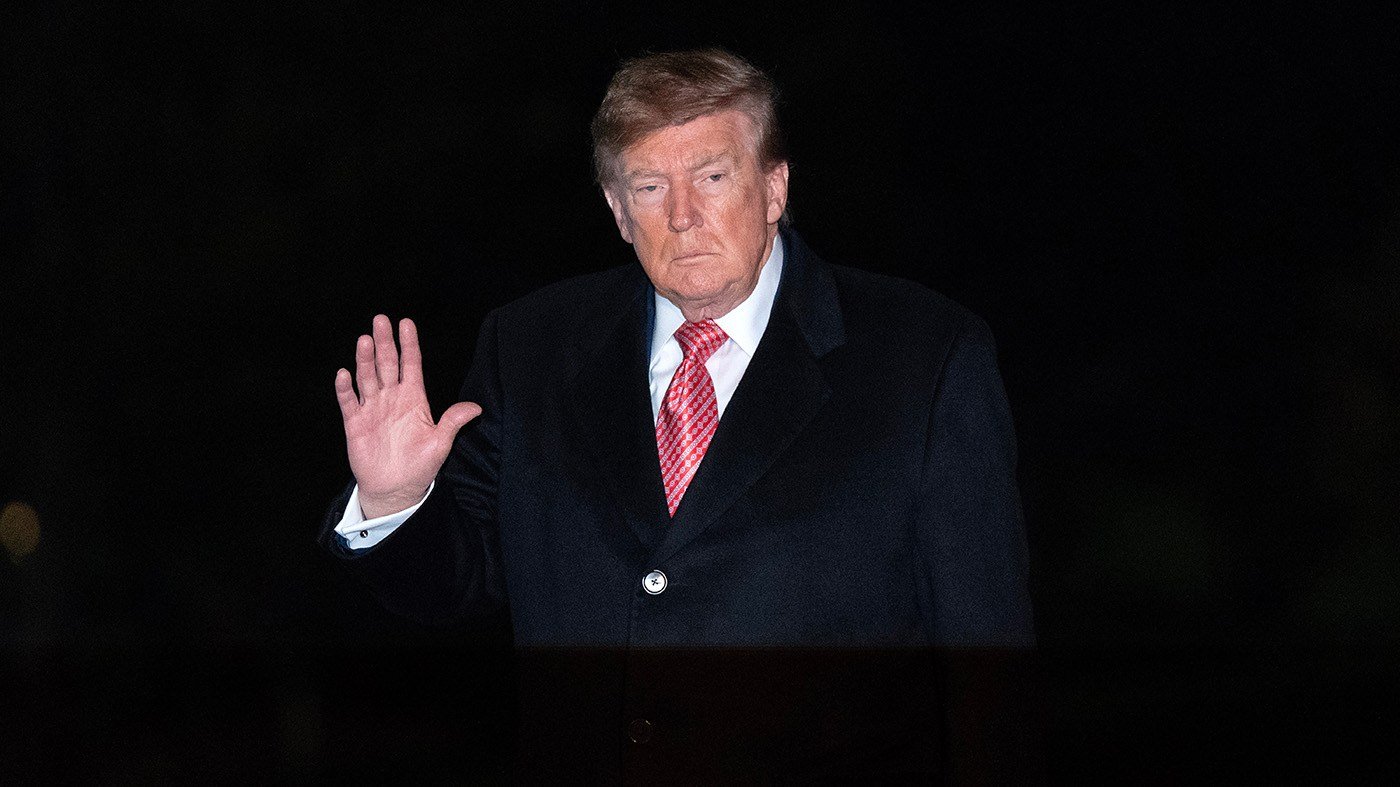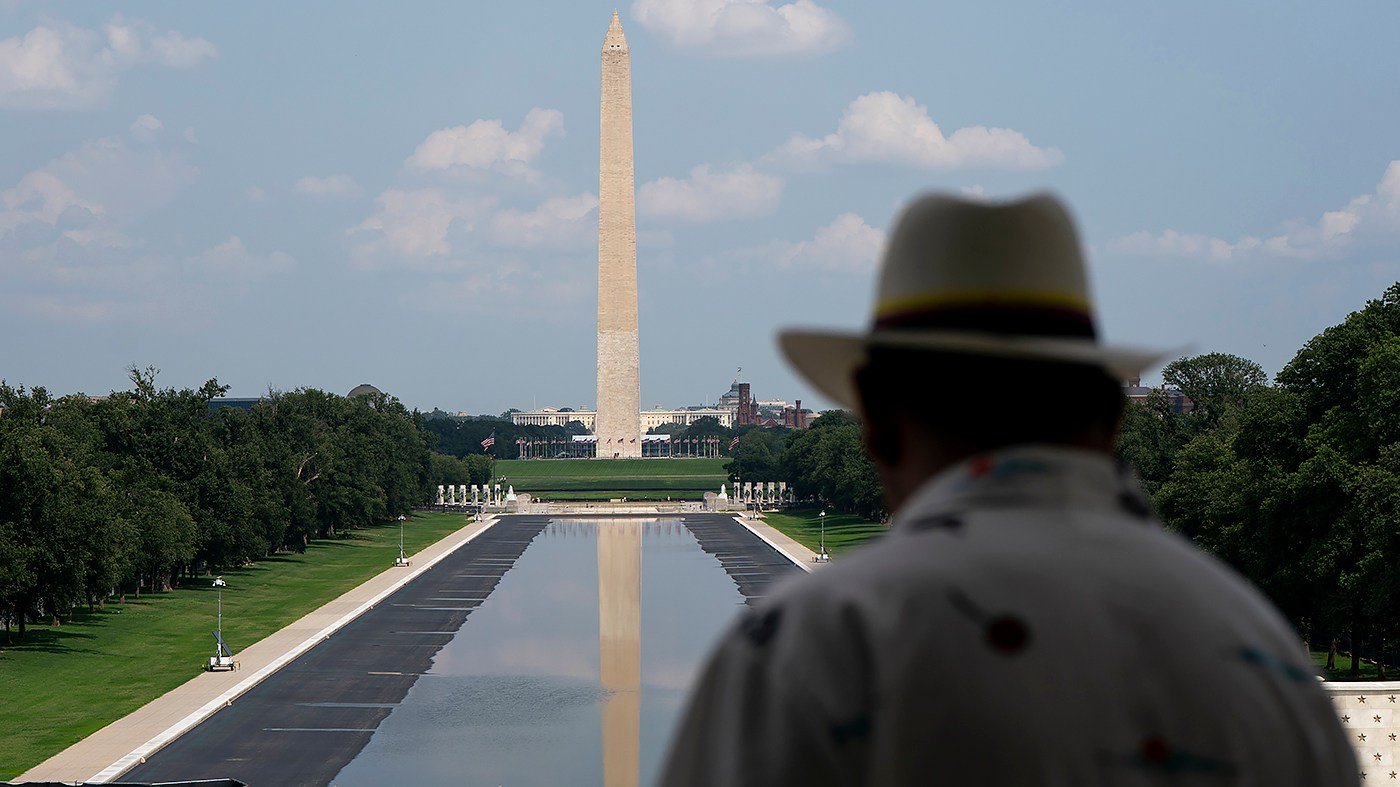
A District of Columbia judge on Friday interrogated federal prosecutors about President Trump's recent statements concerning a former Olympian accused of damaging the Lincoln Memorial Reflecting Pool, as the government sought to keep the door open for potential future charges.
Superior Court Judge Todd Edelman pressed assistant U.S. Attorney Michael Spence on how he should interpret Trump's remarks about David Hearn, one of Hearn's attorneys, and U.S. Attorney for D.C. Jeanine Pirro. Edelman said the comments appeared to be "nothing other than [Trump] pressuring your office, your boss and the three of you to charge Mr. Hearn, recharge Mr. Hearn with what you had decided to be a meritless prosecution."
"Isn't this a unique threat of meritless re-prosecution?" Edelman asked.
Spence responded that Trump's statements "speak for themselves," but argued that it was premature to discuss that hypothetical because no further grand jury action had occurred.
The exchange occurred during a hearing on whether to dismiss the case against Hearn with prejudice, meaning it could never be brought again. The U.S. attorney's office had earlier moved to drop the charges, citing insufficient evidence for felony prosecution.
That decision drew Trump's ire. He publicly criticized Pirro multiple times, urging her to reconsider. "She folded like an umbrella," Trump told reporters on Aug. 3, adding that the U.S. attorney had "choked." The unusual public rift between the two allies left Pirro's job in question.
Trump later attacked Hearn directly, referencing his past donations to Democrats via the ActBlue platform. In a Truth Social post on Aug. 9, Trump wrote: "A National Park Service career employee, a highly credible witness, saw David Hearn (ActBlue) in broad daylight vandalize the Reflecting Pool by 'violently' ripping and tugging at the Pool's somewhat delicate coating."
Hearn was charged in early July with felony destruction of property, after prosecutors said they had evidence he "willfully damaged" the landmark by tearing up a piece of sealant. He pleaded not guilty and was set for trial at the end of the month.
Weeks later, Pirro's office conceded that the peeling paint was likely due to a flawed installation by a no-bid contractor, not vandalism. Prosecutors blamed the Interior Department for failing to provide complete information before the grand jury, and they moved to dismiss the charges.
Judge Edelman granted that request in early August but deferred a decision on whether prosecutors could re-charge Hearn later. Hearn's attorneys argue the case should be dismissed with prejudice. "Why are they reserving the right to reindict a case they acknowledge should never have been indicted?" asked Steve Levin, one of Hearn's lawyers. He said there was "no legitimate purpose" to keep the prosecution alive.
The controversy stems from a $14 million renovation of the reflecting pool, completed in early June. Shortly after, chunks of the "American flag blue" coating—a color personally selected by Trump—began peeling and floating in the water. Trump initially blamed vandalism, but court filings show a National Park Service engineer warned within days that the "top layer of the liner has peeled."
Judge Edelman did not rule from the bench, indicating that a decision would come soon. The case has drawn attention to the intersection of presidential influence and prosecutorial independence, echoing concerns raised in other contexts, such as judicial oversight of executive actions.