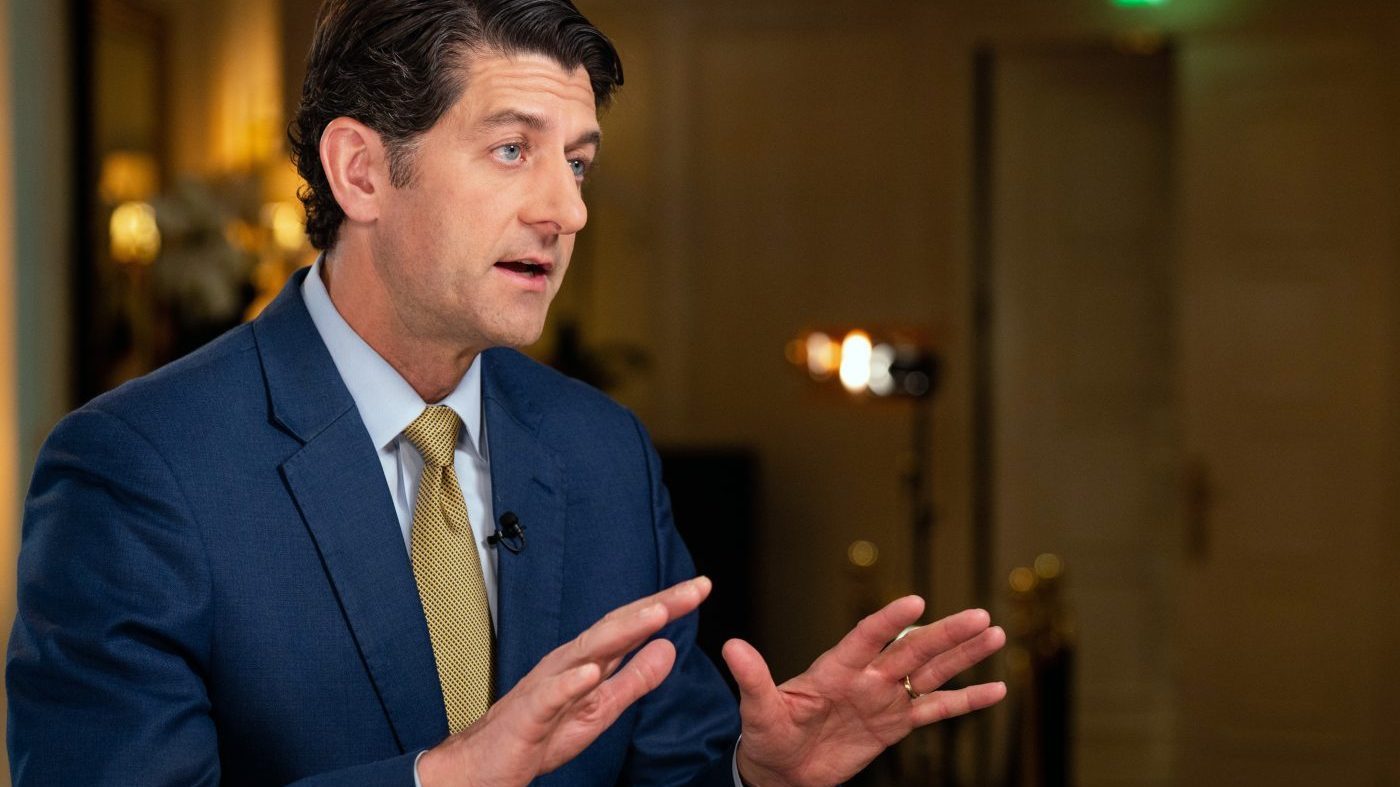
Former House Speaker Paul Ryan (R-Wis.) delivered a blistering critique of American politics on Thursday, arguing that both major parties have traded fiscal responsibility for populist appeals, leaving the nation unprepared to confront its mounting debt.
“Our politics are just fundamentally unserious right now, and they used to be better,” Ryan said during an appearance on CNBC’s “Squawk Box.”
Ryan, who chaired the House Budget Committee before leading the chamber from 2015 to 2019, pointed to the federal debt’s recent surge past $40 trillion as evidence that lawmakers are avoiding hard choices ahead of the November midterms. He argued that the political spectrum has shifted so dramatically that once-standard proposals to curb spending are now considered off the table.
“The Overton window in our politics is open for all these crazy ideas but closed for things like debt reduction,” he said.
Reflecting on his tenure in Congress, Ryan recalled a time when lawmakers felt more willing to cast politically difficult votes on the federal budget without fearing immediate electoral retribution. He attributed the change to the rise of what he called “grievance politics,” a shift that has transformed both parties into vehicles for populist anger rather than pragmatic governance.
“We became populist parties with populist beliefs. Things like debt reduction and entitlement reform are unpopular,” Ryan said. “Therefore, we don’t have anything close to the politics we need to get this stuff done.”
The national debt crossed $40 trillion last month, climbing rapidly from $39 trillion in the spring amid the ongoing Iran war. The federal government owes more than $32.2 trillion to outside entities—including foreign governments and private investors—while an additional $7.8 trillion is held internally in trust funds such as Social Security.
Ryan, who also ran as the Republican vice presidential nominee in 2012, made cutting federal spending and reforming entitlement programs central to his legislative agenda. His comments come as debates over government funding and debt ceilings continue to dominate Washington, with little appetite for the kind of structural reforms he once championed.
Political analysts note that Ryan’s critique reflects a broader concern among fiscal conservatives that neither party is willing to tackle long-term budget challenges. Meanwhile, recent disputes over issues like state-level redistricting battles and federal mandates on safety-net programs illustrate the polarized environment Ryan describes.
As the midterm elections approach, Ryan’s warning underscores a growing frustration among establishment figures who see populism as a dead end for addressing the nation’s fiscal crisis.