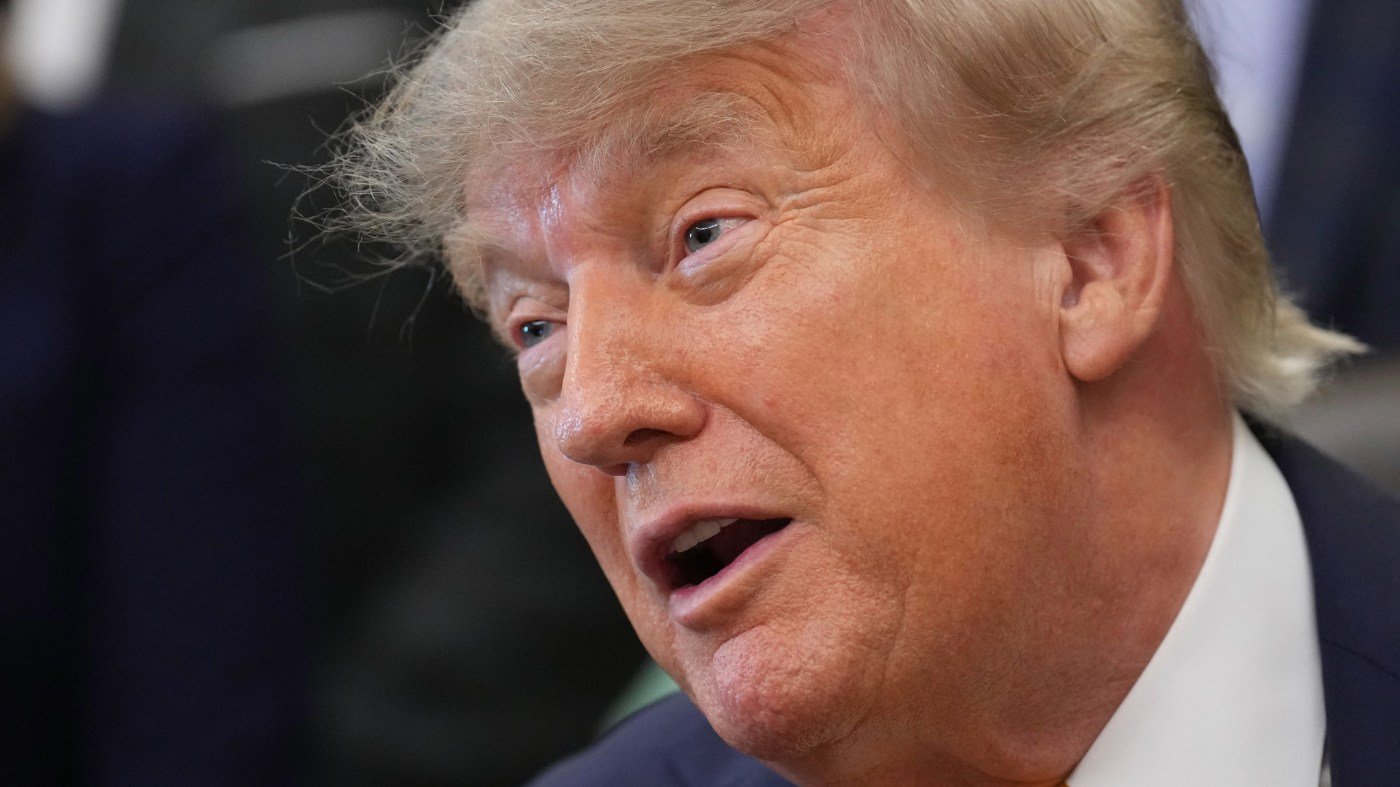
President Trump intensified his campaign against local opposition to data centers on Friday, warning that communities rejecting the AI infrastructure are choosing a future of “poverty, crime and squalor.” The remarks, delivered during an unrelated signing ceremony in the Oval Office, mark the second time this week the president has targeted critics of the server warehouses that underpin the artificial intelligence boom.
“If you want to get rich as a state or as a town, if you want to pay lower taxes, if you want to create tremendous wealth, if you want your house to be more valuable and everything else, you’re going to want a data center,” Trump said. “If you want to go through poverty, crime and squalor, I would say don’t approve data centers. You know, you have your choice. So I’m all for people approving them or not.”
His comments echo a Truth Social post from Monday in which he suggested the “only reason that communities throughout the U.S.A. should not want Data Centers is if they want to end up being backwards and poor.” The president has long championed the expansion of data centers as vital to American technological leadership, but the issue has become a political liability as voters grow wary of the environmental and economic costs.
Across the country, local governments have faced mounting complaints about data centers’ massive electricity consumption, strain on water supplies, and noise and air pollution. While some communities have benefited from increased tax revenue, many jurisdictions initially lured these projects with generous tax breaks. That has prompted a backlash: Ohio and Illinois have paused their incentive programs, and New York recently enacted the nation’s first statewide moratorium on new “hyperscale” data centers.
The political fallout is now reaching the midterm campaign trail, with candidates from both parties seeking to distance themselves from the unpopular facilities. Pennsylvania Governor Josh Shapiro, a Democrat who once touted Amazon’s data centers in his state, announced new restrictions on development last month after facing attacks from his Republican opponent. In Michigan, GOP Senate nominee Mike Rogers has called for a one-year freeze on new projects, and Texas Governor Greg Abbott has halted construction pending state audits.
Trump’s latest remarks come as he navigates a delicate balance between promoting his economic agenda and addressing the concerns of voters in key battleground states. The president’s stance has put him at odds with some Republican governors, including Abbott, who have moved to regulate the industry. Meanwhile, the White House has sought to frame data centers as engines of job creation and innovation, even as his midterm strategy faces internal debate over how aggressively to campaign on divisive issues.
The administration’s push for data centers also intersects with broader trade and technology battles. The president has threatened tariffs on imported technology components and is preparing a Section 301 probe into EU digital regulations, which could further complicate the global supply chain for AI infrastructure. At the same time, the White House has launched a retro game arcade to tout its policies, a move critics see as an attempt to distract from the growing backlash against data centers.
For now, Trump remains unapologetic, framing the debate as a stark choice between prosperity and decline. “You have your choice,” he repeated, daring local officials to defy him. But as the midterms approach, the political calculus may be shifting, with even some allies urging caution. The coming months will test whether Trump’s forceful advocacy can overcome the grassroots resistance that has turned data centers into a surprisingly potent issue on the campaign trail.