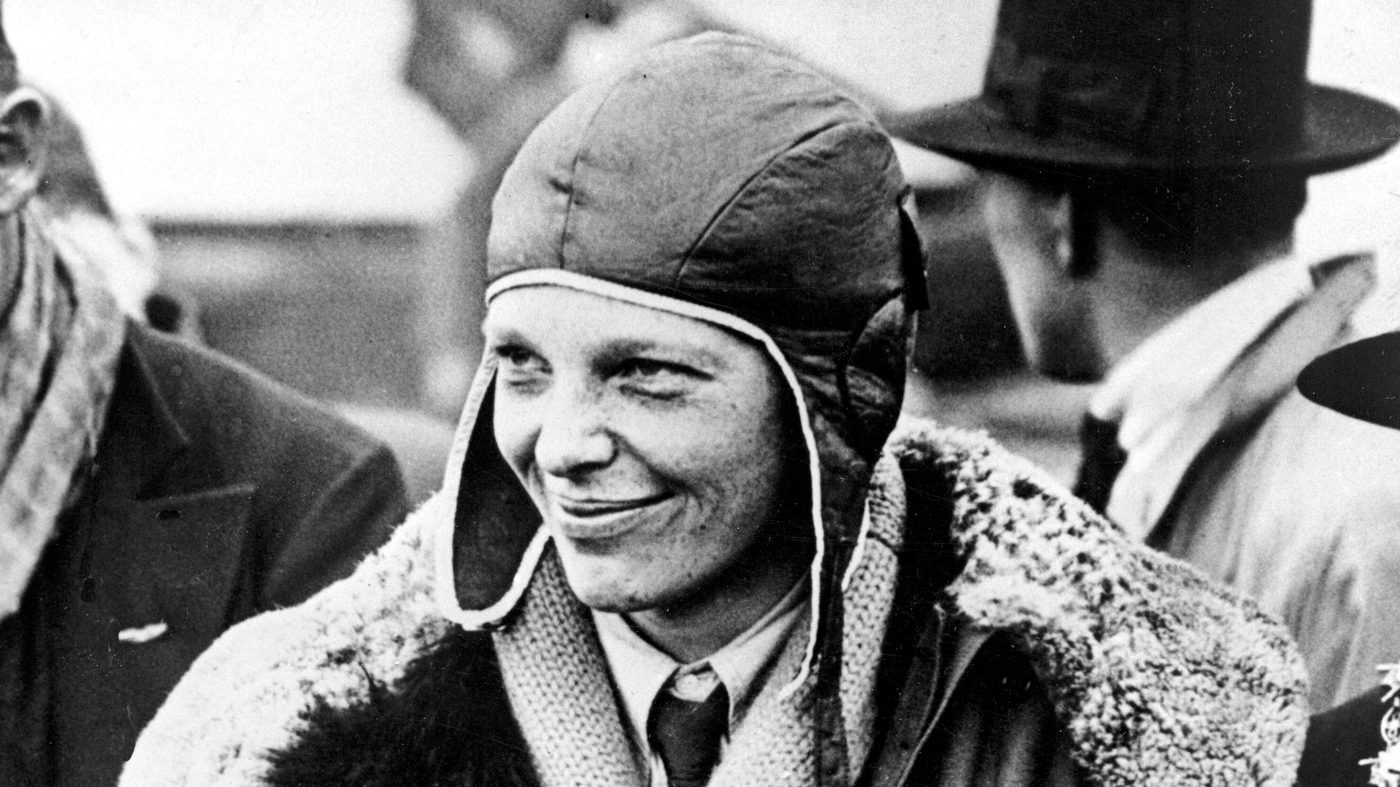
A high-profile expedition to a remote Pacific atoll has come up empty in the search for Amelia Earhart's missing Lockheed Electra 10-E, leaving the aviator's fate unresolved nearly nine decades after her disappearance.
The team, led by Purdue University and the Archaeological Legacy Institute, spent four days on Nikumaroro in the Republic of Kiribati earlier this month, scouring the coral island for any sign of the aircraft. The mission was prompted by a 2020 satellite image that showed a plane-shaped object, dubbed the "Taraia Object," in a lagoon off the island's Taraia Peninsula.

After the fieldwork, Purdue announced on Oct. 18 that the anomaly was most likely a collection of large trees deposited along the peninsula's sandspit. The university said the debris had largely fragmented and washed away by the time the team arrived, leaving only a single Y-shaped segment. The shiny, metallic appearance that fueled hopes was attributed to a carbonate veneer of coral sand coating the wood.
"Evidence gathered at the Taraia Peninsula on Nikumaroro confirmed that the visual anomaly first seen in satellite imagery in 2020 was likely a collection of large trees," the university stated, adding that no conclusive evidence supported the hypothesis that wreckage from Earhart's plane lay in the lagoon.
The 17-person team, led by Steve Schultz of Purdue and Richard Pettigrew of the Archaeological Legacy Institute, launched from Tarawa on Oct. 6 and traveled five days by sea to reach Nikumaroro. Bad weather extended the expedition, but the team managed to complete its onshore investigation.
Despite the disappointment, expedition leaders emphasized the value of testing the hypothesis. "Amelia Earhart's spirit of courage and curiosity drove every step of the search," Pettigrew said. "We accomplished our goal to determine what the Taraia Object was." Schultz echoed that sentiment, quoting Earhart: "Adventure is worthwhile in itself."
While no plane wreckage was found, the team recovered artifacts, including a 30-inch steel tube from the lagoon. These items will be studied to assess the broader castaway theory, which posits that Earhart and navigator Fred Noonan landed on Nikumaroro and were marooned there, rather than crashing into the Pacific.
The search for Earhart's plane continues, with researchers planning to analyze the recovered materials and explore other leads. The mystery, which has captivated the public for generations, remains unsolved.