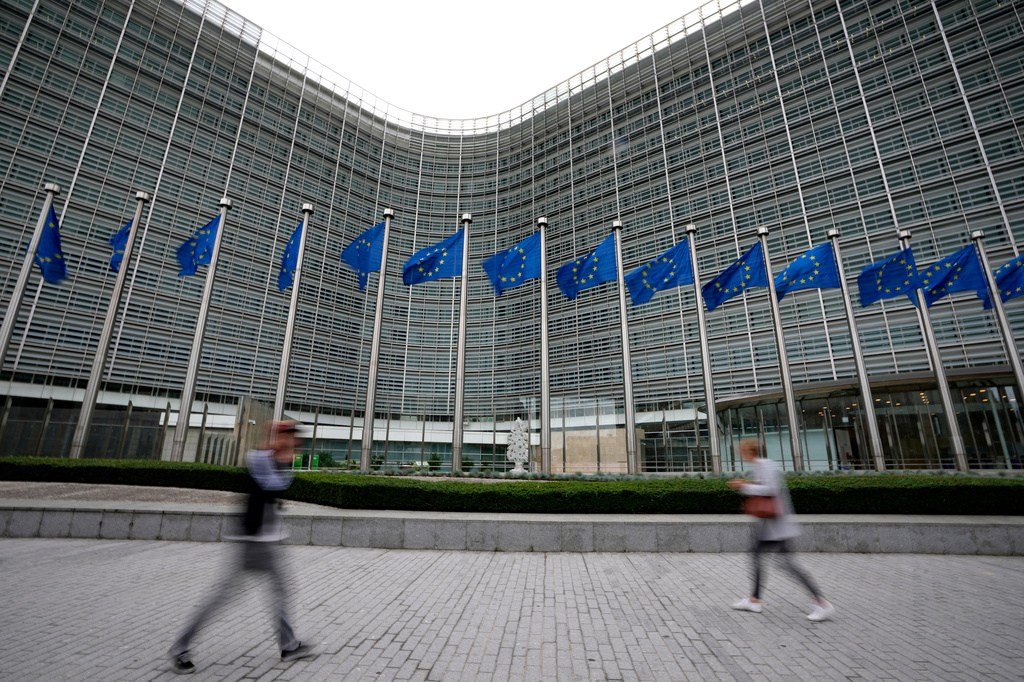
President Trump is set to launch a Section 301 investigation into European Union trade practices, targeting regulations like the Digital Markets Act and the EU Space Act. The move escalates a transatlantic dispute over digital policy, with the administration arguing that Brussels is effectively waging economic warfare on American technology leaders.
The Digital Markets Act, which Brussels frames as a competition and consumer protection measure, imposes obligations based on market capitalization and user counts rather than proven dominance or harm. Critics say this creates a regulatory straitjacket for the very companies that built the modern digital economy. Of the seven designated gatekeepers, five are American: Alphabet, Amazon, Apple, Meta, and Microsoft. The European Commission has already fined US firms €1.59 billion under the DMA, including €890 million against Google in July, on top of billions more in antitrust penalties.
This pattern extends to the proposed EU Space Act, which would create a new “giga-constellation” category for operators with 1,000 or more satellites—a threshold that currently applies only to American companies like SpaceX. The original text also includes reflectivity standards that disproportionately affect lower-altitude satellites, which are key to low-latency services. The US State Department, SpaceX, and the US Chamber of Commerce have all objected, warning of non-tariff barriers and unacceptable burdens on US firms.
The administration’s pushback is led by Commerce Secretary Howard Lutnick and US Trade Representative Jamieson Greer, who have made EU digital rules a central issue in trade talks. Ambassador to the EU Andrew Puzder is carrying the message directly in Brussels, while science advisor Michael Kratsios has argued that these rules are not neutral regulation but a hostile act against American commerce.
The Section 301 investigation is the natural next step, giving the team tools to demand reciprocity. As the White House AI Action Plan cuts red tape at home, Brussels is moving in the opposite direction, ordering Google to share search data with competing AI assistants and stripping intellectual property protections that underpin innovation.
“You cannot demand that American companies serve your market and simultaneously strip them of the protections that make serving it worthwhile,” said Juan Andres Caro, a senior fellow at America First Policy Institute and former deputy assistant commerce secretary. Caro added that the investigation “will not be flattering to Brussels.”
The stakes are high: as Beijing accelerates its AI push, Western tech leadership is at risk. Allies don’t get a pass on this, Caro argued. The probe will put the question squarely: were these rules designed to discriminate against American commerce? The answer, he said, will be telling.