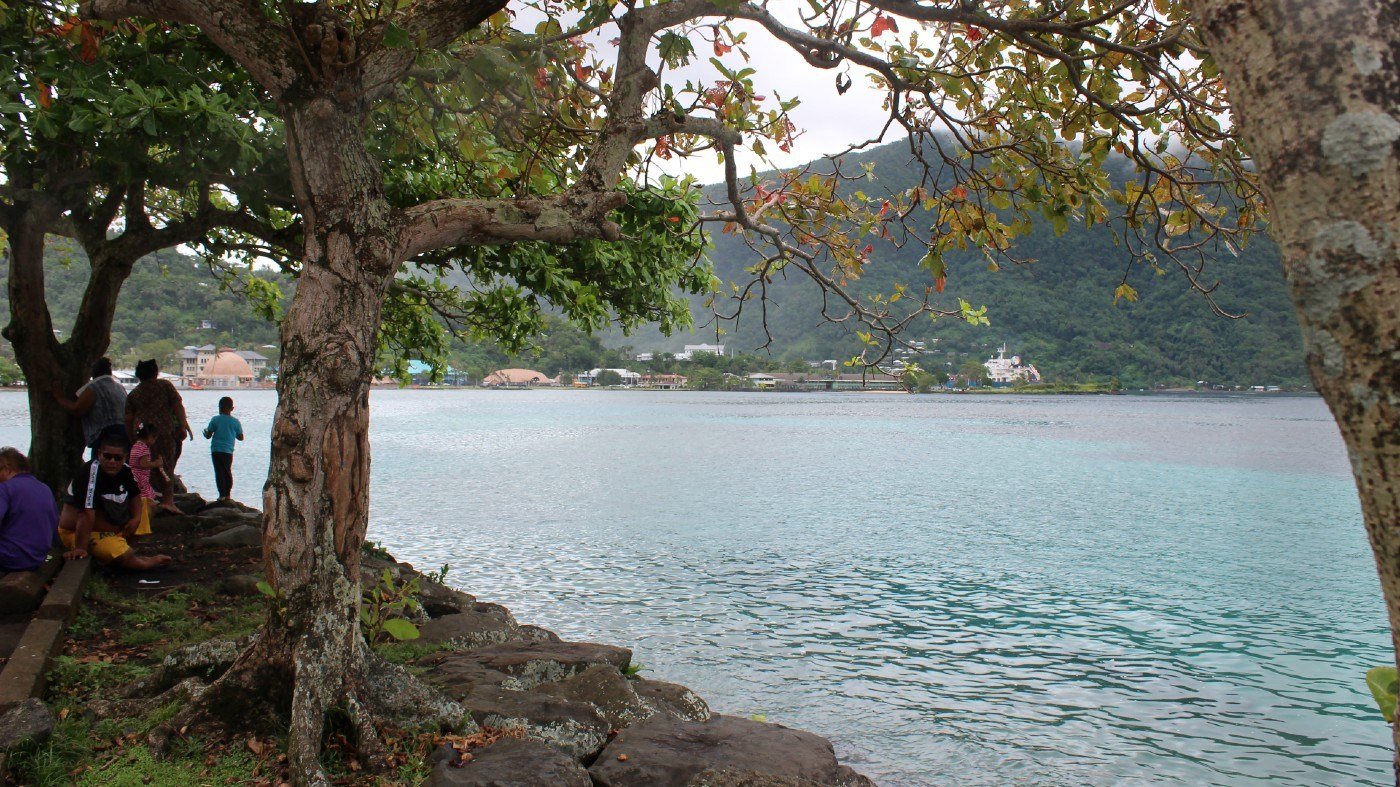
The Trump administration has formally moved to permit deep-sea mining in U.S. waters, announcing Monday that it will auction off mineral extraction rights across nearly 32 million acres off the coast of American Samoa. This marks the first time the federal government has offered offshore mining leases, a step that could open a new frontier for resource extraction but has drawn sharp criticism from environmental groups.
The lease sale, scheduled for November 19, will allow companies to bid on tracts for preliminary activities such as mapping and surveying. However, winning bidders will not automatically receive permission to begin actual mining operations; further environmental and regulatory reviews would be required before any extraction could occur.

Critical minerals as strategic assets
Administration officials framed the move as essential to securing domestic supplies of critical minerals, which are used in everything from batteries to defense systems. Acting Marine Minerals Administration Director Mike Olsen said in a statement that critical minerals are "no longer just commodities; they are a vital strategic asset in global competition, essential for reaching our energy efficiency goals, strengthening our national defense, and securing domestic supply chains."
The decision follows an executive order signed by President Trump last year to accelerate deep-sea mining, part of a broader push to expand mineral production on land and at sea. The administration has argued that relying on foreign sources for these materials poses a national security risk, a position that has gained traction amid ongoing tensions with Russia and other global competitors.
Environmental concerns and opposition
Environmental advocates immediately condemned the lease sale, warning that it could cause irreversible damage to fragile ocean ecosystems. Julia Singer, a campaign manager at Oceana, said in a statement: "These lease sales will open the floodgates to the exploitation of our deep seas." She noted that "thousands of scientists, local leaders, and community members have warned of the danger that deep-sea mining poses, yet the Trump administration is continuing to ignore widespread opposition to this proposal. The U.S. government should defend the deep, not fast-track its destruction."
Deep-sea mining has never been conducted on a large scale anywhere in the world, and scientists have raised concerns about the potential impacts on marine life, including species that are still undiscovered. The seafloor in the region is believed to contain valuable nodules rich in manganese, nickel, copper, and cobalt, metals that are in high demand for renewable energy technologies and electronics.
American Samoa, a U.S. territory in the South Pacific, has a small population and a largely subsistence-based economy. Local leaders have expressed mixed reactions, with some seeing economic potential and others fearing environmental degradation. The lease sale is expected to draw interest from mining companies, but the path to actual extraction remains uncertain, with legal and regulatory hurdles likely.
This is not the first time the administration has moved to expand resource extraction in sensitive areas. Earlier this year, it approved drilling in parts of the Arctic, drawing similar criticism. The move also comes as Congress prepares to investigate potential conflicts of interest among Trump aides, though the mining decision appears to be driven by policy goals rather than personal ties.
The lease sale will be the first test of whether deep-sea mining can become a reality in U.S. waters. If successful, it could pave the way for similar sales in other U.S. territories and coastal areas. But with environmental lawsuits likely and scientific uncertainty high, the future of this nascent industry remains uncertain.