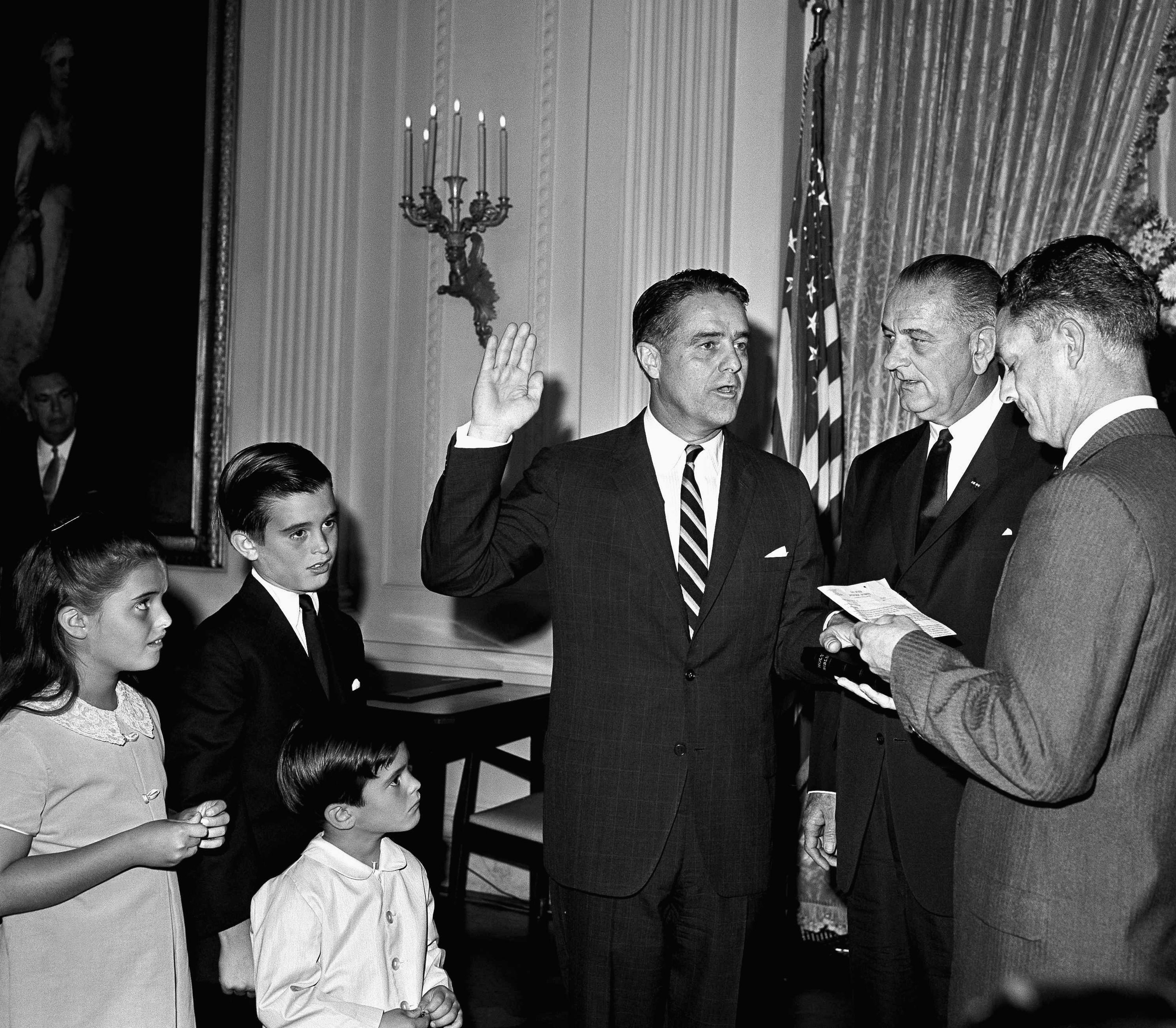
The recently unearthed 1969 memoir of Sargent Shriver, the architect of Lyndon B. Johnson's War on Poverty, reveals he intended the term not as political rhetoric but as a literal call to arms. Shriver, a decorated World War II naval veteran of the Battle of Guadalcanal, applied a combat veteran's understanding of national mobilization to the domestic crisis of poverty, demanding the country confront it with the same seriousness as a foreign enemy.
A Veteran's Framework for Domestic Battle
In the manuscript, titled "We Called It a War," Shriver writes he believed the fight could become "the moral equivalent of war" for his generation. He argued that defeating poverty required the full mobilization of public will and resources, akin to the Allied effort he witnessed firsthand. His approach was rooted in a fundamental belief: people living in poverty were not a problem to be managed but citizens to be empowered, often holding the solutions if given authority.

The "Maximum Feasible Participation" Doctrine
Central to Shriver's strategy was the principle of "maximum feasible participation," which he implemented as a governing rule, not a slogan. This meant placing patients on community health center boards, giving neighborhood leaders shared governance of anti-poverty agencies, and designing programs like Head Start to provide early education while also creating jobs and support for parents. Authority, in this model, was not handed down by bureaucracy but taken up by communities invited into decision-making rooms. This lesson remains starkly relevant as debates over housing, child care, and health care often exclude those most affected, undermining public trust. The recent recall of Amazon hair growth serums over child safety violations underscores how top-down systems can fail without proper accountability.
A Three-Part Test for Serious Policy
Shriver's memoir outlines a three-part test for any genuine anti-poverty campaign: first, convince the nation poverty exists; second, inspire people to join the fight to defeat it; and third, wage that fight "with all the zeal, enthusiasm, and self-sacrifice" historically reserved for defending freedom. He applied a simple, results-oriented standard: keep or change programs based on measurable improvements in families' lives and honest assessments of failures.
He warned that racism, extreme individualism, and the idolization of wealth would sabotage anti-poverty efforts if left unchecked. His optimism about national capacity was tempered by this clear-eyed view of societal flaws. This honesty, he contended, builds the trust necessary for government to function effectively, a principle tested in moments of national strain, such as when TSA officers were forced to work without pay during a government shutdown.
Relevance to Today's Affordability Crisis
The memoir's lessons directly confront contemporary challenges like the cost-of-living crisis, widening wealth inequality, and zero-sum politics. Shriver's framework suggests treating issues like housing costs outpacing incomes, child care exceeding rent, and crippling medical debt as national obligations requiring large-scale mobilization, not marginal adjustments. He posited that economies grow when children are healthy and learning and when parents are supported by systems that treat both work and care as public goods.
Programs born from this philosophy, like Head Start, endure as proof of concept. They demonstrate that inviting people into civic life and granting them real power can create effective, lasting infrastructure. The fight is unfinished, with millions still in poverty or as the working poor, but Shriver's work provides a blueprint for serious effort.
The release of "We Called It a War" arrives as the nation grapples with whether it can muster the collective will for large-scale solutions. Shriver's children—Maria, Bobby, Timothy, and Mark Shriver—note their father wrote plainly so the country might see plainly. His argument remains: the nation must not shrink moral commitments to fit diminished political will but must instead enlarge its will to match the scale of helping families build decent lives. That was the standard for the War on Poverty. His memoir insists it must become the standard again.