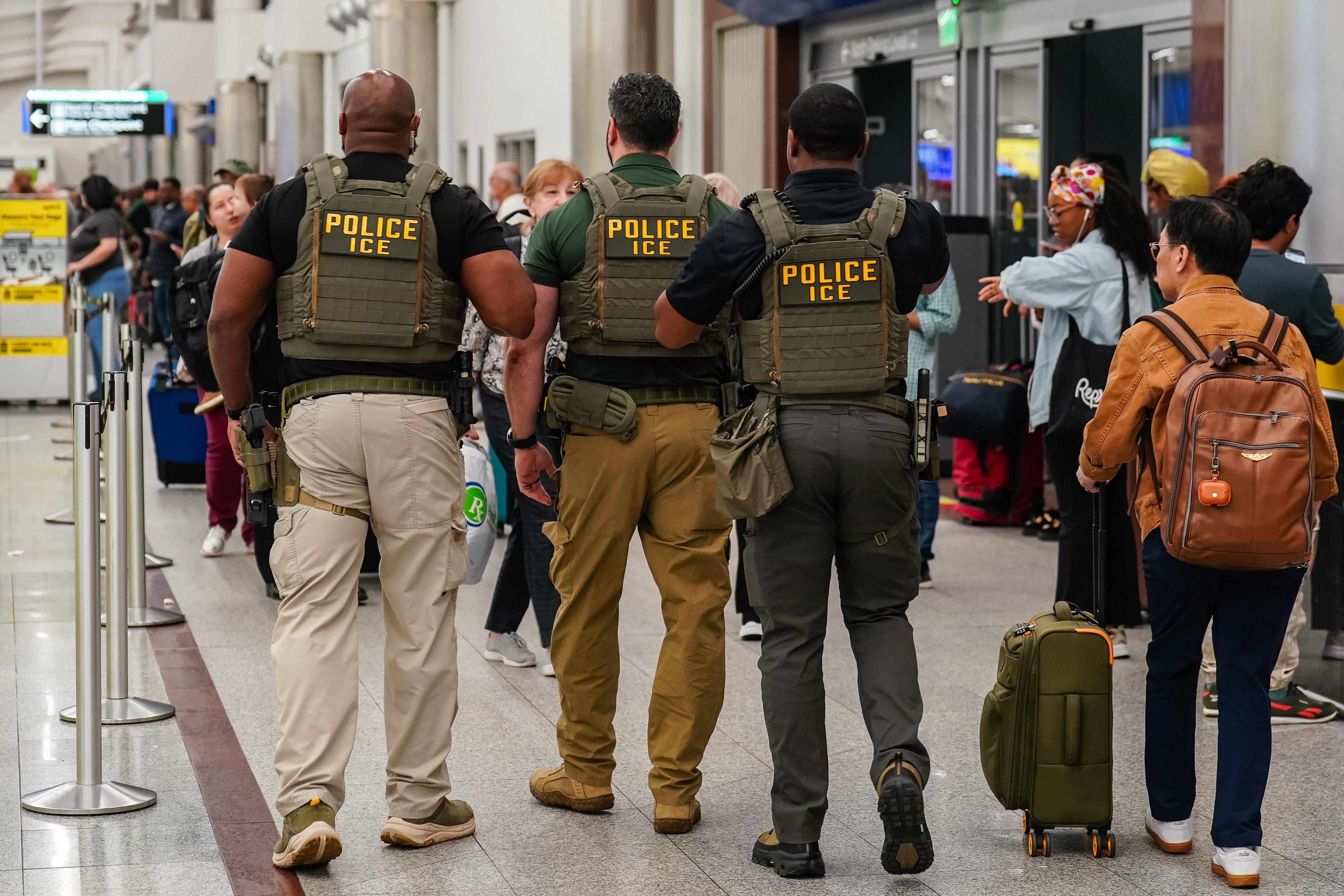
The White House announced Sunday that Immigration and Customs Enforcement officers would be deployed to support airport security operations as the partial Homeland Security Department shutdown extends into its second month. While presented as a stopgap measure to address Transportation Security Administration staffing shortages, the move has drawn sharp criticism from security experts who call it a political maneuver that could compromise aviation safety.
TSA officers, who screen approximately 2.5 million passengers daily, have now worked without pay for over five weeks. The administration's solution—reassigning ICE personnel to airport checkpoints—faces practical and operational hurdles that experts say undermine its effectiveness. Unlike TSA officers who undergo extensive, specialized training in screening procedures and technology, ICE agents lack this specific expertise and cannot quickly master complex security systems.
Operational Incompatibility
Former acting ICE Director Tom Homan clarified that deployed officers would not operate advanced screening technologies like body scanners or computed tomography baggage systems, as mastering these would require weeks of training. Instead, their role would be limited to peripheral tasks like monitoring exit lanes from secure areas. This severely restricts their utility in addressing the core problem: staffing shortages at primary security checkpoints where TSA no-show rates are increasing.
Security analysts warn that inserting untrained personnel into highly coordinated TSA teams could disrupt the entire screening flow. "TSA officers function as a unit, with each member understanding their specific role and how it integrates with others," explained one aviation security expert. "Introducing inexperienced personnel, even for simple tasks, creates friction points that can degrade overall checkpoint efficiency and security."
The deployment raises additional questions about identification, uniform protocols, and whether ICE officers would carry firearms in an environment where weapons are typically restricted to law enforcement responding to incidents. Many airports already have local and state police stationed on premises who could provide supplemental support without the integration challenges posed by federal immigration agents.
Funding Disparity Exposed
Critics argue the ICE deployment reveals a troubling funding disparity: money exists to pay ICE officers during the shutdown, but not TSA officers. Both agencies operate under the Department of Homeland Security umbrella, yet only one is receiving compensation. The weekly cost to pay all 50,000 TSA officers is approximately $120 million—a fraction of DHS's available resources.
The ongoing DHS shutdown has already crippled key airport security programs, including TSA PreCheck and CLEAR lanes, creating longer wait times and operational chaos. As the TSA staffing crisis deepens, the political impasse shows no signs of resolution, with both parties entrenched in their positions.
Financial pressure on TSA officers is mounting, with many living paycheck-to-paycheck. While most continue working with the expectation of eventual back pay, this provides no immediate relief for rent, mortgages, or grocery bills. The typical monthly attrition rate of about 330 officers could spike if the shutdown continues, with some estimates suggesting resignations could exceed 1,000 per month—a loss that ICE deployments cannot offset.
Security expert Sheldon H. Jacobson, a University of Illinois professor who has researched aviation security for 25 years, called the ICE deployment "a bad idea bordering on dangerous." He emphasized that the solution lies not in reassigning incompatible personnel, but in funding the trained professionals already performing the work. "Lawmakers must prioritize paying TSA officers rather than playing politics with aviation security," Jacobson concluded, noting that the political calculus around the shutdown may be shifting as airport disruptions mount.