A political standoff over Department of Homeland Security funding has triggered a staffing crisis at the Transportation Security Administration, crippling security operations at some of the nation's busiest airports and rendering premium screening services unreliable. With roughly 50,000 TSA officers working without pay since mid-February, callout rates have soared, exceeding 40% at critical hubs like Houston's George Bush Intercontinental, Atlanta's Hartsfield-Jackson, and Louis Armstrong New Orleans International airports.
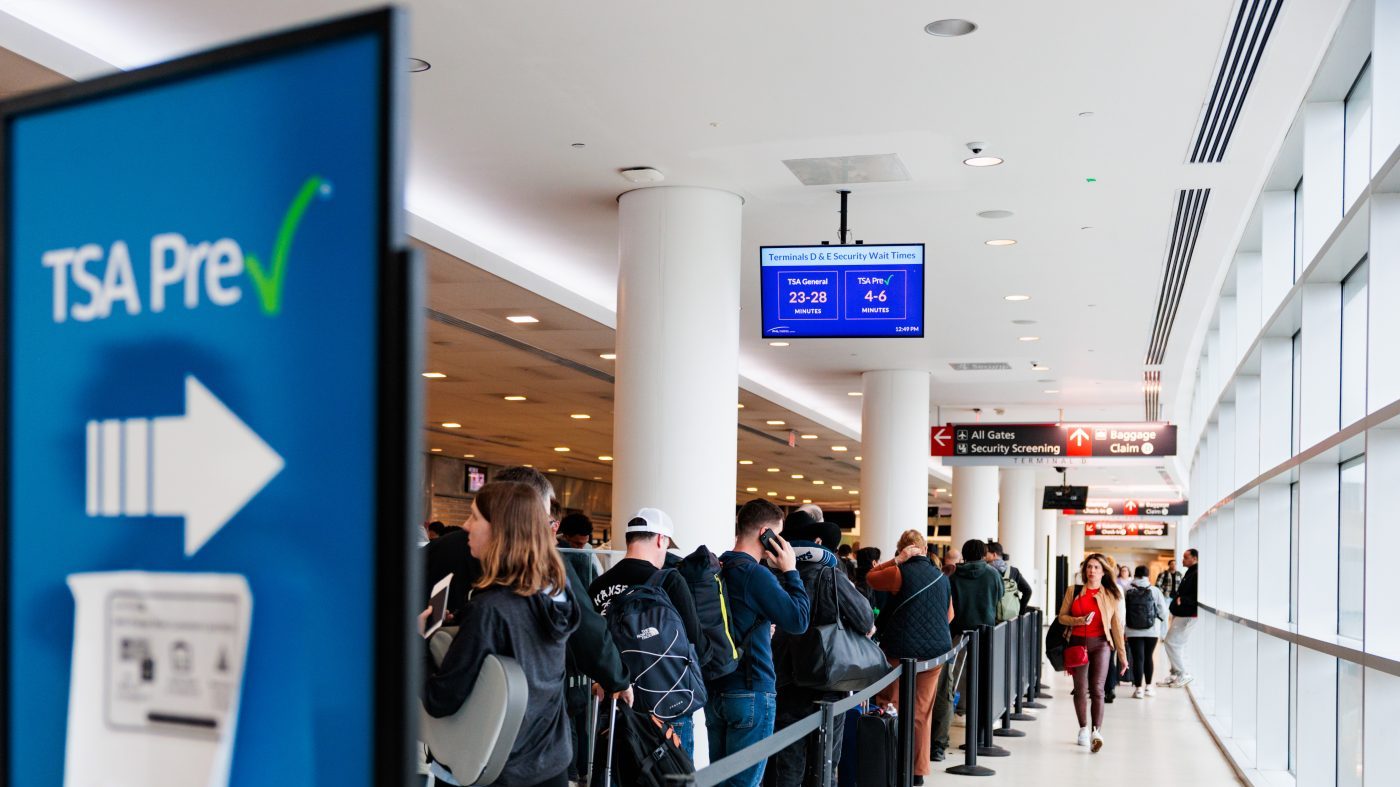
The resulting chaos has directly impacted travelers who pay for expedited screening. At Houston's Bush Airport on Monday, TSA PreCheck lanes were shuttered by 10:30 a.m., and CLEAR service was unavailable. Similar scenes played out in Atlanta, where PreCheck wait times reportedly ballooned to four or five hours on Sunday, and the CLEAR line in the domestic terminal closed. The TSA staffing crisis deepens as the DHS shutdown forces ICE airport deployment to fill gaps, a controversial move that has further complicated the political impasse.
"Service may be affected at some of our locations amid rapidly changing airport conditions," a CLEAR spokesperson acknowledged Monday. The TSA states that PreCheck hours are "subject to change based on operational needs," a bureaucratic phrase now translating to widespread, unpredictable closures for paying members. The agency reported more than 3,450 officer callouts on Sunday alone, representing nearly 12% of its scheduled workforce.
Acting DHS Assistant Secretary Lauren Bis attributed the absences directly to the funding lapse. "The partial shutdown has caused more than 400 TSA officers to quit and thousands to call out from work because they can't afford basic expenses like gas and child care," Bis said in a statement. This DHS shutdown has prompted ICE airport deployment amid rising TSA absences, creating a patchwork security apparatus at major transit hubs.
While expedited programs still offer relative relief at some locations, they provide no guarantee. Data from Monday showed PreCheck wait times around 10 minutes in Orlando against 45-minute standard lines, and under five minutes in Philadelphia versus 28 minutes for regular screening. However, airports facing the most severe shortages, including Baltimore/Washington International and New York's JFK, have suspended public reporting of security wait times altogether, obscuring the full scale of delays. JFK Airport halted security wait time reporting amid DHS shutdown chaos, making independent verification of conditions impossible.
Some travelers reported mixed results. Axios White House reporter Marc Caputo navigated the PreCheck line at Atlanta's massive hub in about an hour midday Monday, while another passenger cleared security in roughly 20 minutes using CLEAR at the international terminal on Sunday. Other major airports, including Denver, Minneapolis-St. Paul, and Charlotte, reported minimal disruptions with sub-10-minute waits across the board.
The instability highlights how congressional dysfunction directly impacts critical infrastructure and commerce. TSA PreCheck operates at approximately 200 U.S. airports, and CLEAR has more than 150 lanes across 60 airports, but their utility is now contingent on a political resolution. Travelers are advised to check their local airport's website or app for real-time conditions, though the data blackout at several key hubs limits this strategy.
As the funding impasse continues, the ripple effects extend beyond inconvenience. The erosion of a predictable, layered security system poses broader questions about homeland security readiness, even as political leaders clash over the deployment of other DHS assets like ICE to manage the fallout. The situation remains fluid, with airport conditions changing hourly based on localized staffing availability.