Senator Bernie Sanders, the Vermont independent, recently conducted an unprecedented policy interview with Claude, an artificial intelligence assistant developed by Anthropic. The wide-ranging discussion covered healthcare, income inequality, corporate power, and democratic institutions, serving as a practical demonstration of AI's potential application in legislative oversight.
The Hearing Room Reality
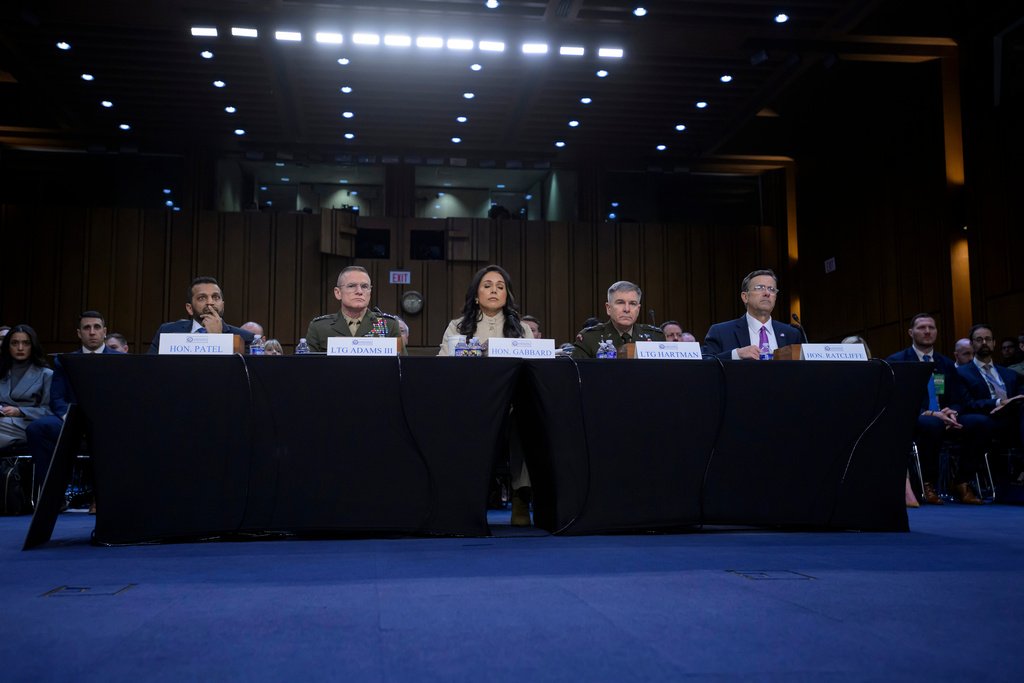
For years, congressional hearings have devolved into political theater where lawmakers deliver prepared remarks for cable news clips while witnesses, coached by legal teams, offer evasive or non-responsive answers. The result is a process that generates political heat but little substantive accountability or public understanding.

Sanders's exchange with Claude revealed something significant: generative AI can engage with complex policy questions more coherently than many human witnesses who appear before committees. While AI won't solve the problem of political grandstanding—a human choice lawmakers show little interest in changing—it could transform the quality of questioning and make evasion substantially more difficult.
Augmenting Congressional Preparation
Imagine if legislators used tools like Claude to prepare for hearings. An AI assistant could analyze thousands of pages of testimony, regulatory filings, and financial disclosures in hours, identifying contradictions between what a witness said previously and what they're expected to say. It could draft logical sequences of questions where each answer narrows the witness's room for maneuver, functioning more like skilled cross-examination than scattered inquiry.
This capability addresses a fundamental problem in congressional oversight. Staff members are overworked and expected to become instant experts on everything from semiconductor supply chains to pharmaceutical pricing. They prepare briefing materials that lawmakers often barely review before hearings. AI wouldn't replace human judgment but could dramatically augment preparation capacity for members like Sanders who prioritize substantive accountability over performance.
The technology's application extends beyond hearing preparation. As Sanders has demonstrated with his legislative focus on technology regulation, including his recent proposal with Representative Alexandria Ocasio-Cortez for a federal moratorium on new AI data center construction, Congress is grappling with how to oversee rapidly evolving technologies while using them to improve governance.
Risks and Institutional Resistance
Legitimate concerns exist about AI-generated questions serving partisan agendas rather than genuine oversight, or lawmakers becoming overly reliant on automated systems. There's also the uncomfortable reality that algorithms might demonstrate better accountability skills than elected officials themselves.
Yet these risks must be weighed against the current system's failures. When committee chairs cannot extract straight answers from technology executives about data privacy or pharmaceutical leaders about drug pricing—as Sanders has attempted in hearings demanding accountability for issues like vaccine misinformation campaigns—the institution loses credibility with the public.
The challenge isn't technological but institutional. The tools exist today; what's missing is congressional imagination to deploy them effectively. Other legislative efforts, such as Senator Tommy Tuberville's attempt to regulate college athlete transfers through legislation, demonstrate how Congress approaches complex policy areas that could benefit from enhanced research and preparation capabilities.
A Path Forward
Sanders has stumbled upon a significant application of artificial intelligence in governance. The next step is bringing this capability into hearing rooms not as a witness or replacement for democratic deliberation, but as the best-prepared participant who never forgets a contradiction or runs out of meaningful follow-up questions.
While AI won't fix everything in a broken oversight system, it could make evasion significantly harder and preparation substantially deeper. In an era where congressional effectiveness is constantly questioned, that improvement alone would justify the experiment. As lawmakers continue to navigate their relationship with emerging technologies—from AI oversight to debates about military authorization, as seen when previous administrations avoided the 'war' label for military actions to circumvent congressional approval—tools that enhance substantive governance deserve serious consideration.