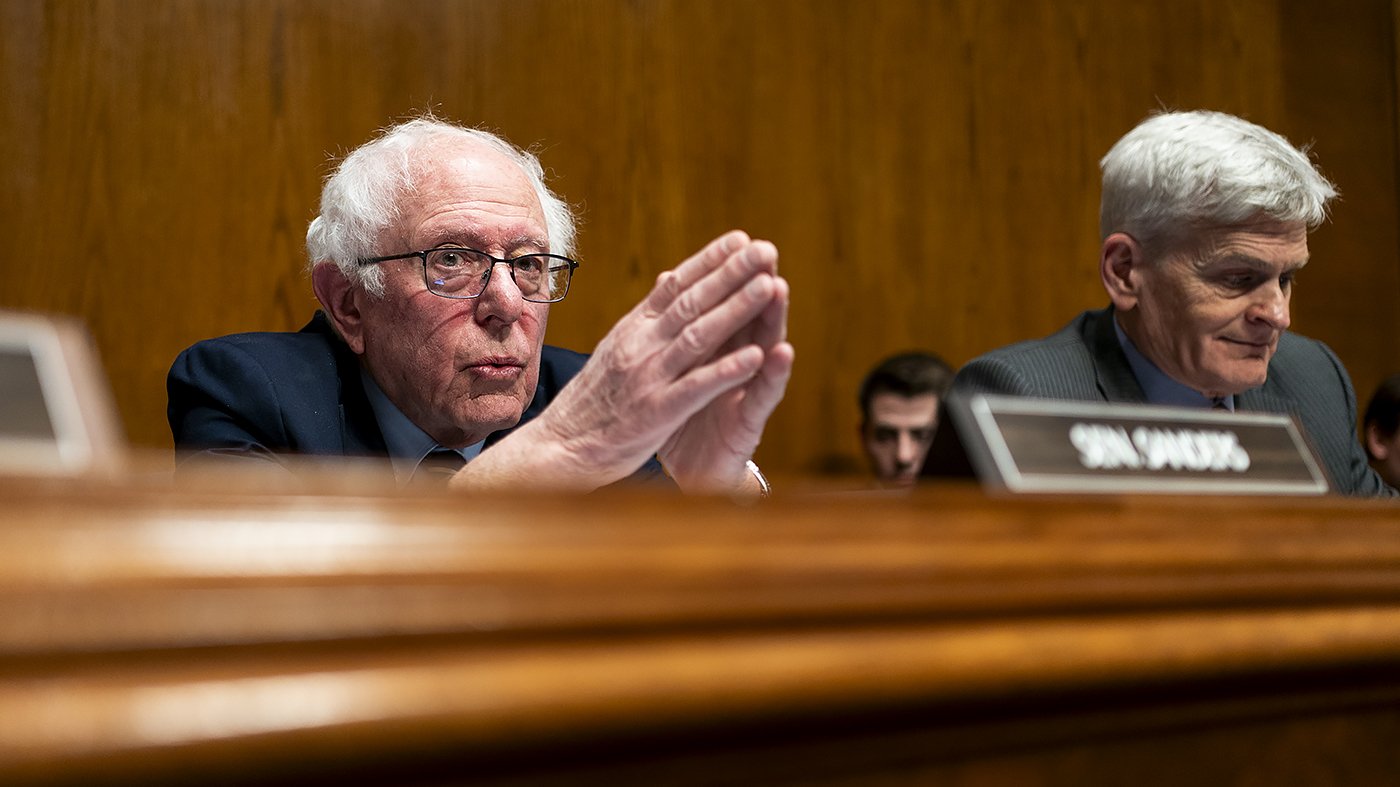
Senator Bernie Sanders, the independent from Vermont and ranking member of the Senate Health, Education, Labor and Pensions Committee, has formally requested that the panel's Republican chairman, Senator Bill Cassidy of Louisiana, convene an immediate hearing. The subject would be what Sanders terms a "dangerous misinformation campaign" led by Health and Human Services Secretary Robert F. Kennedy Jr., who has long promoted the scientifically rejected theory that vaccines cause autism.
In a letter to Cassidy, Sanders argued that Kennedy has persisted in his anti-vaccine advocacy even after assuming his cabinet role. "The reality is that since Secretary Kennedy has been in office, he has continued his longstanding crusade against vaccines and his advocacy of conspiracy theories that vaccines cause autism—all of which have been repeatedly rejected by scientists," Sanders wrote.

The senator invoked Cassidy's own public record supporting immunization, quoting a past statement from the Louisiana Republican: "Vaccines for measles, polio, hepatitis B and other childhood diseases are safe and effective and will not cause autism." Sanders framed the request as a matter of aligning the committee's oversight with established public health principles.
The push comes amid significant legal and policy turmoil surrounding Kennedy's tenure. Just one day before Sanders sent his letter, a federal judge issued a preliminary injunction blocking a reduced childhood immunization schedule Kennedy released earlier this year. The same ruling blocked and nullified a vaccine advisory panel that the secretary had fired and reconstituted last year. This legal setback underscores the contentious nature of Kennedy's policy shifts, which have faced challenges similar to other high-stakes administration actions, such as when a federal court blocked Kennedy's vaccine policy overhaul amid reports of waning White House support.
Sanders also highlighted Kennedy's recent overhaul of the Interagency Autism Coordinating Committee (IACC) at the National Institutes of Health. The secretary appointed several new members, including John Gilmore and Ginger Taylor, who have publicly endorsed the unproven vaccine-autism link. "The IACC is charged with disseminating fact-based information to the public about autism and developing recommendations for autism research," Sanders noted. "Unfortunately, Secretary Kennedy’s newly appointed members have a history of doing the opposite by promoting and providing controversial, untested and dangerous treatments for autism and pushing discredited claims that vaccines cause autism."
The senator's call for a hearing reflects deepening concern among public health advocates and lawmakers about the erosion of trust in federal health guidance. This turmoil at HHS has contributed to a documented decline in public trust in federal vaccine guidance, creating a potential crisis for routine immunization programs.
Sanders asked Cassidy to schedule the hearing "as soon as possible," framing it as an urgent matter of congressional oversight. The request places direct pressure on Cassidy, who as HELP Committee chairman controls the panel's agenda, to either act on the allegations or publicly decline.
The confrontation occurs against a backdrop of intense political debate over science, federal authority, and misinformation. The outcome could influence not only public health policy but also the political dynamics of the HELP Committee, which oversees vast sectors of domestic policy. This internal pressure for accountability mirrors external diplomatic tensions, where officials like Adam Schiff have publicly cast doubt on administration claims regarding negotiations with Iran, suggesting political motives can sometimes override factual clarity.
As of now, the HELP Committee has not publicly responded to Sanders's letter or indicated whether a hearing will be scheduled. The standoff highlights the ongoing conflict between evidence-based public health orthodoxy and political appointees who challenge it, a struggle with significant implications for national health security.