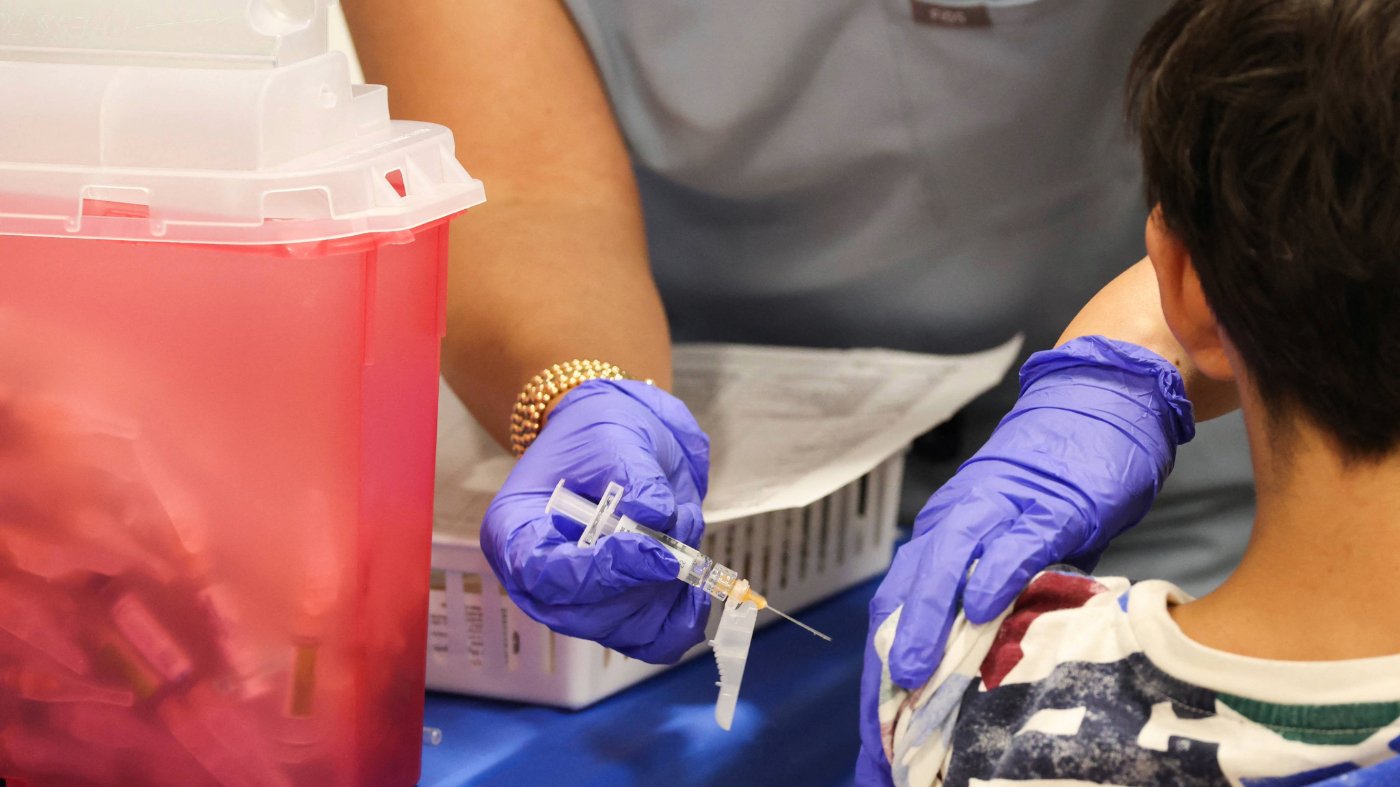
Public confidence in the federal government's recommendations for childhood immunizations has eroded significantly in recent months, according to new polling data that underscores deepening political divisions over public health authority. The findings arrive amid ongoing legal and political battles over the direction of the nation's vaccine policies.
Survey Shows Broad Decline in Confidence
The Axios/Ipsos American Health Index, conducted in early March, found that just six in ten Americans now express trust in federal guidance on childhood vaccines. This marks an 11-point decline from June of last year, when 71 percent of respondents reported confidence. The drop cuts across the political spectrum, indicating a widespread erosion of trust in federal health institutions.
Trust fell most precipitously among Democrats, plummeting 15 points from 81 percent to 66 percent. Republican confidence also slipped, declining six points from 69 percent to 63 percent. Independents showed a seven-point drop, from 65 percent to 58 percent. This broad-based decline suggests that recent controversies have damaged the perceived credibility of federal health agencies beyond core partisan lines.
Policy Changes and Legal Challenges
The survey was released one day after U.S. District Judge Brian E. Murphy issued a ruling that blocked a series of vaccine policy changes enacted by Health and Human Services Secretary Robert F. Kennedy Jr. The judge also found that Kennedy likely violated federal law last year when he dismissed 17 members of the Advisory Committee on Immunization Practices (ACIP) and replaced them with his own appointees.
Judge Murphy's order invalidated all decisions made by the reconstituted panel. These included controversial moves to no longer recommend the hepatitis B vaccine at birth and to drop the COVID-19 vaccine recommendation for children six months and older. The legal setback for the administration's health agenda is detailed in our report on the federal court blocking Kennedy's vaccine policy overhaul.
Earlier this year, the Centers for Disease Control and Prevention (CDC), under Kennedy's direction, reduced the number of recommended childhood shots from 17 to 11. The secretary framed this as part of his "Make America Healthy Again" initiative to reshape healthcare policy. The move drew immediate criticism from medical experts who warned it could trigger a resurgence of preventable diseases by undermining public confidence in vaccine safety and efficacy.
Institutional Trust and Political Perceptions
The polling data reveals a significant preference for medical associations over federal agencies. Approximately one-third of Americans expressed greater confidence in guidelines from the American Academy of Pediatrics compared to just 8 percent who trusted the CDC more. Twenty-three percent had equal confidence in both, while 16 percent were confident in neither source.
A substantial portion of the public remains uncertain about whose views guide federal health agencies. The survey found an even 30 percent split between those who believe guidance reflects the Trump administration's views and those who believe it reflects career scientists' opinions. A plurality, 38 percent, said they were unsure, highlighting the politicized environment surrounding public health. This erosion of trust in institutions coincides with broader foreign policy concerns, as seen in a recent poll showing Americans view the U.S. position in the Iran conflict as deteriorating.
The survey also underscores the challenges facing new vaccine developments in this climate of skepticism. Public trust is crucial for the adoption of new immunizations, such as the Lyme disease vaccine recently reporting 70% efficacy in a Phase 3 trial.
Methodology and Implications
The Axios/Ipsos American Health Index was conducted from March 6 to March 9, surveying 1,225 U.S. adults. It carries a margin of error of 2.9 percentage points. The findings point to a fragile state of public trust as the administration continues its push to overhaul federal health policy, an effort now facing significant judicial headwinds.
The simultaneous decline in trust across partisan groups presents a complex challenge for public health officials. It suggests that efforts to streamline recommendations, intended in part to bolster confidence, may have had the opposite effect, fueling uncertainty. The legal invalidation of the advisory panel's decisions adds another layer of instability, potentially leaving healthcare providers and parents without clear, authoritative guidance. This political turmoil extends beyond health policy, reflecting similar tensions in national security, where figures like Steve Bannon frame security deployments as tests for future election operations.