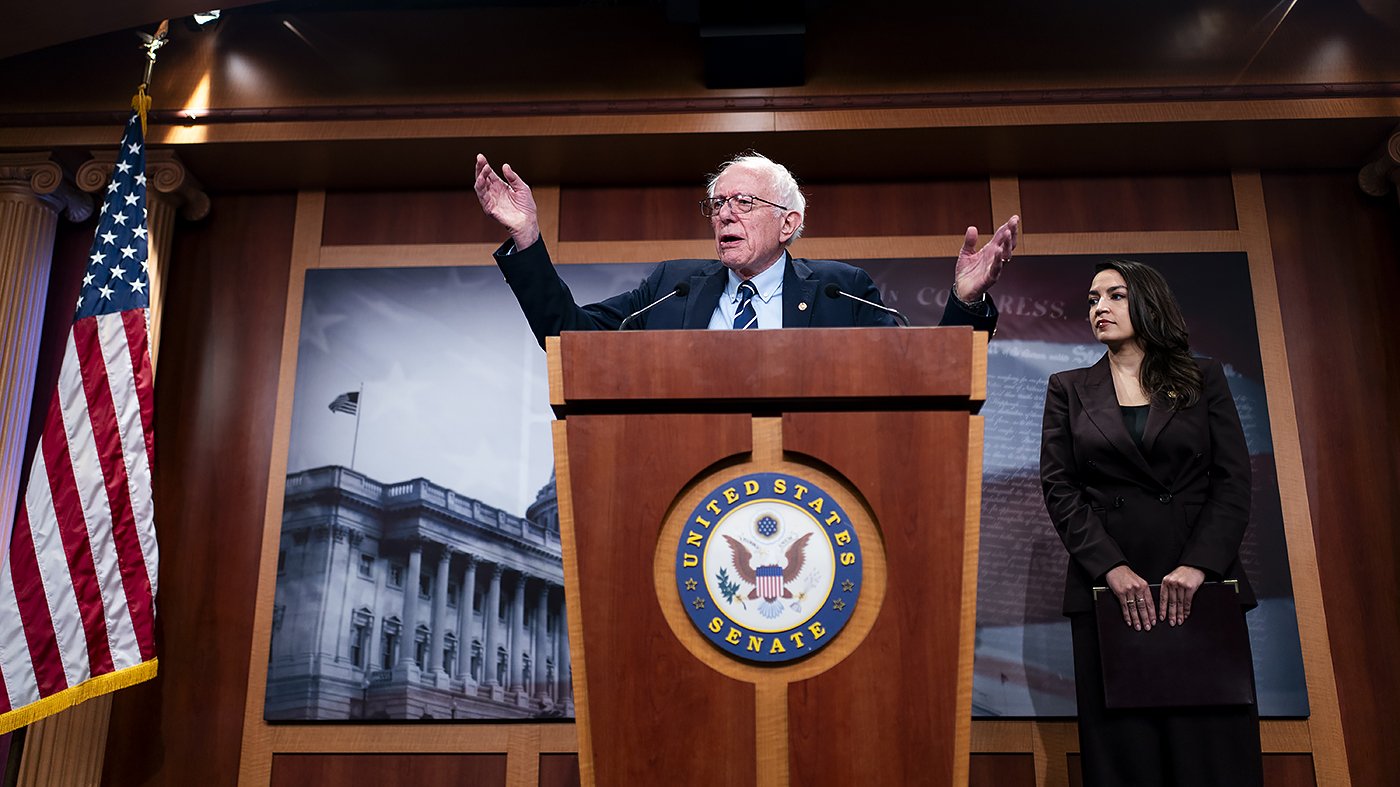
Senator Bernie Sanders, an Independent from Vermont, and Representative Alexandria Ocasio-Cortez, a New York Democrat, unveiled legislation on Wednesday that would impose a nationwide freeze on the construction of new data centers dedicated to artificial intelligence. The proposed Artificial Intelligence Data Center Moratorium Act seeks to halt the expansion of this critical infrastructure until Congress enacts comprehensive federal regulations.
Legislative Rationale and Requirements
The bill mandates that construction cannot resume until lawmakers pass "strong national safeguards." These required measures include establishing a government review process for AI products, implementing protections against mass displacement of workers, and instituting limits on how much these energy-intensive facilities can increase consumer electricity prices. The legislators argue that the rapid, unregulated growth of AI infrastructure presents systemic risks that must be addressed before expansion continues.

"A moratorium will give us time — time to understand the risks, time to protect working families, time to defend our democracy and time to ensure that this technology works for all of us, not just the few," Sanders stated at a press conference announcing the bill. He first signaled support for such a pause in December, as similar local opposition to data center projects has grown, including cases like Aurora imposing strict noise limits on data centers following resident backlash.
Focus on Surveillance and Legislative Gridlock
Ocasio-Cortez, who is co-leading the effort, emphasized the national security and civil liberties implications of unchecked AI development. "All of this harm has occurred, not in spite of, but because of the absence of federal legislation to regulate AI," she said. She expressed frustration with the legislative stalemate on AI, noting that even narrow, consensus-driven proposals have faced significant opposition. "This is not my first bill around AI, and I can tell you that it is extremely discouraging to see how even the most minute efforts to protect people... is still combated," she added, referencing failed attempts to regulate AI-generated exploitative content. This move follows her pattern of challenging established systems, as seen when she dismissed prediction market reforms as a 'fig leaf' against insider trading.
The proposal enters a political landscape where major tech legislation has repeatedly stalled. It represents a more aggressive regulatory approach than industry-supported frameworks and aligns with Sanders's history of advocating for stringent oversight, similar to his recent demand for a Senate hearing on vaccine misinformation campaigns.
Industry Pushback and Economic Arguments
The initiative was immediately criticized by industry representatives. Cy McNeill, senior director of federal affairs at the Data Center Coalition, argued that data centers are essential infrastructure. "Data centers power modern life," McNeill said in a statement. "This infrastructure is not optional; it is foundational." He warned that the proposed freeze would have severe consequences, stating, "A federal mandate to halt data center construction risks rationing access to digital services, impairs our global competitiveness, and will have substantial impacts on Americans’ daily lives."
The debate touches on core tensions between technological innovation, economic leadership, and regulatory oversight. Proponents of the moratorium frame it as a necessary pause to prevent irreversible harm, while opponents view it as an impractical barrier that would cede ground to international competitors, akin to concerns driving NASA's accelerated timeline for lunar base construction.
Context and Political Pathway
The bill reflects growing scrutiny of the AI sector's physical footprint, particularly its massive energy and water consumption, which has sparked local disputes nationwide. It also signals a strategic shift by progressive lawmakers to use the permitting and construction of physical infrastructure as a leverage point to force broader AI regulation, a tactic similar to legal challenges used in other domains, such as the federal lawsuit filed to halt the Kennedy Center renovation plan.
The legislation's prospects in a divided Congress are uncertain. It is likely to face stiff resistance from pro-business lawmakers and members from districts where data center development is a key economic driver. However, it establishes a clear marker in the evolving political debate over AI governance, framing the issue around labor, equity, and democratic resilience rather than purely technical standards.