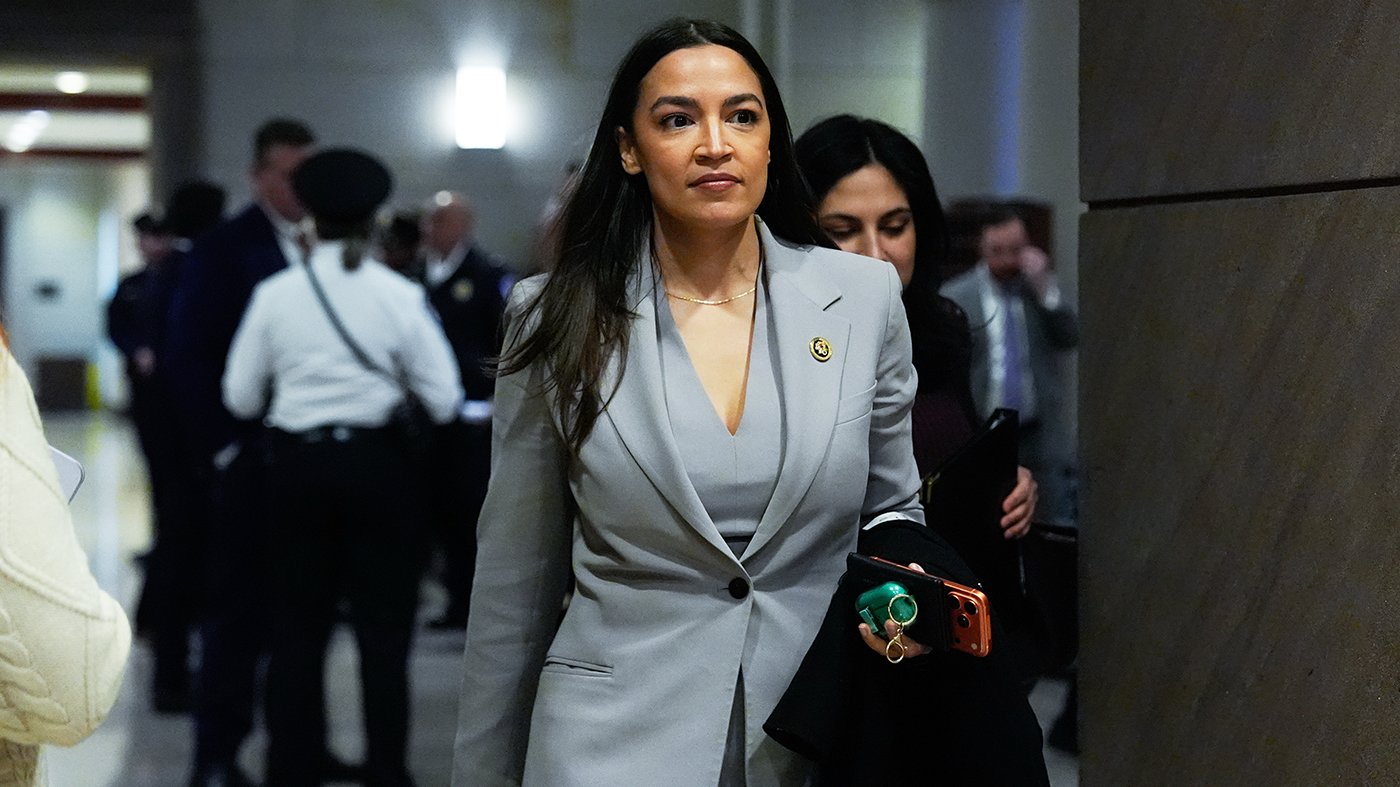
Representative Alexandria Ocasio-Cortez sharply criticized newly announced insider trading restrictions from major prediction market platforms on Monday, labeling the reforms a superficial "fig leaf" that fails to address systemic vulnerabilities.
The New York Democrat argued in a social media post that the policy changes from platforms Kalshi and Polymarket are "absolutely not enough" to prevent trading on non-public information. "Just on the policy piece alone, there are SO many individuals – staff, advisors, consultants, cabinet secretaries, spouses, and more – that can trade on insider information," Ocasio-Cortez stated. "This is just a fig leaf to deflect from criticism. We need to do more."
Platforms Announce New Guardrails
The criticism followed announcements from both companies earlier Monday. Kalshi said it was implementing "new technological guardrails that preemptively block politicians, athletes, and other relevant people from trading in certain politics and sports markets." The company framed this as a proactive measure exceeding traditional market practices.
Polymarket concurrently unveiled "updated market integrity rules" designed to clarify prohibited conduct. The rules specifically ban trading on stolen confidential information, trading based on illegal tips, and trading by individuals who could influence an event's outcome.
Industry Pushback and Defense
Kalshi CEO Tarek Mansour responded directly to Ocasio-Cortez's critique, defending the platform's existing protocols. "Like traditional markets, Kalshi already bans, monitors, and enforces against all the groups you mentioned," Mansour wrote. He emphasized that the new pre-trade blocking screens represent an advancement, noting "even the stock market doesn't do this yet."
The debate over prediction market integrity has intensified amid geopolitical events where insider knowledge could prove lucrative. Recent reporting has highlighted suspicious trading activity surrounding the Iran-Israel conflict. One trader on Polymarket reportedly earned nearly $1 million in 2024 by correctly predicting U.S. and Israeli military actions against Iran.
Further scrutiny emerged around a cluster of eight newly created accounts that placed nearly $70,000 in bets predicting a U.S.-Iran ceasefire by March 31. The bets, placed around March 21, could yield approximately $820,000 if a deal materializes, a prospect that gained traction after former President Donald Trump signaled a desire to end hostilities. This activity underscores broader concerns about the vulnerability of prediction markets to information asymmetries.
The controversy occurs alongside other regulatory challenges for the sector, including a recent Nevada court order halting Kalshi's operations related to sports betting. It also intersects with wider political efforts to regulate these markets, such as the bipartisan push led by Reps. Schiff and Curtis to ban sports contracts on prediction platforms.
The fundamental dispute centers on whether technological barriers and updated rules can effectively police a market where value is derived from future political and geopolitical events. Ocasio-Cortez's intervention suggests that legislative or regulatory action may be forthcoming, as purely voluntary measures by the platforms are deemed insufficient to prevent abuse by a vast network of connected individuals.