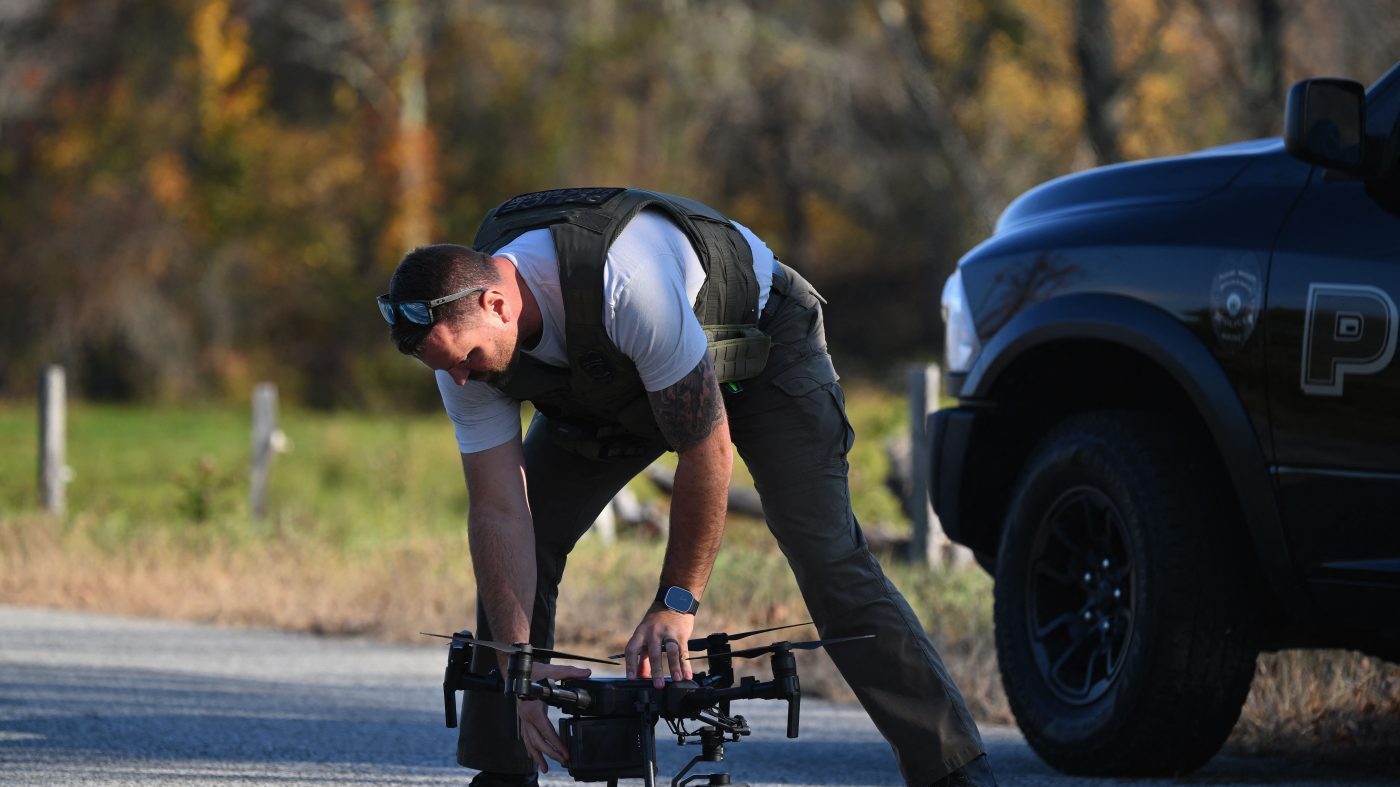
Sacramento County Sheriff Jim Cooper on Monday declared that drones are poised to become a cornerstone of American policing after his department used an unmanned aircraft to disarm a wanted felon earlier this month—a maneuver he says marks a first in U.S. law enforcement history.
Speaking on NewsNation’s “The Hill,” Cooper described the operation as a glimpse into the future of tactical policing. “Drones are cheap, they work, and they save lives,” Cooper said. “We use them to enter houses—through garage doors, doggy doors—on a regular basis. This was just the next step.”

The incident unfolded when deputies with the Sacramento County Sheriff’s Office Special Enforcement Unit surrounded a residence after spotting a known felon and parolee-at-large armed with a firearm. After negotiators failed to get a response, drone operators located the suspect hiding in a garage corner and determined he was holding a knife.
Instead of storming the garage—a move that could have escalated into a deadly confrontation—one drone pilot attached a powerful magnet to the aircraft and used it to safely lift the knife from the suspect’s hand. The sheriff’s office later released drone footage showing the magnetized device pulling the weapon away. Deputies then moved in and took the suspect into custody without incident.
“It was an incredible display of creativity, skill, and precision,” the department wrote on social media. Cooper noted the suspect appeared unconscious and may have overdosed, adding that the drone operation “possibly saved someone’s life, preventing us from taking a life.”
The use of drones in law enforcement has grown rapidly. According to a 2020 study by the Bard College Center for the Study of the Drone, more than 1,500 state and local police, sheriff, fire, and emergency services agencies had acquired drones by March of that year, with 283 agencies spending over $8.4 million collectively on the equipment. The technology is also increasingly deployed in other contexts, such as Ukraine’s escalating drone campaign against Moscow refineries and cellular drones that pose a cheap precision threat to Western security.
But the expansion of drone use has drawn scrutiny from civil liberties groups. The American Civil Liberties Union has warned that drones equipped with facial recognition, infrared sensors, or audio surveillance could violate privacy rights. The organization has called for warrants to be required before police deploy drones for surveillance. Cooper dismissed those concerns, arguing that drones make officers better decision-makers and speed up response times. “It’s a win-win all the way around,” he said.
The Sacramento operation is the latest example of law enforcement leveraging drone technology in innovative ways. Earlier this year, a drone boat rescued an Apache helicopter crew near the Strait of Hormuz, while Russian drone strikes hit the Chernobyl nuclear fuel site, highlighting the dual-use nature of the technology. Cooper’s comments underscore a broader trend: as drones become cheaper and more capable, police departments are finding new ways to deploy them in high-risk situations, often with dramatic results.