Ukraine's recent Operation Spiderweb has rewritten the rules of modern warfare. In a coordinated strike, dozens of internet-connected drones launched from trucks inside Russian territory destroyed strategic Russian aircraft. The drones took off from Russian soil but were controlled by operators sitting safely in Ukraine. This operation is a stark warning for every Western capital: precision strike capability is no longer the exclusive domain of major military powers. It is now accessible, at low cost, to almost any actor.
The battlefield is undergoing its most radical transformation since the advent of rockets and missiles. The wars in Ukraine and Gaza have accelerated a revolution that is reshaping how militaries, intelligence services, and even terrorist organizations think about conflict. Until recently, drone threats fell into two categories: short-range radio-controlled drones, effective but limited to a few miles, and long-range drones that were essentially guided missiles with little ability to adjust in flight.

Two New Technologies Change the Game
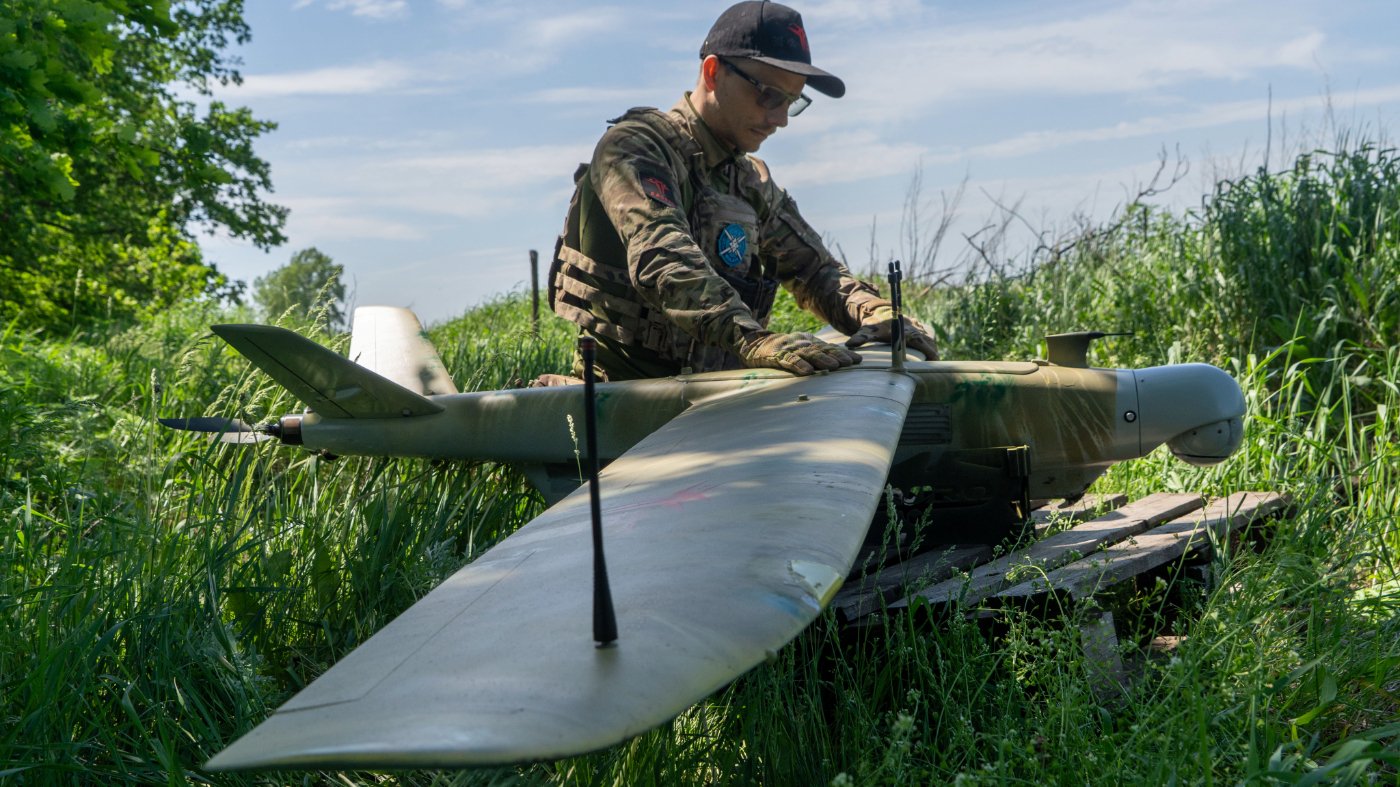
Two emerging technologies have shifted the balance. The first is fiber-optic drones, which use a physical cable to connect operator and drone, typically achieving ranges of 5 to 20 kilometers. But the more strategically significant development is the cellular drone. These systems rely on mobile phone networks or internet connections, allowing them to fly much farther, be redirected mid-flight, operate at low altitudes to evade radar, and strike with high precision. In Ukraine, there is mounting evidence of cellular drones operating at ranges of hundreds of kilometers—even up to 1,000 kilometers—far beyond what fiber-optic systems can achieve.
The danger of cellular connectivity lies in its accessibility. Unlike satellite links, cellular components are lightweight, cheap, and widely available. A simple modem, a SIM card, network access, and a control interface—all commercially obtainable—can turn an inexpensive drone into a precision weapon. Wherever there is cellular coverage, a drone can be guided toward a specific target: an apartment window, an air-defense battery, a critical infrastructure site, or an aircraft on the ground. The operator can be in a bunker in another country, far from the launch site and the target. The line between front line and home front is blurring.
Strategic Implications for Democracies
This is what makes the cellular drone a strategic problem, not just a tactical nuisance. Precision, range, and operational flexibility are being democratized for actors that could never afford guided missiles or modern air forces: failed states, militias, terrorist organizations, and criminal networks. The threat is not theoretical. Russia has used internet-connected drones against Ukraine and is a leading supplier of weapons to malign actors. Iran possesses similar capabilities; China is assumed to as well. Given the technology's simplicity, proliferation is inevitable. An offensive operation against a democratic society is a question of when, not if.
Democracies face a particular challenge due to asymmetry. Authoritarian regimes can shut down cellular networks with little regard for civil liberties or economic cost. Democracies have far higher constraints, and even a partial shutdown can cause disruption that becomes a strategic effect for the attacker. The drone does not have to reach its target to inflict damage. Israel's experience offers a separate warning. The danger of Hamas's tunnel network was not that it went undetected, but that its operational implications were not fully absorbed in time. The later surprise at the emergence of fiber-optic drones on the Lebanese front pointed to the same problem: bureaucratic systems often recognize new threats before they adapt to them. The cellular drone demands a faster cycle of recognition to response.
What the West Must Do
The response must begin with intelligence. Western nations should cooperate more closely in threat analysis and in mapping the proliferation pathways of these systems. Ukraine, which has become by necessity the world's most important laboratory for unmanned-systems innovation, offers lessons that must be absorbed urgently. Beyond intelligence, the West needs capabilities to detect and counter drones that use cellular networks, not only at borders but deep inside the homeland. A drone does not behave like a normal smartphone. Its communications patterns and command signals may create detectable signatures that can be flagged in real time. Western countries will also need tools that exploit the drone's dependency on connectivity—identifying, isolating, and disrupting hostile links where legally and technically possible. Kinetic layers of defense will remain necessary as well.
The West has real advantages: artificial intelligence, data processing, cyber capabilities, and advanced algorithms. These are precisely the tools needed to detect weak signals across vast communications networks. But technological superiority is not the same as operational readiness. That requires doctrine, procurement, and partnerships with the private sector, which can often deliver solutions faster than state bureaucracies. In parallel, Congress is debating measures like the Schiff Bill that mandates human control over Pentagon AI weapons, reflecting growing awareness of the need to manage emerging threats responsibly.
Anyone doubting the cost of delay need only look at Russia, a nuclear power that cannot prevent waves of Ukrainian drones from repeatedly striking deep into its strategic rear. Western democracies cannot afford to wait for the first strategic strike before adapting. Cellular drones turn civilian connectivity into a battlespace. The technology is already here. The question is whether the response will be as swift as the threat demands.