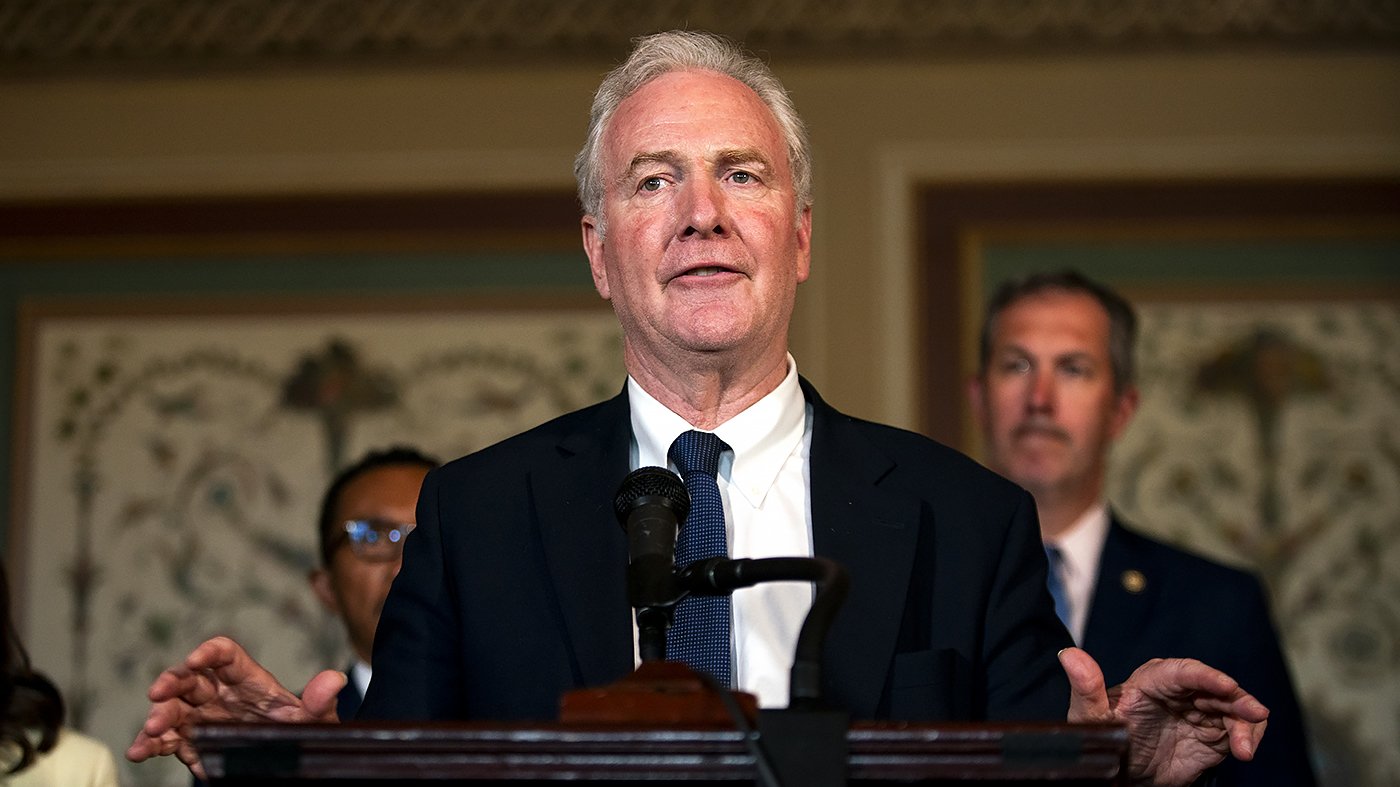
Sen. Chris Van Hollen (D-Md.) accused President Trump of executing a “bait and switch” against Saudi Arabia, alleging the administration changed the terms of a nuclear cooperation agreement by linking it to Saudi normalization with Israel after the deal was already signed.
“As you well know, the Saudis have been very clear that they will normalize relations with Israel when we’re on a clear path toward developing a Palestinian state, living side-by-side — security for both Palestinians and Israelis,” Van Hollen told Martha Raddatz on ABC News’s “This Week with George Stephanopoulos.” “That has been the Saudi position. And so, what the Trump administration did was a bait and switch scheme.”
The U.S. and Saudi Arabia finalized a nuclear cooperation agreement on Wednesday that permits Riyadh to enrich uranium, a provision that could pave the way for the Gulf kingdom to develop nuclear weapons. Saudi Arabia, a regional rival of U.S. ally Israel, has also faced longstanding allegations of involvement in the September 11, 2001, terrorist attacks.
Less than 24 hours later, Trump made Saudi normalization with Israel a condition of the deal. Van Hollen described the sequence as “complete whiplash.”
“I mean, it just shows you cannot rely on the United States,” the Maryland Democrat said. “You certainly can’t count on the Trump administration. They had signed a deal.”
Saudi officials have consistently conditioned any normalization with Israel on a credible path to a Palestinian state, a prospect Israeli Prime Minister Benjamin Netanyahu has repeatedly dismissed. Netanyahu’s office issued a statement Thursday touting the potential expansion of the Abraham Accords, saying, “The joint American and Israeli military action against the genocidal regime in Tehran and Israel’s crushing of Iran’s terror axis have created the possibility to expand the circle of peace.” The statement added, “As President Trump has said, Saudi Arabia’s joining of the Abraham Accords would be a historic leap forward for peace in the Middle East. Peace through Strength.”
White House Press Secretary Karoline Leavitt defended Trump’s approach, saying he “is always the final dealmaker.” When asked why the Abraham Accords conditions were not included in the Energy Department’s initial deal announcement, she warned that if the Saudis reject joining the accords, “the deal is off.” Trump has touted the 2020 Abraham Accords, which normalized ties between Israel, the UAE, and Bahrain, as a signature first-term achievement that he believes should have earned him the Nobel Peace Prize.
On Friday, Trump suggested that Saudi Arabia had initially declined to join the accords due to fear of Iranian attack — a threat he claimed has since been eliminated. “It’s a two-way street, and we think it’s very important for the future of the Middle East,” he said from the Oval Office during a nuclear power event, with Energy Secretary Chris Wright at his side.
The episode has intensified scrutiny of Trump’s dealmaking style and raised questions about U.S. credibility in the region. As Sunday shows previewed the escalating tensions, critics argue the administration’s shifting conditions could undermine trust with Riyadh at a moment when the Iran conflict threatens GOP turnout and Trump’s base shows signs of wavering on war. Meanwhile, Houthi missile and drone barrages targeting Saudi Aramco sites underscore the volatile security landscape.