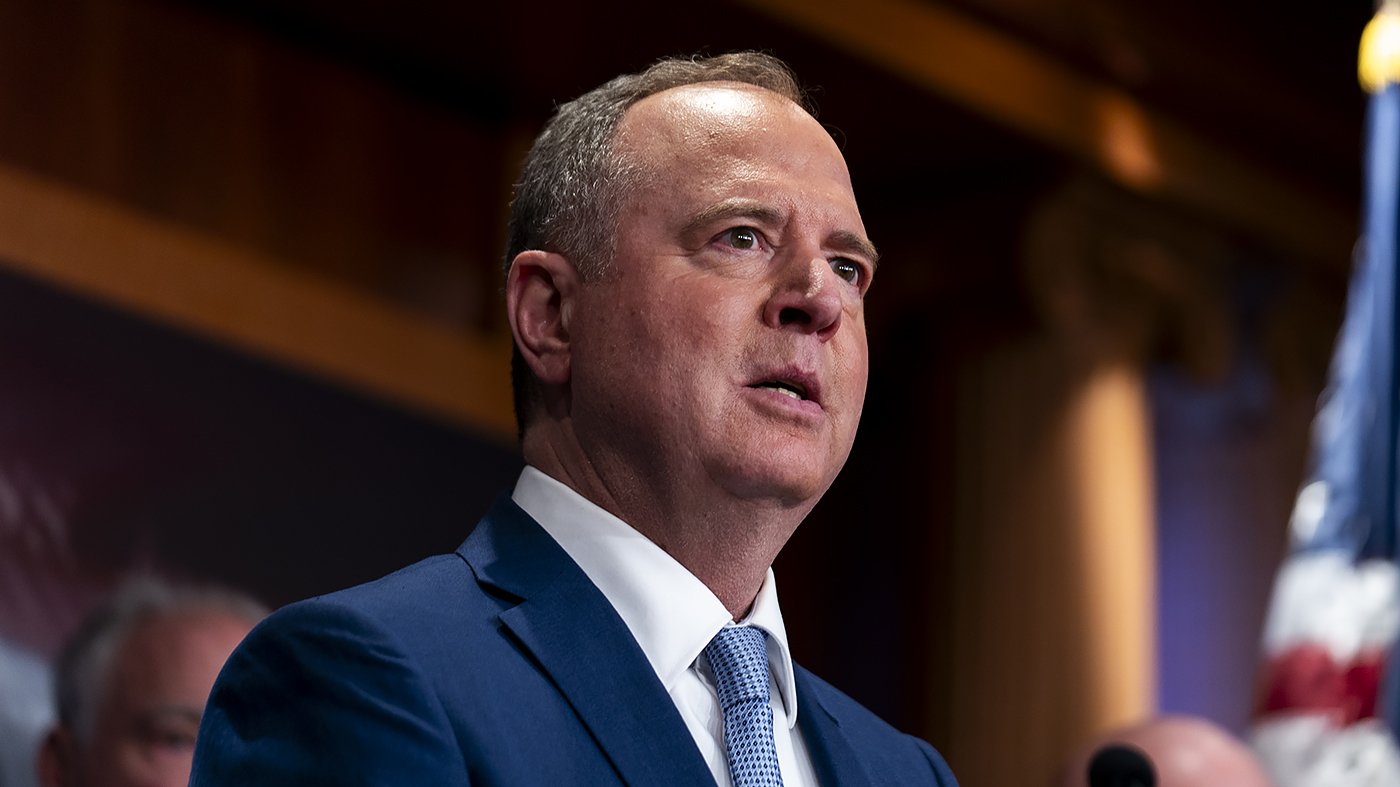
Sen. Adam Schiff (D-Calif.) on Monday introduced legislation that would compel the Defense Department to maintain human control over autonomous and semi-autonomous weapon systems, a move that sharpens the Democratic push to rein in the military's use of artificial intelligence.
The Human Authority in Lethal Operations (HALO) Act aims to establish a transparent chain of command, with a designated commander holding final authority over any decision to use force involving AI-driven weapons. Pentagon officials would also be required to document their decision-making processes—including target selection—for retrospective review.
“The past few months have shown us that there is an urgent need for commonsense guardrails to ensure the Defense Department’s use of AI is in line with Americans’ national security and privacy priorities,” Schiff said in a statement. He acknowledged the potential benefits of AI for national security but cautioned, “just as with any tool, we cannot depend on technology alone to guide us, particularly when the risks of harm can be fatal.”
The bill goes further than previous proposals by barring the military from using AI to monitor individuals for constitutionally protected activities, removing human oversight from nuclear weapons deployment, or purchasing personal data on Americans from third parties in certain cases. It also mandates a review process for any autonomous or semi-autonomous weapon system.
Schiff’s proposal arrives as several Senate Democrats push to attach AI constraints to the National Defense Authorization Act (NDAA). Sen. Kirsten Gillibrand (D-N.Y.) introduced her own bill last week that would prohibit the Pentagon from using AI to launch nuclear weapons, conduct surveillance on Americans, or deploy autonomous weapons—language she hopes to offer as an NDAA amendment. Sen. Elissa Slotkin (D-Mich.) also plans to introduce AI guardrails as an amendment to the annual defense policy bill.
The legislative flurry follows a highly public dispute earlier this year between the Pentagon and Anthropic over the terms of use for the company’s AI model. The episode highlighted growing friction between the defense establishment and tech firms over ethical boundaries in military AI deployment.
For context, the Pentagon has faced scrutiny on multiple fronts recently. House Republicans advanced a $1.15 trillion defense bill that would rename the Pentagon as the War Department, while Democrats have demanded answers about the White House’s role in a Pentagon loan to a firm linked to Donald Trump Jr. These debates underscore the broader partisan tensions shaping defense policy.
Schiff’s HALO Act, if enacted, would represent a significant shift in how the military integrates AI into lethal operations, ensuring that human judgment remains central even as technology advances.