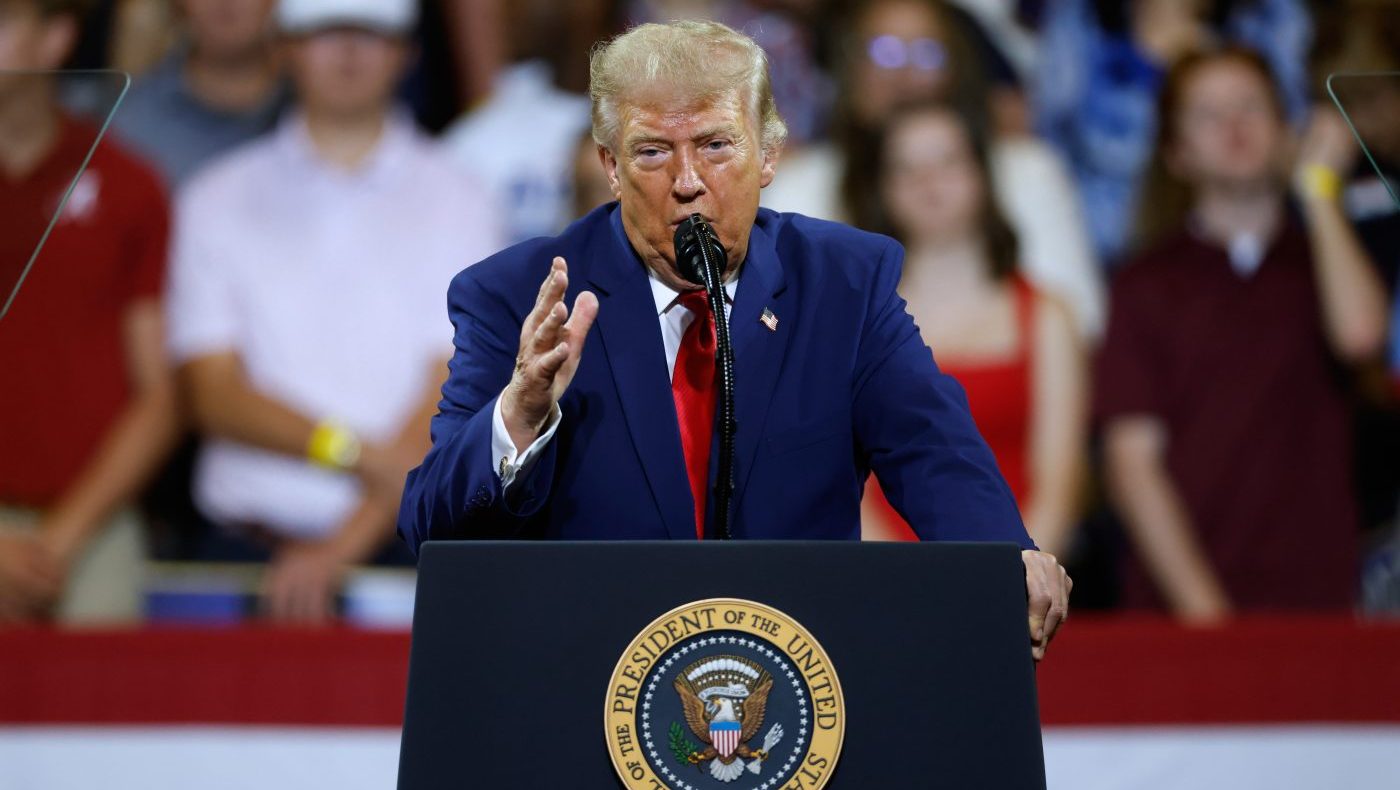
President Donald Trump warned Thursday that the United States will hold Iran directly accountable for any further Houthi attacks on commercial vessels, after the Iranian-backed Yemeni rebel group claimed responsibility for striking two Saudi oil tankers in the Red Sea. The ultimatum, delivered via Truth Social, marks a sharp escalation in rhetoric as the administration juggles ongoing military operations against Iran and growing instability in key maritime chokepoints.
“A year ago the United States of America attacked, very powerfully, the Houthis, for their interference with commerce and trade, by shooting at ships,” Trump wrote, referencing the nearly two-month U.S. campaign against the group that ran from March to May 2025. That operation targeted Houthi assets in response to their campaign of harassment against commercial shipping in the Red Sea and Gulf of Aden.
On Thursday, the Houthis said they hit the Saudi-flagged tankers Encelia and Layla using ballistic and cruise missiles as well as drones, according to the group’s SABA news agency. The attacks are the first known since the militants declared a blockade of Saudi vessels attempting to transit the Bab el-Mandeb Strait on Monday.
Trump noted that the Houthis had “acted very responsibly” since the U.S. concluded its military campaign in May 2025 and throughout the ongoing conflict with Iran. “Unfortunately, now they are starting up again, shooting at two Saudi Arabian ships last night,” he said. “Please let this TRUTH serve to represent that if they do this again, the U.S. will hold Iran responsible, in that the Houthis are a Surrogate and/or Proxy of Iran, and major military punishment will be inflicted upon Iran and, of course, the Houthis, themselves, who I am very disappointed with in that they have, until now, acted very professionally and smart.”
The Houthis said they “will continue their naval operations” against Saudi Arabia, which leads a coalition—backed by U.S. arms—against the group in Yemen’s 11-year civil war. The blockade followed a strike on Sanaa International Airport, which the internationally recognized, Saudi-backed Yemeni government claimed responsibility for. The Houthis warned that “any folly or aggression targeting our country will be met with large-scale operations deep within its territory.”
The U.S. is already conducting daily strikes against Iran, completing the 12th consecutive night of attacks on Wednesday. U.S. Central Command said it hit Iranian maritime capabilities, missile and drone storage facilities, coastal surveillance sites, and air defense assets. The Houthi strikes on Saudi tankers add a new dimension to the conflict, threatening to disrupt energy flows through the Bab el-Mandeb Strait, which along with the Strait of Hormuz saw roughly 29.6 million barrels of oil transit in 2023—about 28 percent of global consumption, according to the U.S. Energy Information Administration.
Oil markets reacted swiftly, with Brent crude rising 5.5 percent to $99.25 a barrel on Thursday. The combined pressure from Houthi restrictions on Saudi shipping and Iranian military controls in the Strait of Hormuz threatens to further roil energy markets already on edge. Meanwhile, the Trump administration continues to face scrutiny over its broader regional strategy, including a nuclear deal with Saudi Arabia that has sparked nonproliferation concerns.
The president’s warning to Tehran comes amid a backdrop of domestic political headwinds, as his approval rating has sunk to 36 percent, with a majority disapproving of his performance. The Houthi attacks and the administration’s response are likely to feature prominently in the coming weeks as the situation in the Red Sea and Gulf of Aden remains volatile.