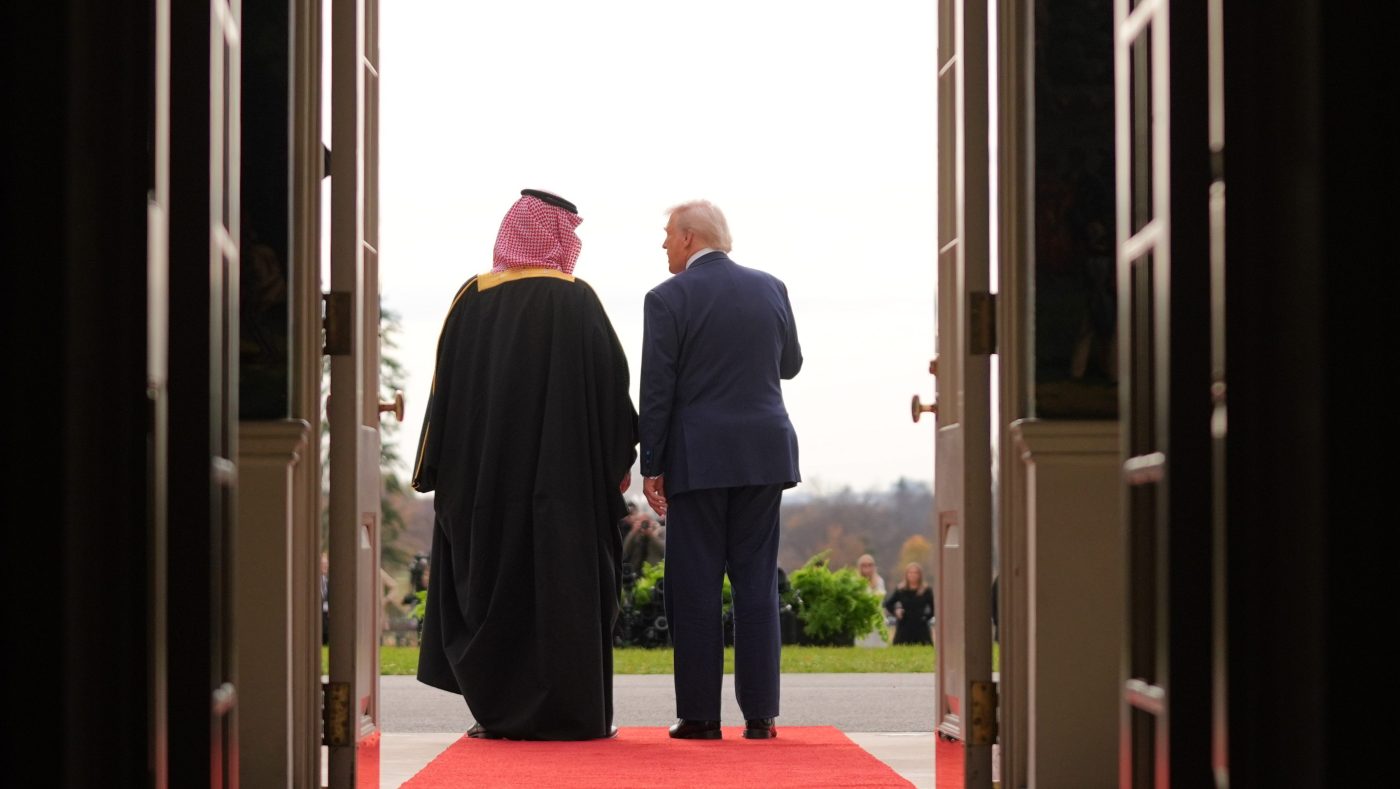
The Trump administration finalized a civilian nuclear cooperation agreement with Saudi Arabia on Wednesday, framing the pact as a major economic victory. Energy Secretary Chris Wright and Saudi Energy Minister Prince Abdulaziz bin Salman signed the so-called 123 agreement, which is required under U.S. law to ensure nonproliferation and security benchmarks are met.
The administration touted the deal as a “decades-long, multi-billion-dollar partnership” that would boost American industry and supply chains while addressing Saudi energy demands. In a statement, officials said the agreement “provides great access for American companies in the Saudi nuclear energy program.” The pact now heads to Congress for review.
But the announcement drew immediate pushback from Democratic lawmakers and nuclear experts, who argued the reported terms could allow Riyadh to enrich uranium—a process that can produce fuel for both reactors and weapons. Rep. Gregory Meeks (D-N.Y.), ranking member of the House Foreign Affairs Committee, voiced alarm on social media, saying any deal must include “appropriate limits on enrichment and reprocessing as well as the IAEA Additional Protocol.”
The agreement comes after years of stalled negotiations. The Biden administration had pushed for a broader package that would tie Saudi civil nuclear cooperation to normalization with Israel, but those efforts collapsed after Hamas’s Oct. 7, 2023 attacks and the ensuing Gaza war. The Trump administration moved ahead without that linkage.
According to The Wall Street Journal, the deal could permit Saudi enrichment under U.S. oversight, with safeguards meant to prevent military use. Critics warned that allowing Riyadh to enrich uranium would give Iran a justification to pursue its own enrichment program, complicating diplomatic efforts to end the conflict.
Rosemary Kelanic, director of the Middle East Program at Defense Priorities, argued the arrangement effectively provides Saudi Arabia with a backdoor security guarantee. “It has happened many times before with other U.S. partners—South Korea and West Germany for example,” she wrote. “They made nuclear progress, we wanted to prevent them from getting the bomb, and ultimately we offered them greater U.S. military protection.”
The administration’s push for the deal coincides with a broader foreign policy agenda that has seen tensions with allies and a focus on transactional relationships. Earlier this year, turnover among Senate-confirmed officials has accelerated, raising questions about continuity in nuclear policy. Meanwhile, the president’s approval ratings have slipped to 36% amid growing concerns over affordability and foreign entanglements.
Supporters of the agreement argue it strengthens U.S. energy security and deepens ties with a key Middle Eastern partner. But the lack of explicit restrictions on enrichment and reprocessing has left many experts uneasy. “This deal is a back door security guarantee to Saudi Arabia,” Kelanic said.