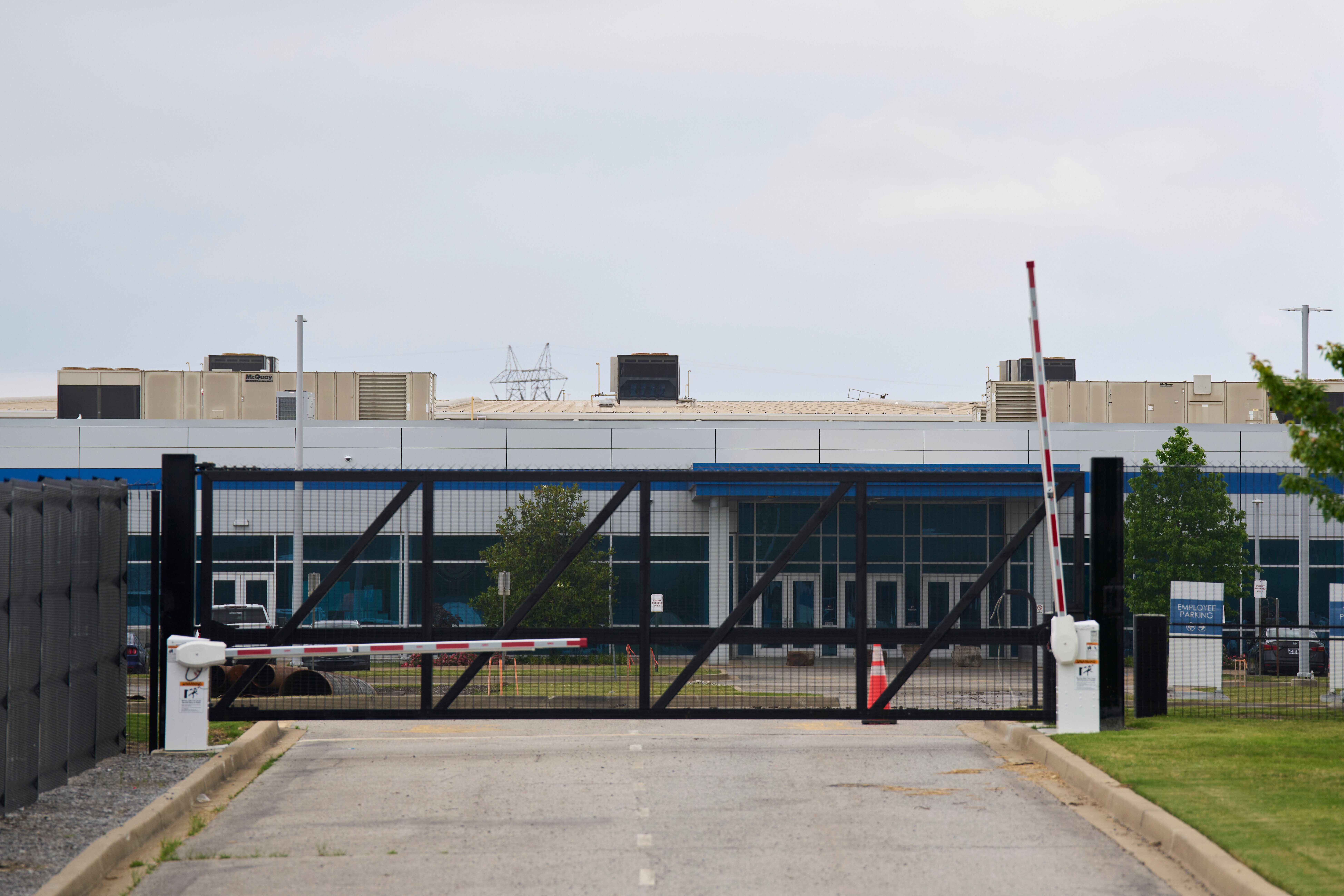
The White House is broadening its push to contain the electricity cost fallout from the data center boom, expanding a voluntary pledge to utilities and state governors as the Trump administration tries to keep rising power demands from hitting American households.
A White House official confirmed to The Hill on Wednesday that President Trump will announce Thursday that major power providers, including Nextera and Duke Energy, are joining the initiative. The pledge, originally targeted at Big Tech companies, now covers nearly 200 additional entities—utilities, data center developers, electric cooperatives, public power sources, and state governors.

Earlier this year, the Trump administration sought agreements with tech giants to foot the bill for increased power costs in areas where they build new data centers. Google, Microsoft, Meta, Oracle, xAI, OpenAI, and Amazon have already signed on. The White House says the expanded pledge now covers 80 percent of the power delivered to U.S. homes and businesses, according to a report from The Wall Street Journal.
“President Trump is expanding the Ratepayer Protection Pledge to governors, legislators, developers, and power providers to ensure everyone involved in building and powering data centers covers their own costs instead of passing them on to American families,” said White House spokeswoman Taylor Rogers in a written statement. “The President’s bold action is turning data centers into engines of growth for local communities, while cementing America’s dominance in the global AI race.”
Trump is set to announce the new signatories at an event Thursday alongside Energy Secretary Chris Wright, EPA Administrator Lee Zeldin, and four Republican governors who have signed: Louisiana’s Jeff Landry, Georgia’s Brian Kemp, Nebraska’s Jim Pillen, and Idaho’s Brad Little. The pledge, originally outlined in a March proclamation, requires AI companies to “build, bring, or buy the new generation resources and electricity needed to satisfy their energy demands, and pay for all new power delivery infrastructure upgrades to service their data centers.” It also mandates that they negotiate their own rate structures with utilities and state governments.
The expansion comes as data center electricity demand strains grids and drives up prices. On the campaign trail, Trump pledged to cut energy and electric prices in half within 18 months, but the data center buildout is contributing to rising costs. According to the Bureau of Labor Statistics, electricity prices rose 4 percent year-over-year in June. The tension between AI growth and ratepayer protection is a growing political flashpoint. Democrats and many Republicans acknowledge the problem, but there are deep interparty and intra-party disagreements on how to address it. Notably, New York recently imposed a one-year moratorium on new large data center construction while it develops a regulatory framework.
The pledge’s expansion also dovetails with broader administration efforts on energy policy. In a related development, the White House has faced scrutiny over SNAP funding in 41 states due to error rates, while Trump continues to escalate strikes on Iran. The data center initiative is part of a pattern where the administration seeks to balance industrial growth with consumer protections, a theme that resonates in the GOP’s expanding target list for Democrat-held seats.