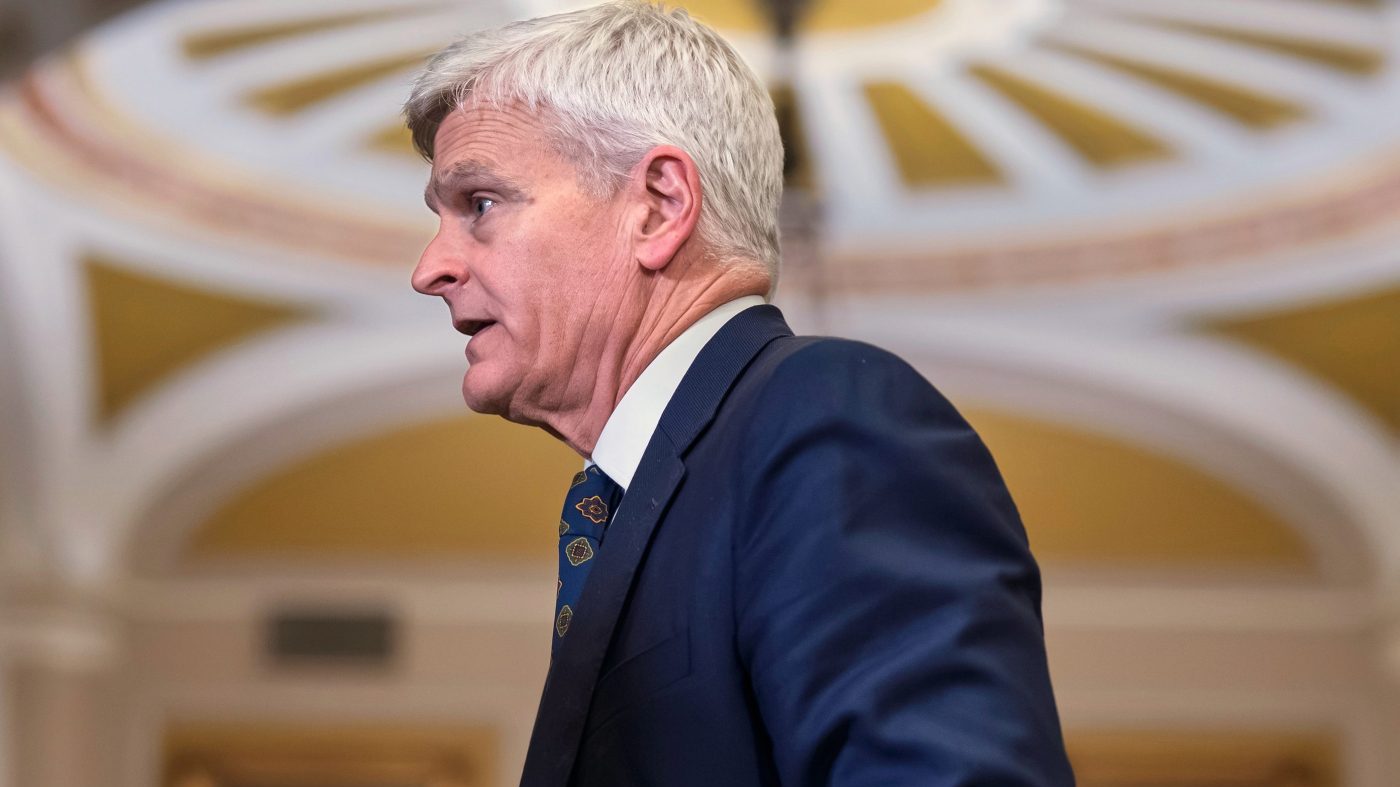
Sen. Bill Cassidy (R-La.) expressed deep skepticism on Sunday about President Trump wrapping up the conflict with Iran anytime soon, urging the White House to bring Congress into the fold for a broader national debate on how to proceed.
In an interview on CNN’s “State of the Union,” Cassidy said that while Trump’s team has suggested a quick resolution, he finds that outcome improbable. “If the president wraps this up quickly, it seems unlikely, but they seem to reassure that it can happen. OK, that’s fine,” he remarked. “At this point, I do think there needs to be a fuller national discussion as to how we go forward.”

The Louisiana Republican, who lost his Senate primary bid in May, emphasized that if the conflict drags on, Trump must present the facts to Congress and the American people. “If it doesn’t happen, then again, the president needs to come to Congress [and] the American people and say, ‘These are the facts,’ and then we have a conversation,” Cassidy added. He acknowledged that lawmakers may need to force that dialogue through legislation, a point host Dana Bash reinforced by noting Congress could compel action by law.
Cassidy has been a vocal critic of Trump’s handling of the war, particularly its economic toll. Iran’s closure of the Strait of Hormuz has driven U.S. gas prices above $4 per gallon twice, squeezing household budgets and fueling inflation. In May, he was one of four Senate Republicans who voted to advance a war powers resolution directing Trump to withdraw U.S. forces from Iran—a move that underscores GOP unease over the conflict’s impact on the party’s base.
Saturday marked the first night in nearly two weeks without U.S. airstrikes on Iran, but both sides have accused each other of violating a temporary deal signed last month. That agreement was meant to reopen the Strait of Hormuz, lift sanctions, and end hostilities, but it has so far failed to produce a lasting ceasefire.
Former Defense Secretary Leon Panetta warned that continued bombing will not force Iran back to negotiations, comparing the protracted war to Vietnam. “And at the same time, the American people are paying a very heavy price as a result of oil prices going sky high and the cost of living increasing as much as it is,” he told CNN last week.
The conflict has also spread to the Red Sea, where Iran-backed Houthi rebels in Yemen have blockaded Saudi exports. On Saturday, the Houthis launched missiles and drones at Saudi Arabia, claiming retaliation for Saudi attacks on Yemen’s coastal city of Hodeida. This escalation threatens to widen the war further, even as Trump’s administration faces pressure from both parties to de-escalate.
Cassidy’s call for congressional involvement comes amid growing GOP divisions over Trump’s war strategy, with some senators pushing for a more assertive legislative role. The debate also intersects with broader foreign policy fights, including controversies over a potential Saudi nuclear deal that critics say could further destabilize the region. For now, Cassidy’s message is clear: without a swift end, Trump must answer to Congress.