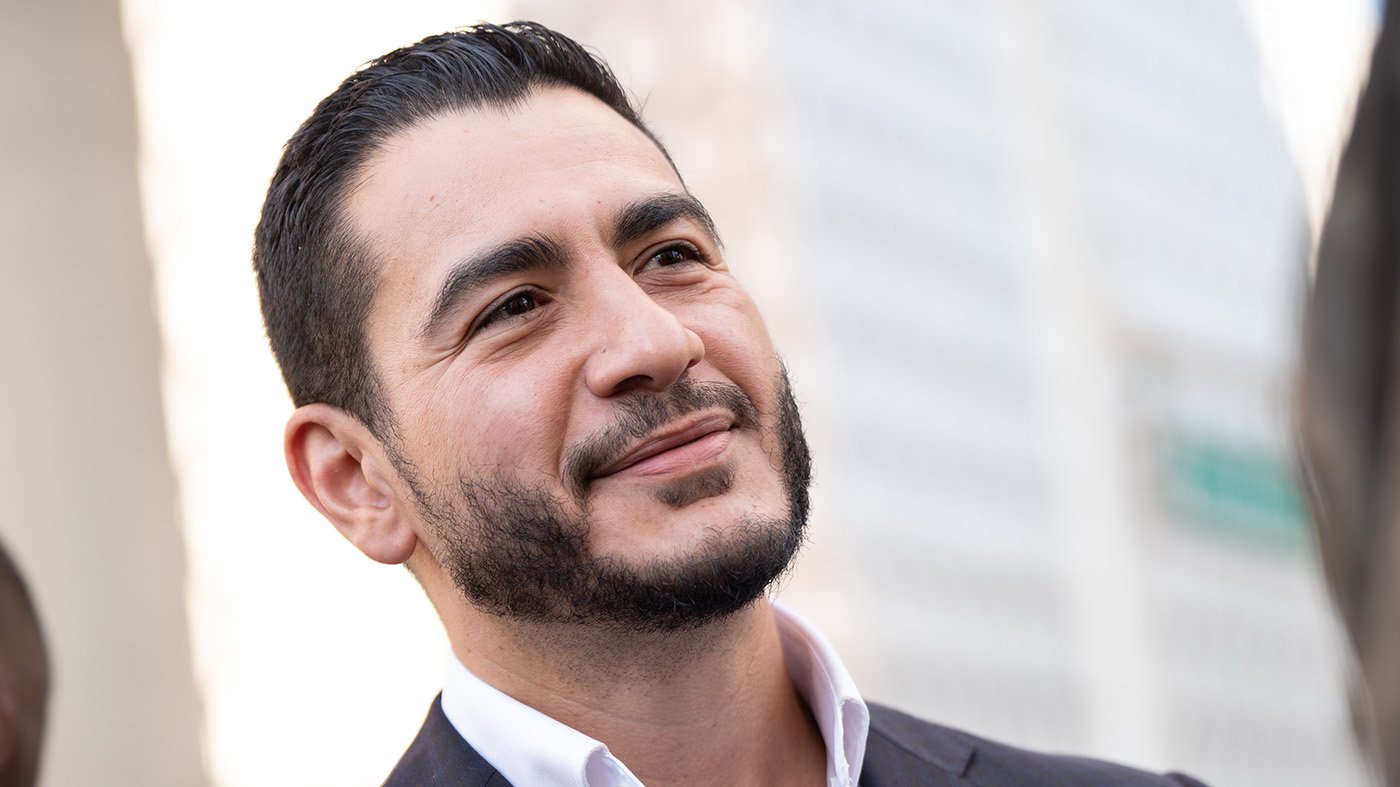
Abdul El-Sayed's victory in Michigan's Democratic Senate primary has set up a high-stakes general election battle, but his path to the Senate runs through a voting bloc he struggled with in August: Black voters.
During the primary, Black voters largely sided with Rep. Haley Stevens, the establishment-backed candidate. Now, Democrats warn that El-Sayed must win a majority of those voters to defeat Republican Mike Rogers in November.
"It's a risky bet to assume Black voters will come home out of natural physics," said Jamal Simmons, a Michigan-born Democratic strategist. "He needs to reach out to them directly and prioritize their issues over the political agenda he may prefer to discuss."
Simmons added that El-Sayed must "do research and find out what the voters who supported Haley Stevens want and how he can help them get those things."
That task is complicated by El-Sayed's anti-establishment campaign tone. "Attacks on the Democratic establishment in places like Detroit are attacks on Black leaders," Simmons said.
The primary results show the challenge. In districts where Black residents make up more than 15% of the population, Stevens led El-Sayed by 8 percentage points. July polling showed only 21% of Black voters backed El-Sayed, while 67% supported Stevens.
El-Sayed's campaign did not respond to a request for comment.
Former Michigan House Speaker Joe Tate, a Democrat who endorsed Stevens, said the congresswoman had an advantage with Black voters because of her work in office. Tate stressed that economic mobility is a top concern for Black voters, saying, "I think they're going to want to hear, 'OK, what are you gonna do to improve our lives if you get there?'"
Democratic strategist Basil Smikle echoed that, noting that progressive candidates like Bernie Sanders and El-Sayed must earn "the confidence of many Black voters, who will continue to evaluate candidates through a political tradition shaped by generations of balancing protest with governance."
Smikle also said El-Sayed's campaign against the Democratic Party could be a problem. "He ran against the Democratic Party and while flawed, it was a vehicle through which African American voters and their representatives found political and economic paths to power," Smikle said. "Progressives often privilege class over race, which flattens Black voters as perpetually working class."
There are also lingering tensions from the 2024 "uncommitted" movement. El-Sayed voted "uncommitted" against President Biden in the 2024 primary, though he later backed Vice President Harris. His recent ads remind voters of that support, and Harris has endorsed him in the Senate race, a move Tate called "certainly goes a long way."
El-Sayed also reached out to Maryland Gov. Wes Moore, the only Black governor, to help with voter outreach, a source confirmed.
Republicans, however, see an opening. Rogers's campaign plans to target Black leaders and churches that supported Stevens, according to reports.
Democratic strategist Joel Payne said Black voters are "behaving with a great deal of pragmatism across the board" in the Trump era. "He has got to demonstrate through his campaign that this binary choice is an existential choice," Payne said. "And he has got to take his message, which sometimes feels disconnected and connect to the everyday experience of Black voters."
Payne added, "Just because it didn't land in the primary doesn't mean it won't land in the general."
El-Sayed's outreach to Moore and his focus on Harris's endorsement may help. But the skepticism among Black voters remains a hurdle. As Simmons noted, "It's a risky bet to assume Black voters will come home out of natural physics."