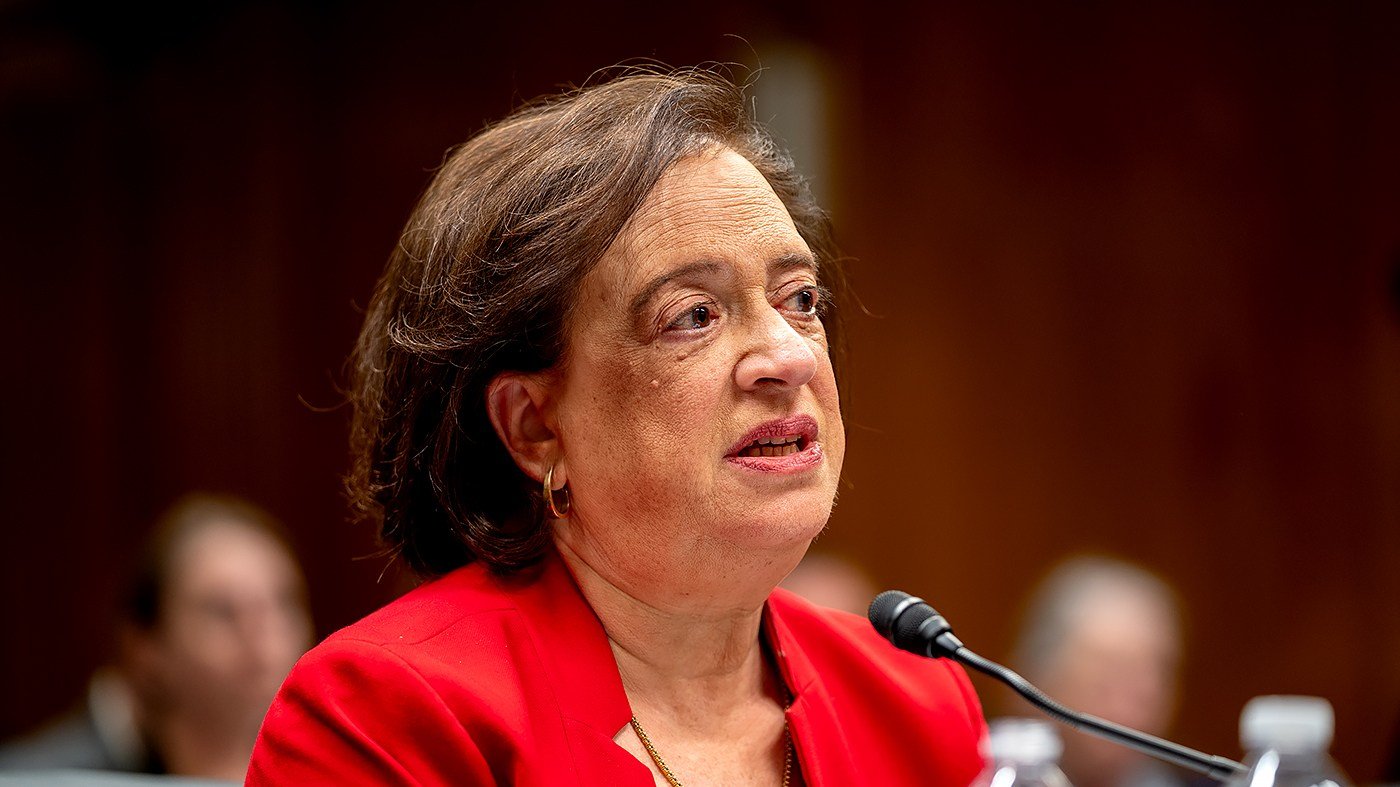
Supreme Court Justice Elena Kagan on Tuesday rejected an emergency request from a surrogate mother seeking to intervene in a custody dispute that has drawn national attention. The surrogate, McKenna West, had asked the high court to lift a parentage judgment issued by a California court in favor of the biological parents.
Kagan, who handles emergency matters arising from California, denied the application in a single-sentence order without explanation. The decision keeps the Supreme Court out of a contentious case that spans three states and raises broader questions about abortion and surrogacy law.

West had argued that the case should be litigated in Alaska, where she resides, rather than in California, where the biological parents live. The couple, Omar Ahmed and Nausheen Gilkar, had secured a California court order declaring them the legal parents of the child. West said that judgment has effectively stripped her of any information about or control over the boy.
The dispute began when doctors diagnosed the fetus with hypoplastic left heart syndrome, a severe congenital condition in which the left side of the heart is underdeveloped and cannot pump blood effectively. According to court filings, physicians recommended a standard course of three surgeries after birth to treat the condition.
Ahmed and Gilkar demanded that West terminate the pregnancy under the terms of their surrogacy agreement. West refused and instead left Alaska for Texas, where she gave birth to the child on August 12. She then sought to appeal the California order, arguing that it denied her any parental rights or access to the child.
Kagan could have referred the matter to the full court for a vote but opted to act alone. Her decision leaves the California judgment in place and avoids a politically charged fight at the Supreme Court over surrogacy and abortion rights—issues that have become flashpoints in national politics.
West is represented by a legal team that includes Alliance Defending Freedom, a conservative Christian legal group that has won several high-profile cases at the Supreme Court. The group argued that Alaska, not California, is the proper venue for the custody dispute.
The case has drawn comparisons to other recent legal battles over state authority and parental rights, including efforts to reshape election rules and disputes over whether the executive branch must follow court orders. As the legal fight continues, it is likely to fuel debates over surrogacy contracts and reproductive rights in state legislatures and lower courts.