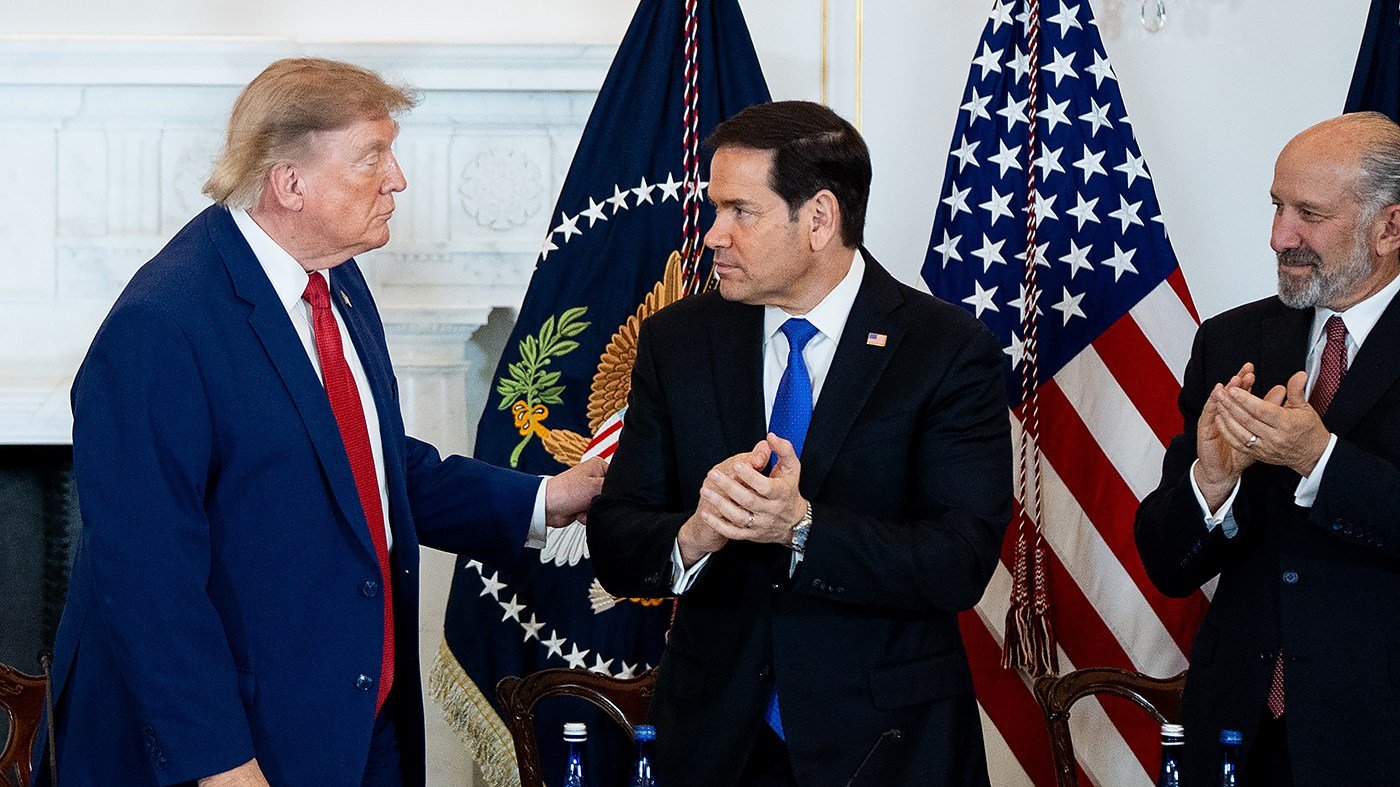
President Donald Trump has signed a commission formally installing Secretary of State Marco Rubio as national security adviser, a White House official confirmed. The move ends Rubio’s stint as acting adviser and cements his dual role atop the administration’s foreign policy apparatus.
Rubio becomes the first individual to simultaneously serve as the nation’s top diplomat and its chief national security adviser since Henry Kissinger held both posts under Presidents Richard Nixon and Gerald Ford. The arrangement centralizes significant influence over U.S. foreign policy in Rubio’s hands.
The development was first reported by MS NOW. Rubio had been filling the adviser role in an acting capacity since the departure of Mike Waltz, who left the position in May 2025 and now serves as U.S. ambassador to the United Nations.
Waltz’s exit followed the eruption of the “Signalgate” controversy, in which he created a private group chat on the encrypted messaging app Signal. Participants, including Defense Secretary Pete Hegseth and Vice President JD Vance, discussed military operations against the Houthis in Yemen. The episode triggered bipartisan scrutiny over the handling of sensitive national security information.
Trump and other administration officials have repeatedly praised Rubio’s capacity to manage multiple high-stakes portfolios. “When I have a problem, I call up Marco. He gets it solved,” Trump said last year when he first tapped Rubio to replace Waltz on an acting basis.
Rubio’s expanded role comes as the administration confronts a range of international challenges. He recently raised concerns about strikes on U.S.-linked assets in Ukraine, underscoring the delicate balance Washington must strike in that conflict. Meanwhile, Trump has pressed for an end to the Ukraine war as energy costs climb.
Beyond Ukraine, Rubio will help steer policy on Iran, where Trump recently threatened annihilation and defended an unpopular war during his United Nations address. The national security adviser typically coordinates across agencies on such matters, giving Rubio a central role in shaping options presented to the president.
Rubio has also been mentioned as a possible Republican presidential contender in 2028, alongside Vice President Vance. He sought to quiet such speculation earlier this month. “I don’t know what the future holds, but I have no plans at this time,” Rubio told Colombian news station RCN in an interview translated by NBC News. “I’m not a candidate for anything right now. And I’m 100 percent focused on my job, and I have to be because I have two jobs.”
The commission formalizes what had been a temporary arrangement, ensuring Rubio retains both titles as the administration navigates a crowded foreign policy agenda. It also raises questions about whether the dual role will concentrate too much power in one adviser’s hands—a debate that echoes the Kissinger era.