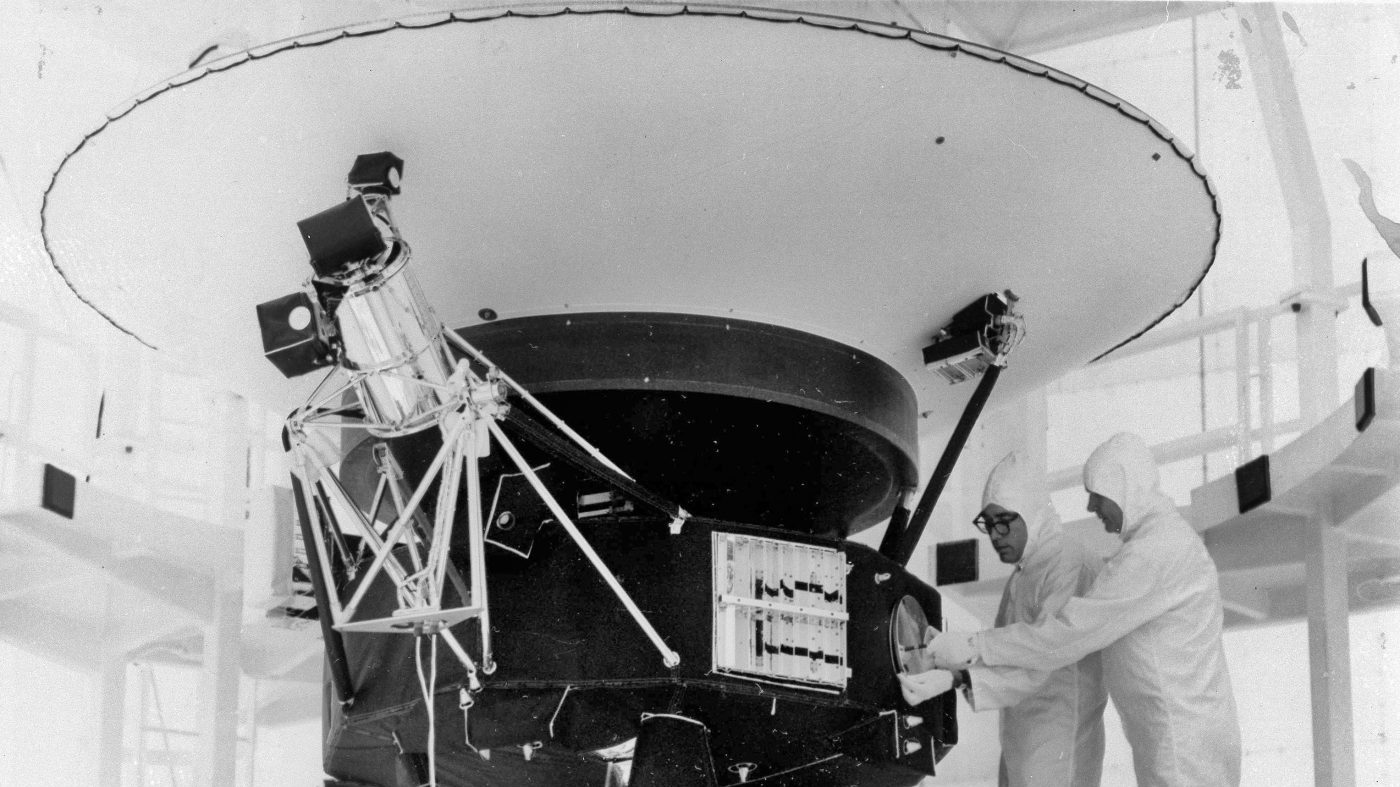
NASA engineers have pulled off a delicate power-saving maneuver on the Voyager 2 spacecraft, buying the aging probe at least one more year of scientific observations in interstellar space. The operation, nicknamed the "Big Bang" by the team at NASA's Jet Propulsion Laboratory, involved shutting down a voltage regulator and tapping into a backup power source to keep the probe's three remaining instruments alive.
Voyager 2, launched in 1977, is one of humanity's most distant emissaries, now cruising through the region beyond our solar system's heliosphere. Its twin, Voyager 1, is on a similar path. Both spacecraft are powered by radioisotope thermoelectric generators, which convert heat from decaying plutonium into electricity. But that plutonium is slowly depleting, and the probes lose roughly four watts of power each year. After nearly half a century in flight, the energy margins have become razor-thin.

To conserve power, mission managers had already switched off non-essential systems, including two of Voyager 2's scientific instruments. Without the new fix, they would have been forced to shut down a third instrument by the end of this year, further diminishing the mission's scientific return.
The "Big Bang" solution was to turn off a voltage regulator that was no longer needed and instead route power from a backup circuit to the instruments. The team also had to ensure the spacecraft's temperature remained within safe operating limits, as the instruments require warmth to function correctly. The delicate operation was executed from billions of miles away, with commands taking more than 18 hours to reach the probe.
With this adjustment, all three of Voyager 2's remaining instruments should continue operating for at least another year. The same procedure is planned for Voyager 1 in the coming months, potentially extending the life of both spacecraft as they continue to send back data from the interstellar medium.
This engineering feat underscores the enduring value of the Voyager missions, which have provided unprecedented insights into the outer planets and the boundary of our solar system. The probes have also become cultural icons, carrying the Golden Record with sounds and images of Earth.
The success of the power reallocation is a testament to the ingenuity of NASA's team, who have spent years devising ways to stretch the spacecraft's resources. As the probes age, each extension is a race against time and entropy, but for now, Voyager 2's journey continues.
For more on how NASA manages its deep-space assets, see recent coverage of federal investigations and government accountability efforts that reflect broader scrutiny of agency operations.