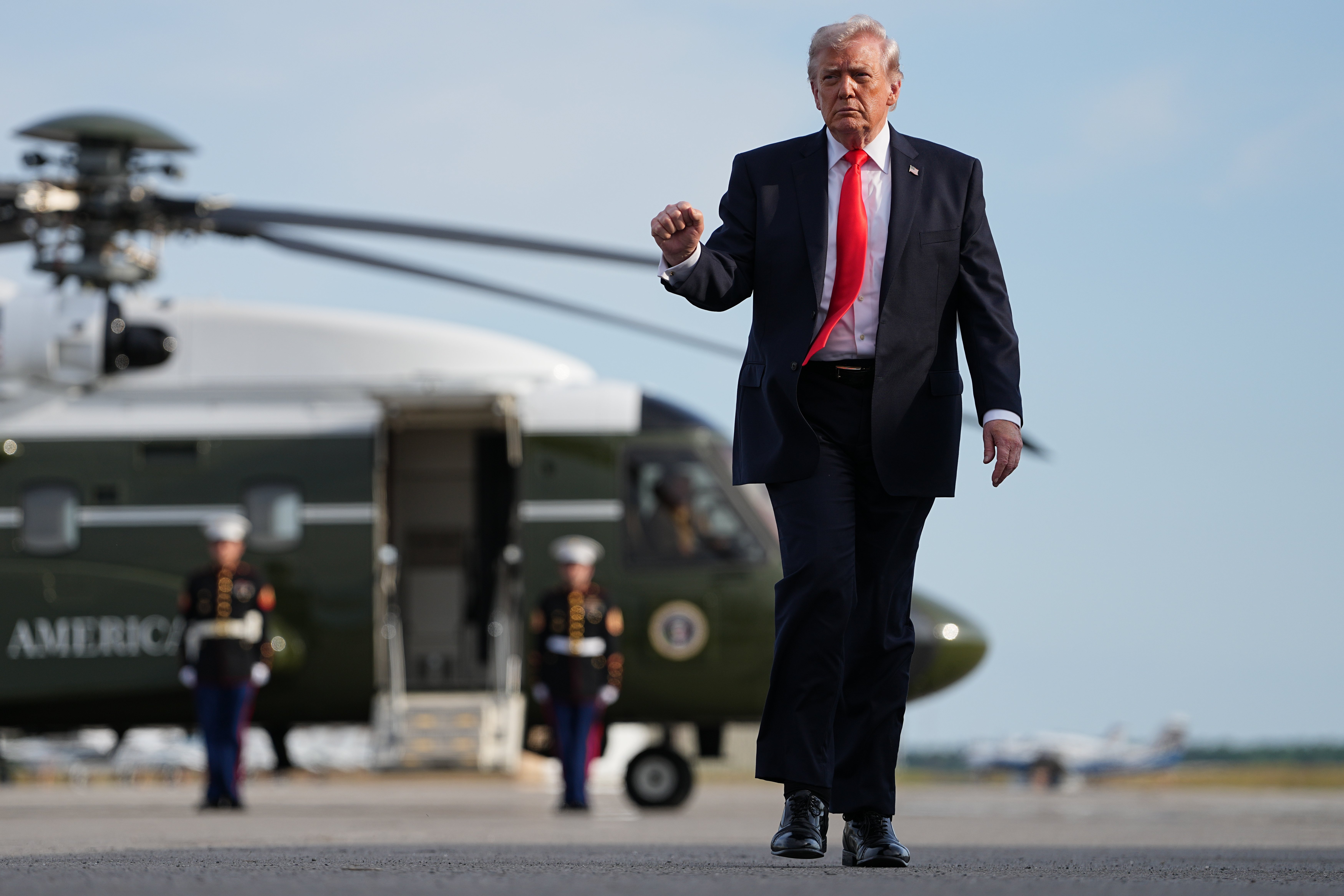
The Federal Aviation Administration has opened an investigation into a Tuesday afternoon incident involving Marine One, the helicopter that transports President Trump around the Washington, D.C., area. The president was departing the White House under routine conditions when air traffic controllers at nearby Reagan National Airport had not yet paused commercial departures, as is standard procedure for such movements, according to a report from the Wall Street Journal.
The lapse resulted in another aircraft taking off around the same time as Marine One, leading to a loss of the required separation between the two planes. Federal guidelines mandate that aircraft maintain at least 1.5 miles of horizontal distance and 500 feet of vertical separation to ensure safe operations. Investigators are now reviewing the circumstances, although the jet never came close to colliding with the presidential helicopter.
The incident comes amid heightened scrutiny of air traffic control operations in the congested airspace around the nation's capital. The FAA had already implemented stricter measures for Reagan National following a deadly midair collision in January 2025 between an American Airlines passenger jet and an Army Black Hawk helicopter. That crash prompted new rules requiring commercial traffic to halt during presidential and other high-priority flyovers.
White House spokesperson Kush Desai downplayed the severity of Tuesday's event, emphasizing that the president was never in danger. "Marine One flights are piloted by some of the best aviators in the world, and at no point was the President in harm's way," Desai told the Journal. The FAA did not immediately respond to requests for comment.
This is not the first time the FAA has scrutinized operations involving the president's aircraft. Earlier this year, the agency reviewed a similar incident at the same airport, and lawmakers have repeatedly raised concerns about the safety of the busy flight corridor. The new investigation could reignite debates over air traffic controller staffing and the need for additional safeguards.
Political observers note that such incidents often become fodder for criticism of the administration, especially given the president's history of weighing in on aviation matters. Some have pointed to the ongoing discussions about international airspace security as a backdrop, though the FAA's probe is focused solely on domestic procedures.
Meanwhile, the White House has signaled that the president remains focused on other policy priorities, including pushing for permanent daylight saving time, a move that could affect aviation scheduling. The FAA's findings could prompt new directives for Reagan National and other airports that host VIP movements.
Aviation safety experts say the incident underscores the challenges of coordinating complex flight operations in high-density airspace. "Any loss of separation is taken seriously, regardless of who is on board," said one former FAA official. "The investigation will determine whether procedural changes are needed."
As the probe continues, the FAA is expected to review radar data, air traffic controller communications, and the flight paths of both aircraft. The outcome may lead to updated training or revised protocols for handling presidential departures. For now, the agency has not indicated whether any personnel have been placed on leave.