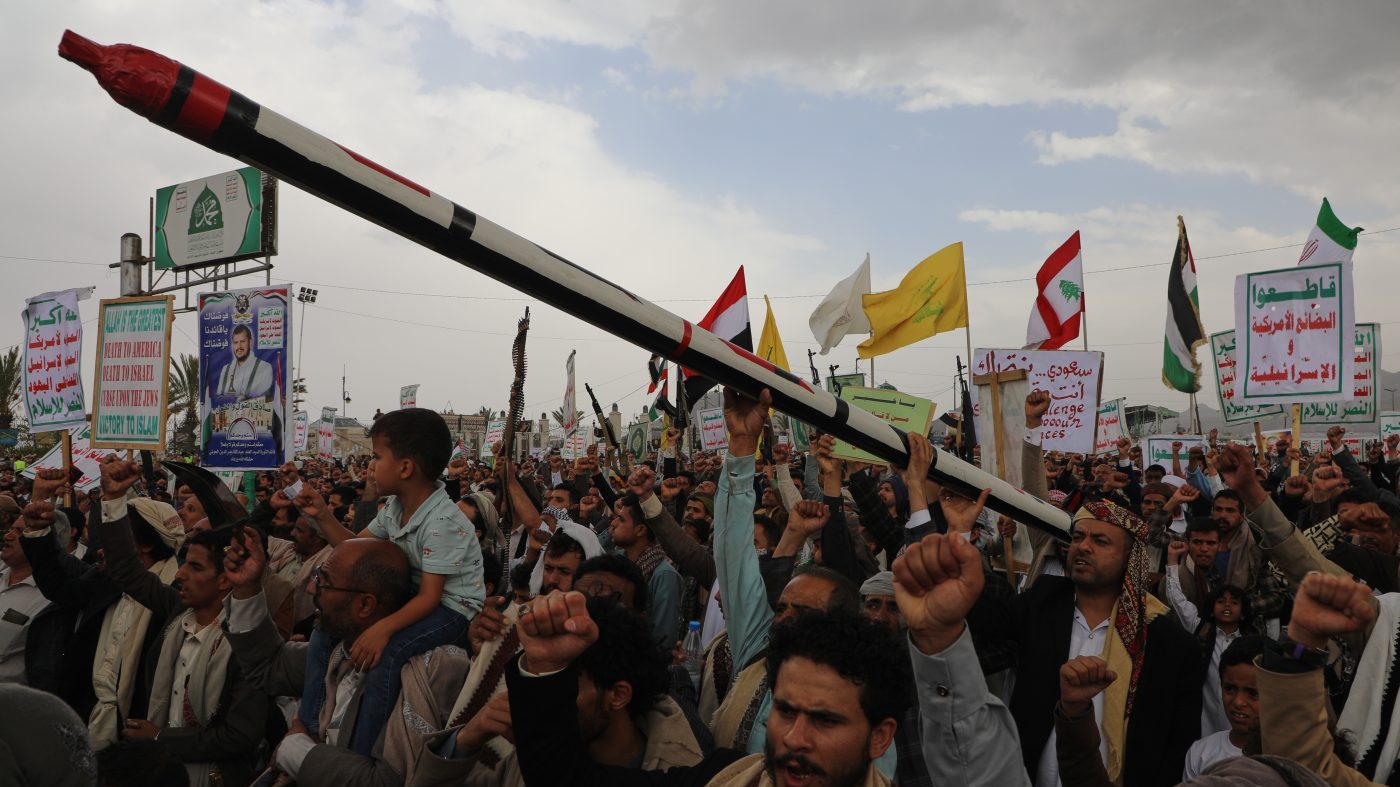
Iran-backed Houthi rebels launched a wave of drone and missile attacks on Friday against Saudi military positions in the eastern Yemeni city of Marib, killing at least two people and wounding more than a dozen others, according to Yemen's state-run news agency SABA. The strikes targeted residential areas and camps for displaced people, raising alarms that the fragile truce in Yemen could collapse into a wider war.
The Houthis claimed responsibility for the assault, saying they struck the Sahn al-Jinn military camp, a base used by Saudi-backed Yemeni government forces. In a statement carried by SABA, the group said it hit "weapons depots, military vehicles and equipment" with "a large number of missiles and drones." The rebels framed the operation as retaliation for Saudi actions, vowing to continue "targeting Saudi aggression wherever it may be."
Brig. Gen. Yahya Saree, the Houthi military spokesman, said in a social media post that the operation followed "precise monitoring of the movements" of Saudi forces. He added that the Yemeni Armed Forces "are steadfast in confronting escalation with escalation" and would "strike hard any mobilization or force brought by the Saudi enemy to maintain the siege imposed on our country."
The Friday strikes came just one day after Houthi attacks on military camps in Marib and Hadramawt provinces killed at least 30 Yemeni government troops, according to government sources cited by Reuters. That escalation has heightened fears that Yemen could return to full-scale conflict more than four years after a UN-brokered truce in April 2022 largely halted major fighting.
UN Special Envoy for Yemen Hans Grundberg warned on Friday that "Yemen today faces a greater risk of renewed large-scale conflict than at any point since the UN-brokered truce of April 2022." In a post on X, he expressed concern over "strikes on civilian infrastructure, including airports, and heightened regional tensions," noting that these developments "risk jeopardizing the gains of the 2022 truce." He urged all sides to exercise "maximum restraint" and engage in UN-led negotiations.
The latest violence comes amid a volatile regional backdrop. Last month, the Houthis announced a blockade in the Red Sea aimed at ships from Saudi Arabia, prompting tit-for-tat strikes between the two sides. President Trump has also threatened the militant group, as the conflict becomes intertwined with the ongoing war with Iran. Reports suggest the US and Iran are nearing a deal that would reopen the Strait of Hormuz and potentially pave the way for new peace talks, a development that could reshape the region's security landscape. The Houthi attacks also come as the US faces questions about its missile stockpiles after recent strikes on Iran, adding another layer of complexity to the crisis.
Analysts say the Houthi escalation appears designed to pressure Saudi Arabia and its allies at a time when diplomatic efforts are fragile. The targeting of civilian areas, including camps for displaced people, has drawn sharp criticism from humanitarian groups, who warn of a worsening humanitarian catastrophe in one of the world's poorest countries.
The UN has repeatedly called for a ceasefire and a return to political negotiations, but the Houthis have shown little willingness to compromise, instead escalating their military campaign. With the truce under strain and regional tensions at a boiling point, the risk of a renewed all-out war in Yemen is now a tangible threat, not just a distant possibility.