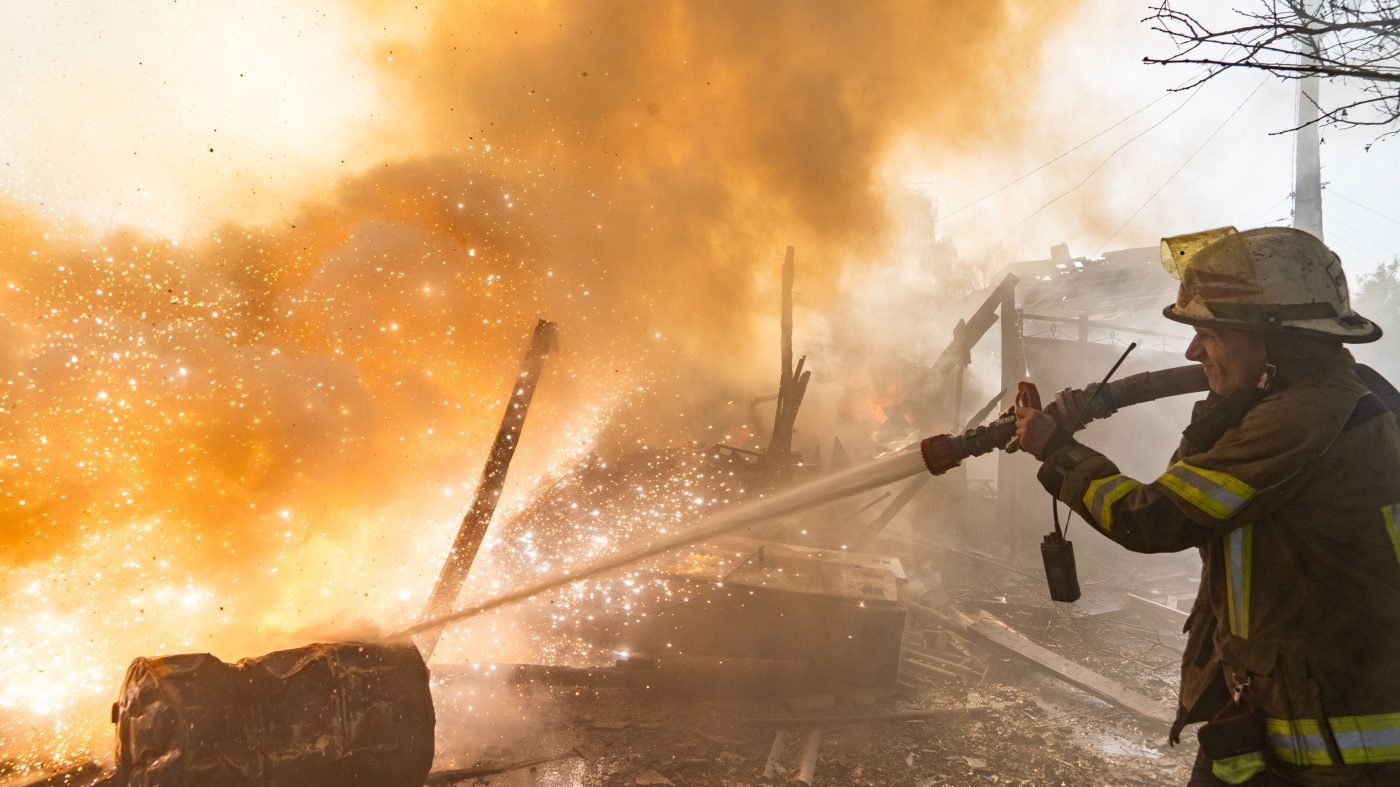
More than 700,000 Russian soldiers have died in Moscow's war in Ukraine, according to a fresh analysis released Monday. The tally, drawn from newly obtained data from Russia's state statistics service, marks a devastating milestone in a conflict that has already become Europe's deadliest since World War II.
The figure—which surpasses the total number of American military deaths across every conflict the U.S. has fought in the past 150 years—was compiled by the exiled Russian outlets Meduza and Mediazona. They based their calculations on data leaked by pro-Ukraine hackers from Rosstat, Russia's official statistics agency. The analysis did not provide estimates for the number of wounded.
The mounting death toll underscores the staggering human cost that President Vladimir Putin is willing to absorb in his bid to subjugate Ukraine, a war he launched more than four years ago with the aim of quickly toppling the government in Kyiv. Instead, Russian forces met fierce resistance and have been bogged down in a grinding war of attrition.
The new estimate marks a sharp increase from the roughly 500,000 Russian troops killed that was disclosed by the UK's spy chief in late May. Putin has consistently withheld accurate casualty figures from the Russian public, suppressing information that would reveal the true scale of the losses.
When Moscow sent more than 150,000 troops across the border in February 2022, it expected a lightning campaign. But Ukrainian units, armed with Western-supplied weapons and employing hit-and-run tactics, stalled the invasion. Within a month, Russia had lost an estimated 15,000 soldiers and was struggling with shortages of food, fuel, and cold-weather gear.
Since then, the war has evolved into a brutal war of attrition. Ukraine has leveraged its rapid mastery of drone warfare to strike deep into Russian territory, hitting oil refineries and military installations and blunting Moscow's advances on the battlefield. Just this week, Ukrainian drones sank a Russian naval vessel in a Libyan port, according to President Volodymyr Zelensky.
Ukrainian losses remain less well-documented, though the Center for Strategic and International Studies estimated in July that around 150,000 Ukrainian troops had been killed through June. The true toll on both sides is likely higher, but the new Russian figure offers a stark reminder of the war's relentless toll.
The Kremlin's willingness to sustain such losses has drawn sharp criticism from Western officials. Senator Jeanne Shaheen and others have called for a more robust U.S. response to Russian aggression, including addressing airspace breaches by Russian-allied forces. Meanwhile, Ukraine's strategic strikes, such as the Kerch Bridge attack, signal a shift in Zelensky's approach, moving from defense to targeted offensive operations.
As the war grinds on, the human cost continues to mount, with no end in sight. The international community watches closely, aware that the conflict's outcome will shape European security for decades.