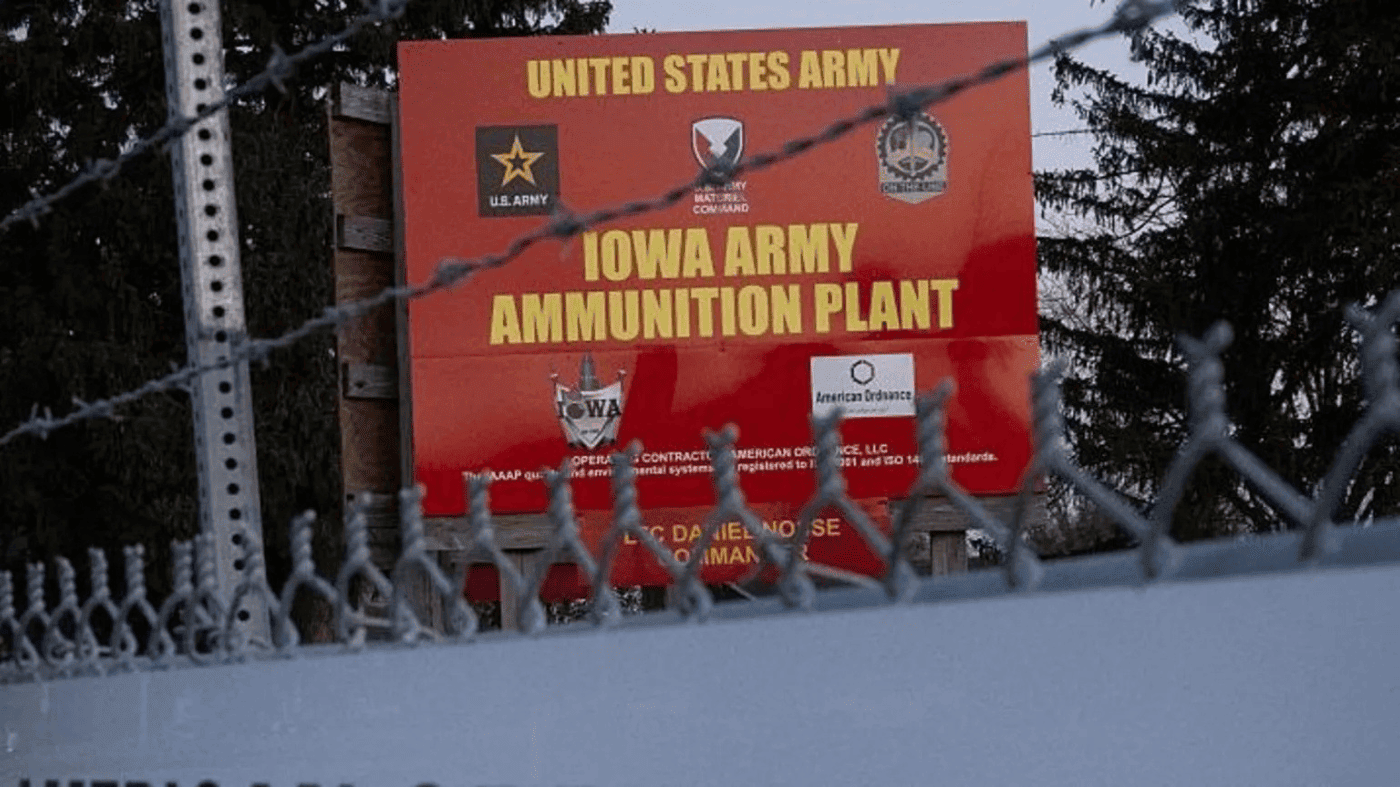
The U.S. Army has rescheduled the controlled detonation of more than 60 barrels of lead azide at the Iowa Army Ammunition Plant to Wednesday, Nov. 25, after a legal battle that temporarily blocked the operation and drew sharp criticism from Iowa lawmakers over the lack of advance notice.
The Army announced the new date in a statement, confirming that the detonation will proceed despite ongoing concerns from environmental groups and local officials. The operation was initially set for Nov. 20, but was delayed after two lawsuits were filed and members of Congress blasted the military for not adequately communicating the plan.

Iowa Governor Kim Reynolds (R) said the state would remain engaged in the preparation process, even though the detonation is a federal operation. “Protecting the health and safety of our people and communities is our highest priority,” Reynolds said in a statement. She activated the State Emergency Operations Center on Friday, triggering coordination meetings with state and federal partners to ensure the area is prepared for the explosion.
The legal challenges came from two environmental groups that argued the Army had not fully assessed the potential risks to nearby residents in Iowa and across the Mississippi River in Mercer County, Illinois. One lawsuit alleged that the detonation could release lead dust into the air, potentially traveling up to 100 miles north and lingering in “yards, gardens, and play areas” for years.
Lead exposure is particularly dangerous for children and can cause serious health problems, according to the Environmental Protection Agency. There is no known safe level of lead exposure, making the planned burn a significant public health concern for communities in the region.
The Army has defended the operation as necessary, noting that a drop in temperatures later this week would make the lead azide even more unstable. Officials have stressed that the detonation is a controlled procedure and that safety measures are in place. However, the lack of communication has been a repeated point of contention. Earlier this month, the Army delayed the burn after Iowa lawmakers protested the short notice, as reported in this earlier coverage.
Senator-elect Josh Turek (D-Iowa) expressed continued worries about the health risks and the Army’s transparency. “I remain concerned about the potential health risks resulting from the U.S. Army’s planned detonation in Middletown and the lack of clear communication and transparency from the U.S. Army,” he said on Sunday. He called for a full investigation into how the lead azide stockpile was allowed to degrade to its current state and why safer disposal methods were not pursued.
The controversy has also drawn attention to broader questions about the military’s handling of hazardous materials and its obligations to inform and protect nearby communities. Environmental groups have previously sued the EPA over the Army’s lead detonation plan, arguing that federal agencies have not done enough to safeguard public health.
As the new detonation date approaches, local officials and residents are bracing for the operation, even as legal and political pressures continue. The Army has not indicated any further delays, but the situation remains fluid given the legal history.