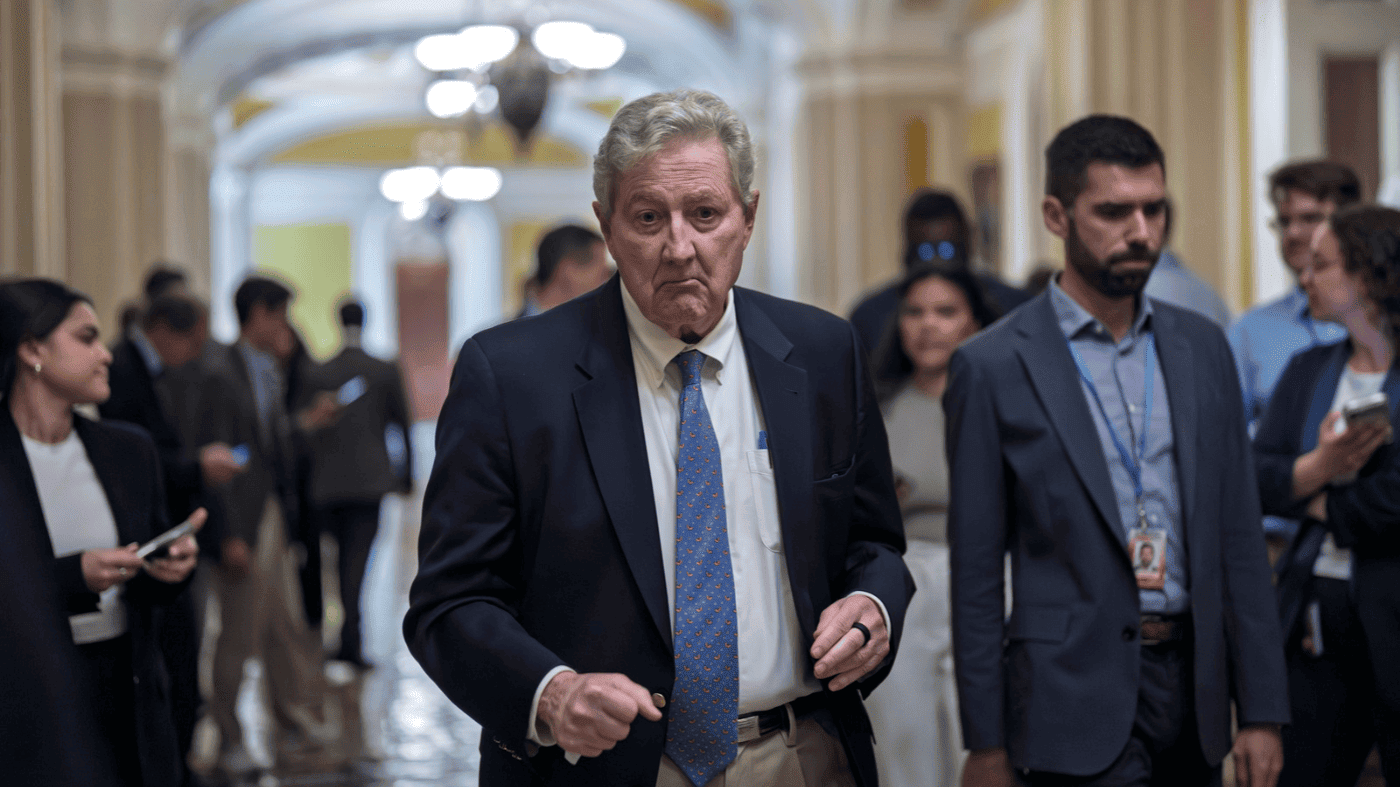
Sen. John Kennedy (R-La.) on Sunday voiced support for President Trump's recent trilateral meeting with Russian President Vladimir Putin and Chinese President Xi Jinping, calling the gathering of the world's most powerful leaders a positive development—provided the United States leverages it to project firmness.
"Well, I think it's a good thing that the presidents of the three most powerful countries in the world are meeting, so long as America uses the opportunity to show its resolve," Kennedy told NBC News's Kristen Welker on "Meet the Press."
Kennedy, a Republican known for blunt rhetoric, did not mince words about the U.S. posture. "You can't go in with your eyes wide shut. None of this is advanced calculus. Putin and Xi are predators. They want to eat America's liver with some fava beans and a nice Chianti. Pretty talk doesn't help," he said, referencing the famous line from The Silence of the Lambs.
The summit, held last week in China, produced a four-point "peace declaration" signed by Trump, Putin, and Xi. The document, released by all three governments, addressed United Nations reform, oil production and supply, the International Criminal Court, and nuclear conflict.
Specifically, the declaration affirmed the three nations' commitment, as permanent members of the U.N. Security Council, to "promoting UN reform so that it may respond more effectively to global challenges." It also outlined plans to "increase the production and supply of refined petroleum products for the benefit of all nations."
On judicial matters, the three countries backed the position that "the International Criminal Court and other similar bodies must not abuse their jurisdiction." The declaration further recommitted to the principle that a nuclear war must never occur and pledged to "conduct a dialogue on reducing nuclear risks and preventing the proliferation of nuclear weapons."
Trump's rapport with both Xi and Putin has been notably warmer than the historically tense relations the U.S. has maintained with China and Russia. This latest summit underscores that dynamic, even as critics in Washington question the strategic value of such high-level engagement with adversaries.
Kennedy's comments come amid broader debate over Trump's foreign policy approach. His remarks echo concerns raised by intelligence officials about Putin's intentions, as highlighted in recent assessments. The president's willingness to engage directly with these leaders has drawn both praise from supporters who see it as pragmatic diplomacy and criticism from those who worry about concessions.
The declaration's emphasis on oil supply is particularly notable given ongoing energy market volatility, and its stance on the ICC aligns with U.S. opposition to the court's jurisdiction over American personnel. Meanwhile, the nuclear risk dialogue represents a continued effort to manage the world's largest nuclear arsenals.
As the administration moves forward, Kennedy's warning serves as a reminder that even Republican allies expect the president to maintain a firm line in dealings with Moscow and Beijing.