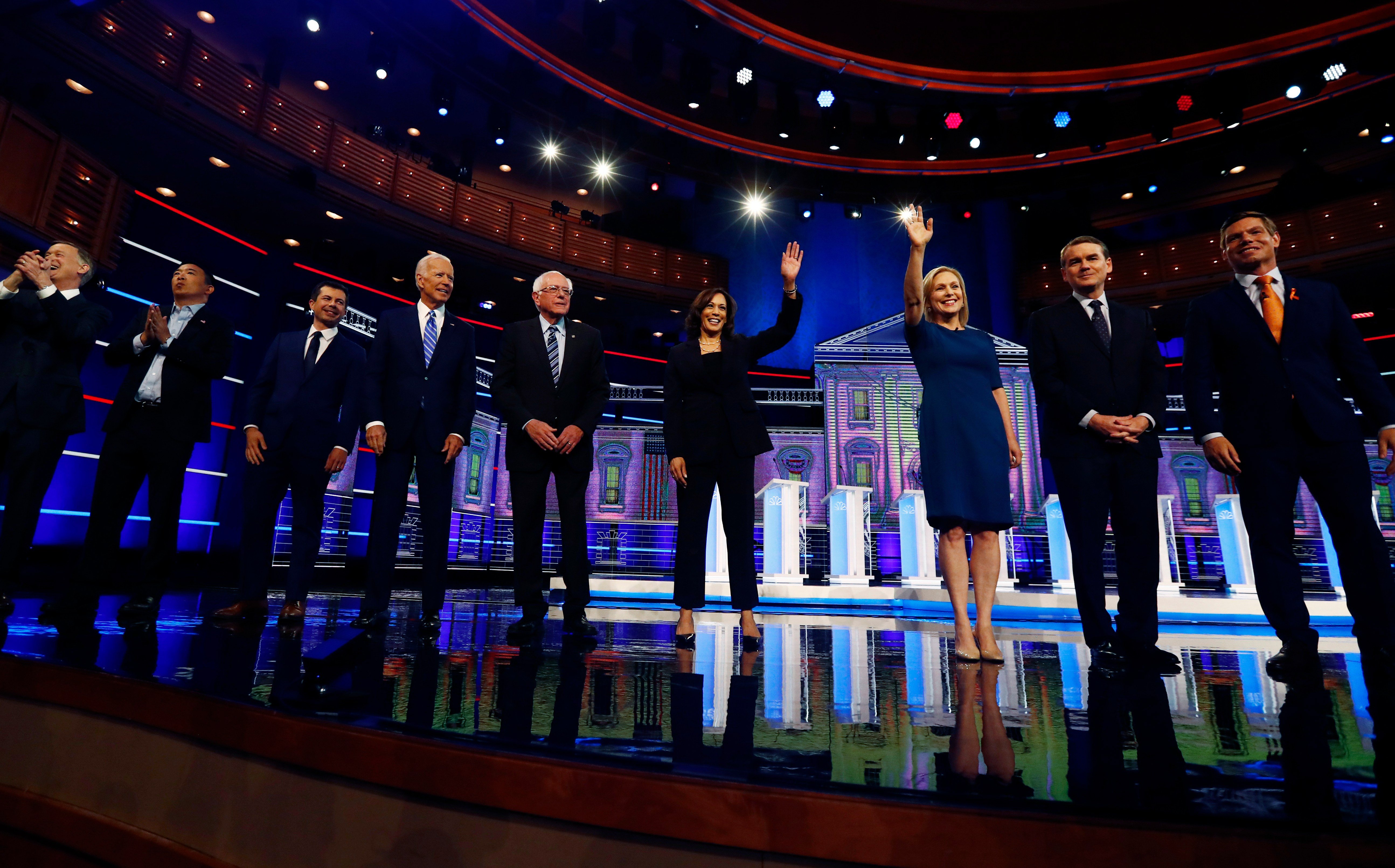
The Democratic National Committee unveiled its 2028 presidential primary debate schedule on Monday, introducing a new requirement: any candidate hoping to take the stage must sign a pledge rejecting dark money. The framework, which includes 12 debates across 2027 and 2028, marks a shift from previous cycles by making the pledge a condition of participation.
According to the DNC's plan, the first two debates will occur in June and July 2027, followed by five more later that year. The remaining seven debates are slated for 2028, with six held in early-primary states and the finale scheduled for March 2028. Specific dates and venues are expected to be announced starting in January.
The dark money pledge is a notable addition, reflecting ongoing intra-party concerns about the influence of undisclosed spending in elections. While the overall debate count mirrors the 2020 primary, this new stipulation sets the 2028 cycle apart. Candidates will be required to formally commit to opposing such financial vehicles, a move that could resonate with grassroots donors and progressive activists.
In another departure from past formats, the DNC is explicitly incorporating digital creators and influencers into the debate process. This recognition of the evolving media landscape suggests the party is seeking to engage younger voters and adapt to how political information is consumed online. The inclusion of these figures could bring new dynamics to candidate interactions and voter outreach.
Political analysts note that the pledge may become a litmus test for candidates, potentially prompting debates over campaign finance reform. Some contenders might welcome the commitment as a way to signal transparency, while others could view it as an unnecessary hurdle, especially if they rely on super PACs or other outside groups. The DNC's move comes amid broader discussions about money in politics, including recent scrutiny of bipartisan efforts to overhaul campaign finance rules.
The announcement also follows a period of internal party debate over primary rules, with some progressives pushing for more debates and stricter ethics standards. The DNC's decision to require the pledge may be seen as a response to those calls, though it stops short of limiting super PAC spending outright. Instead, it places the onus on individual candidates to publicly reject dark money.
Observers point out that the effectiveness of such pledges is uncertain. Past commitments have not always translated into policy changes, and enforcement mechanisms are unclear. Still, the symbolic weight could influence donor behavior and shape the early narrative of the race. For now, the DNC is framing the pledge as a core principle of the 2028 contest.
The debate schedule itself is designed to give voters ample opportunity to assess the field, with early contests in Iowa, New Hampshire, and other key states. The inclusion of digital creators suggests a forward-looking strategy, but it also raises questions about how debates will be moderated and what role these influencers will play. The DNC has not yet released detailed guidelines on their participation.
As the party gears up for what promises to be a competitive primary, the new requirements are likely to spark discussion among candidates and their teams. Whether the pledge becomes a unifying theme or a point of contention remains to be seen. For now, the DNC has set the stage for a 2028 cycle that will test candidates' commitment to campaign finance reform from the very start.