For an industry that positions itself as the last defense against misinformation, last week was not corporate media's finest hour. From investigative failures to legal missteps, the press's slowly recovering reputation took several hits.
Two ABC News staffers are reportedly on paid leave following an early October report claiming firms tied to Donald Trump Jr. and Eric Trump had won over $6 billion in defense contracts. The story was quickly retracted, then republished with a new headline and framing, removing the $6 billion figure and the original byline. Sources at ABC initially cited premature publication, but an internal investigation revealed the authors never contacted one of the firms involved for comment—a basic journalistic lapse.
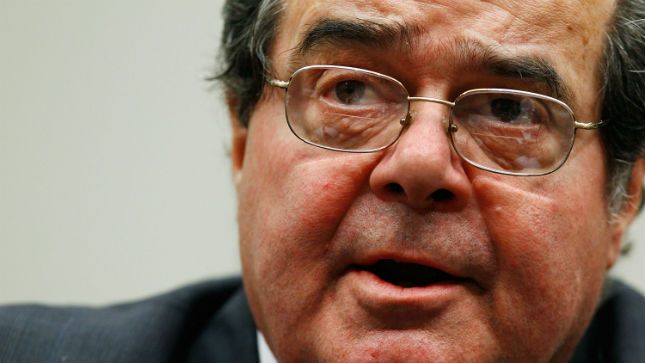
The New York Times faced a different kind of failure. On Nov. 10, the paper reported that Justice Antonin Scalia's Heller opinion relied on a misquotation of William Blackstone, changing "dangerous or unusual" to "dangerous and unusual." The Times claimed this error had influenced gun-control rulings nationwide. However, legal experts, including Jonathan Adler of the Volokh Conspiracy, pointed out that Scalia used a "see" signal, which does not require direct quotation but cites sources supporting the proposition. The Supreme Court's style guide confirms this. The Times also reportedly ignored a detailed on-the-record correction from John Bash, a Scalia clerk, who explained the misunderstanding.
The Washington Post also drew criticism for a news blurb that seemed to blame former Virginia Gov. Glenn Youngkin (R) for the state's exit from the Federal Scholarship Tax Credit program, while ignoring the role of current Gov. Abigail Spanberger (D). The Post's framing suggested Youngkin was solely responsible, omitting Spanberger's involvement.
These incidents underscore ongoing challenges in political journalism. Accurate reporting is paramount, and these lapses erode public trust. As media outlets strive to regain credibility, they must prioritize thorough fact-checking and legal understanding. For more on how media narratives can shape perceptions, see this analysis of media framing.
The ABC case highlights the dangers of rushing to publish. The initial story's false claims about defense contracts not only damaged the network's reputation but also fueled misinformation. The retraction and rewrite, while necessary, came too late to prevent harm. The internal investigation's findings—including the failure to seek comment—point to systemic issues in editorial oversight.
The Times' legal error is particularly troubling given its influence. Misinterpreting Supreme Court precedent can have real-world consequences. The paper's defensive statement, insisting its reporting was accurate, shows a reluctance to acknowledge mistakes. As Adler noted, "It seems to me the Times is still not accounting for the meaning of the 'see' signal."
The Post's Virginia story, while less consequential, reflects a pattern of partisan framing. By attributing the program's exit solely to Youngkin, the Post ignored Spanberger's role, potentially misleading readers. Such omissions undermine the paper's objectivity.
These failures come at a time when public trust in media is fragile. According to a recent poll, Americans are increasingly concerned about misinformation, with AI overtaking cancer as a top fear. Media organizations must redouble their efforts to ensure accuracy and fairness. The stakes are high, as misinformation can influence elections and policy decisions.
For political journalism to regain credibility, it must learn from these mistakes. That means rigorous fact-checking, legal expertise, and balanced reporting. It also means being transparent about errors and corrections. As political capital diminishes, the media's role in informing the public becomes even more critical.