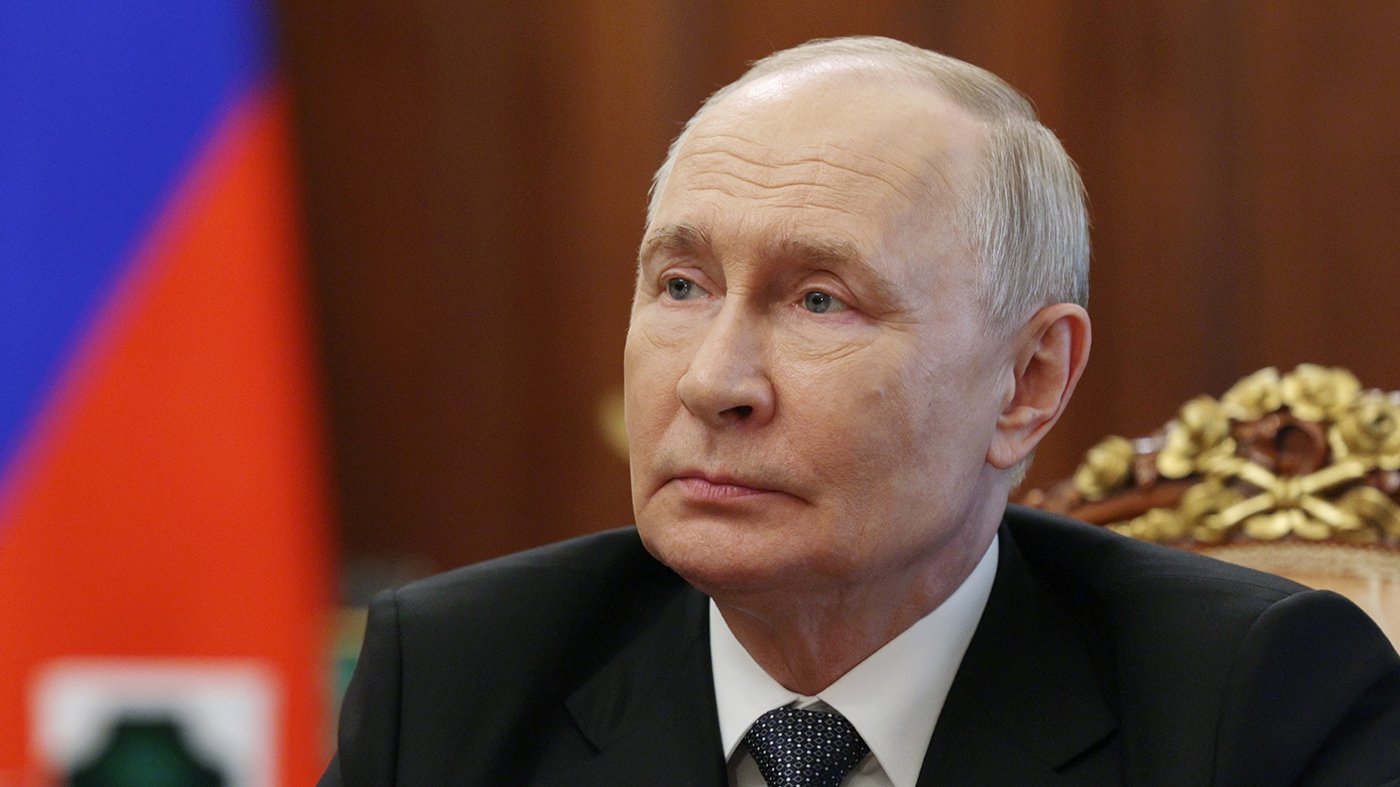
Russian President Vladimir Putin is facing an unusual wave of domestic criticism, a stark sign that the prolonged war in Ukraine is taking a heavy toll on the country. Fuel shortages, soaring inflation, high-profile attacks on Russian energy infrastructure and cities, and rising military casualties are prompting prominent figures to publicly assign blame to the Kremlin.
“It is a crisis,” said Vladimir Milov, a Russian economist in exile and former deputy minister of energy. “What we are seeing right now is an extreme acceleration of public admissions that we are in trouble.”
German Gref, head of Russia’s largest bank Sberbank, has become one of the most high-profile elites to call for an end to the conflict. “I don’t think there’s a single person who isn’t concerned about anything other than a rapid end of hostilities, that’s clear,” he reportedly said on Russian state television, reflecting the overwhelming negative economic trends.
Russia may now be approaching a breaking point, a situation brewing since its full-scale invasion of Ukraine in February 2022. Ukrainian advances in drone technology have enabled strikes on mid- and long-range targets in Russian-occupied Crimea and inside Russia, delivering both strategic and psychological blows to Putin.
Ordinary Russians are feeling the impact on their wallets, experiencing strikes in major cities and canceling vacations in Crimea. Russian air defenses are stretched thin, with insufficient manpower to operate them, leaving targets vulnerable, analysts say.
“The Ukrainian mid-range and long-range strikes are eliminating the gap, the time that Putin had thought he had to make serious decisions,” said Kateryna Stepanenko, Russia team lead at the Institute for the Study of War.
A key concern is whether Putin will order a general mobilization to bolster air defenses and address manpower shortages. The Russian casualty rate has likely risen eightfold over the first six months of 2026, according to a recent report by the Center for Strategic and International Studies (CSIS). The report describes the figures as “astounding,” estimating 450,000 Russian soldiers killed among 1.4 million casualties. Russia is losing more soldiers per month than it can recruit—30,000 versus 27,000.
Stepanenko noted that Putin could nationalize industries to address fuel shortages caused by Ukrainian attacks on oil facilities. Reuters reported that Russia has started importing gas from India to ease shortages across its 11 time zones, with rationing, long lines at gas stations, and record-high prices becoming common.
However, Stepanenko said there are no signs Putin is moving toward these hard decisions, instead absorbing what he views as temporary pain to maintain pressure on the front line. Russian forces remain stalled, and it’s unclear if Putin is denying, unwilling to confront, or misinformed about the battlefield reality. A leaked Russian Defense Ministry map from April showed occupied Ukrainian towns that Russian forces had failed to capture, raising doubts about the accuracy of military claims.
Public criticism of Putin is a “fresh development,” Milov said, still mild but no longer taboo. He described an “unholy trinity” of economic pressures: Russia’s GDP began contracting in the first quarter of 2026, the budget deficit is ballooning, and inflation is rising. “The government is effectively funding the deficit through printing money, which has enormous pro-inflationary effects,” Milov said, preventing the Central Bank from cutting rates and choking investment.
Milov warned that political change in Russia is unpredictable, with Putin having destroyed political opposition. He suggested Russia could face a major rupture similar to the Bolshevik Revolution or the fall of the Soviet Union. “At some point it collapses and there’s no one to defend it,” he said.
Putin’s pain is self-inflicted, but Ukrainian President Volodymyr Zelensky is seeking to deepen it to force negotiations. On June 25, Zelensky announced a “40-day influence operation” aimed at compelling Russia to end the war, underscoring the intensifying pressure on the Kremlin. For more on the broader political landscape, see our report on how recent Supreme Court rulings are reshaping campaign finance. Meanwhile, Democrats are targeting the affordability crisis with local policy wins ahead of the midterms.