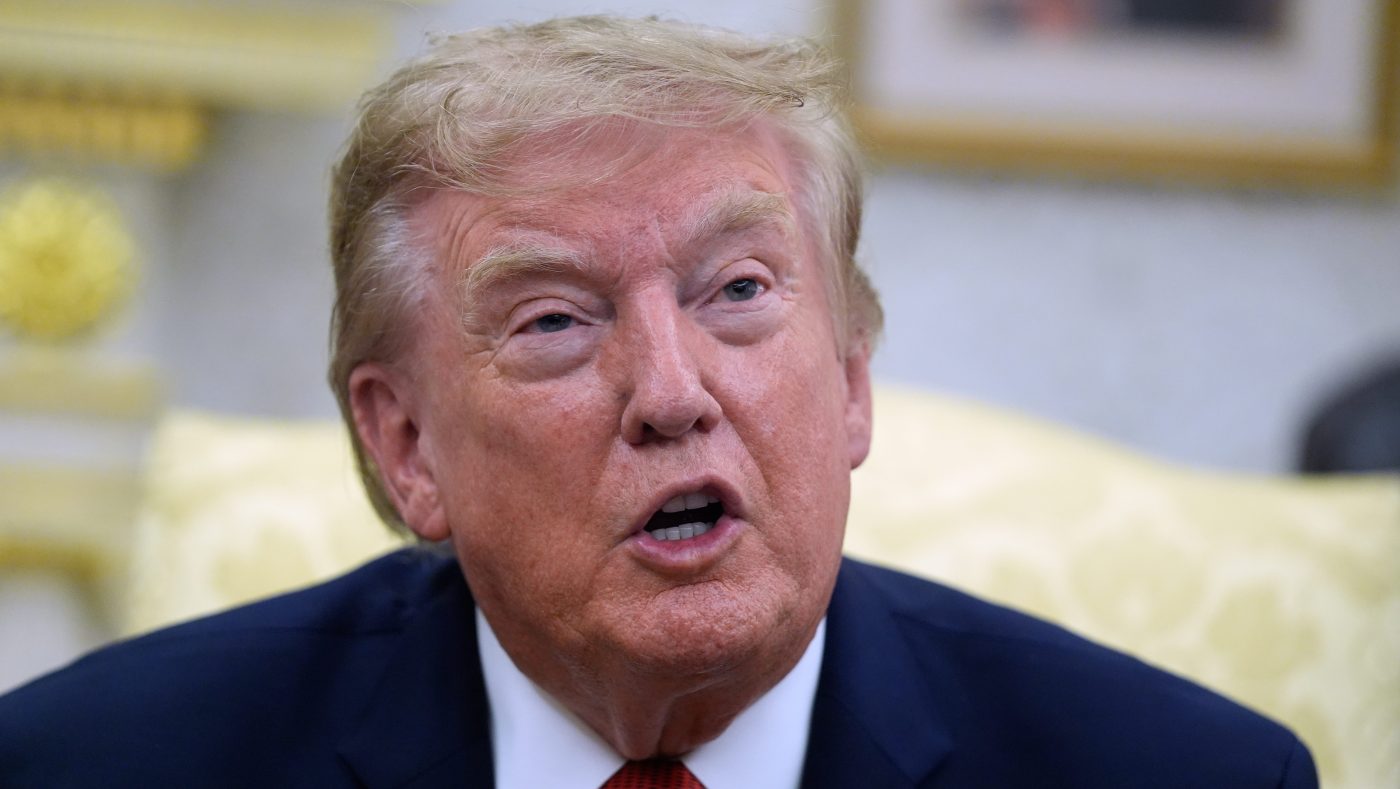
President Trump on Monday tied his decision to reduce joint military exercises with South Korea to Seoul's unwillingness to support US operations against Iran, a move that has drawn sharp criticism from lawmakers and military analysts.
Speaking in the Oval Office, Trump recounted a recent phone call with South Korean President Lee Jae Myung, in which he asked for assistance with Iran. According to Trump, Lee declined, prompting Trump to question the value of the US security commitment to Seoul.
"I called him. I said, 'Would you like to give us a little hand? We don't need help with Iran, but if you'd like, give us a hand with Iran.' He said, 'No thanks,' and I said, 'Wait a minute. We have 39,000 soldiers over there, guarding you from Kim Jong-un, your next-door neighbor, and you're not going to help us on a very easy military operation in Iran. That's strange,'" Trump said.
The president said Lee indicated that South Korea preferred to stay out of the Iran conflict. Trump expressed frustration that the US bears the financial and military burden of defending allies who are not willing to reciprocate.
"I want to help them, but you know, when you ask somebody, 'Would you like to give us a hand,' and they say, 'No thanks,' and then we're guarding them from a country and paying, ourselves, billions of dollars…to protect not only them, but other countries," he said.
Trump also claimed that he had previously secured billions of dollars in cost-sharing payments from South Korea, but that the Biden administration had rescinded that arrangement. The Biden administration negotiated its own cost-sharing deals with Seoul, which Trump argued were less favorable to the US.
"We would have been getting paid a lot more," Trump said. "But we can't go around and protect all of these countries, especially when they're not there to help us."
On Sunday, Trump announced he had directed the Pentagon to "substantially reduce" the annual Ulchi Freedom Shield exercises, which began Monday and are scheduled to run through Aug. 27. The drills have long been a cornerstone of the US-South Korea alliance and a key element of deterrence against North Korea.
The decision has drawn bipartisan concern. Lawmakers and former military officials have described the move as shortsighted and damaging to a longstanding alliance. A retired colonel warned that cutting the drills is an "unforced error" that could undermine regional stability, as noted in this analysis. Meanwhile, Seoul has sought talks to address the reduction, signaling unease among US allies.
Trump defended his decision, saying, "All I want is fairness." But critics argue that the move could be interpreted as a weakening of US commitments to Asia, especially at a time of heightened tensions with North Korea and China.
The reduction in exercises also comes amid broader controversies over Trump's foreign policy, including his approach to Iran and his handling of troop welfare in conflict zones, which has drawn sharp criticism from veterans' groups, as highlighted in a recent report.
As the drills proceed on a reduced scale, the future of US-South Korea military cooperation remains uncertain. Trump's linkage of the exercise cut to Iran may further strain an alliance that has been a pillar of stability in the Indo-Pacific for decades.